Stainless Steel Cookware: Pros, Cons, and How It Compares to Ceramic & Aluminum

I. Introduction
It’s a Sunday afternoon, and you’re making a multi-step meal: simmering tomato-basil soup with vinegar, searing a pork chop, then deglazing the pan for sauce. Your old pan falters—tomato acids taint the soup with metal, and scraping browned bits scratches its surface. But your stainless-steel skillet handles it all: no metallic taste in the acidic soup, no scratches from the metal spoon, even searing and sauce-making. That’s why it’s a favorite for cooks who value durability and versatility.
Stainless-steel cookware is mostly iron, boosted by at least 10.5% chromium. This creates an invisible, rust-resistant layer. Some adds nickel for extra durability and a smoother finish.
Stainless-steel cookware is mostly iron, boosted by at least 10.5% chromium. This creates an invisible, rust-resistant layer. Some adds nickel for extra durability and a smoother finish.
The goal of this article is clear: to take a deep dive into the pros and cons of stainless-steel cookware. But we won't stop there. We'll also compare it to other common types of cookware, like ceramic and aluminum, to give you a well-rounded view. By the end, you'll have all the information you need to decide if stainless-steel cookware is the right fit for your kitchen and cooking style.
II. The Advantages of Stainless-Steel Cookware
A. Durability
One of the standout features of stainless-steel cookware is its incredible durability. Unlike some other materials that scratch easily or dent with minimal impact, stainless steel can take a lot of abuse. It's resistant to scratches from metal utensils, dents from accidental drops, and rust from exposure to water and moisture.
Many users can attest to its longevity. Take Sarah, for example, a home cook who inherited a set of stainless-steel pots and pans from her grandmother. "Those pans are over 40 years old," she says, "and they still work just as well as the day they were bought. I use them almost every day, and they've barely shown any signs of wear." Stories like Sarah's are common, making stainless-steel cookware a long-term investment.
B. Non-Reactive Surface
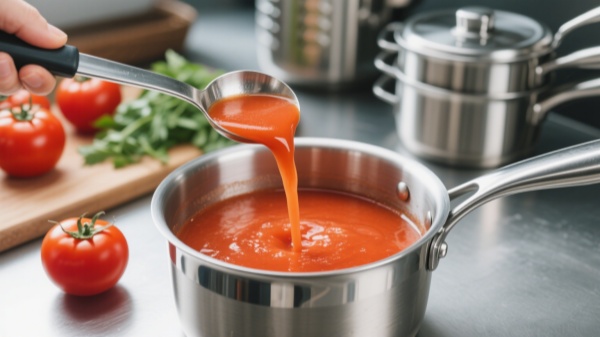
Another major advantage is its non-reactive surface. When cooking acidic foods—think tomatoes, citrus fruits, vinegar, or wine—some cookware materials can react with the acid, leaving a metallic taste in the food or even leaching chemicals into it. Stainless steel, however, remains inert. (This is a stark contrast to bare aluminum cookware, which is highly reactive.)
C. Easy to Clean
Cleaning up after cooking is often the least enjoyable part of the process, but stainless-steel cookware makes it a bit easier. Its smooth surface doesn't have pores or crevices where food can get trapped, so most messes wipe away with a little soap and water. Even better, most stainless-steel cookware is dishwasher safe, saving you even more time and effort.
D. Versatility in Cooking
Stainless-steel cookware is incredibly versatile when it comes to cooking. It works with almost any heat source, including gas stoves, electric cooktops, ceramic glass ranges, and even induction cooktops (as long as it's magnetic stainless steel). This means you can use the same pan no matter what type of stove you have, whether you're at home or cooking in a rental.
It's also suitable for a wide range of cooking methods. You can fry a crispy batch of chicken, sauté vegetables, boil pasta, simmer soups, and even bake in the oven (many stainless-steel pans are oven-safe up to high temperatures). This versatility makes it a great all-purpose option for busy kitchens.
III. The Disadvantages of Stainless-Steel Cookware
A. Heat Conductivity
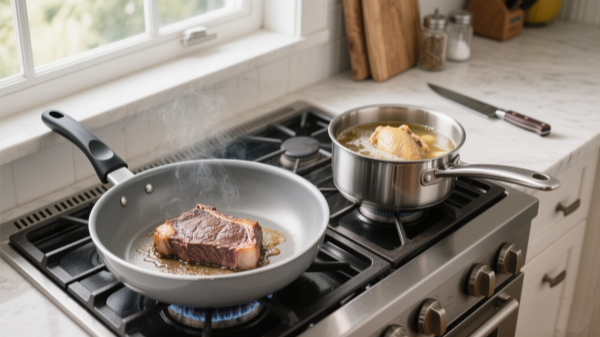
While stainless steel has many strengths, heat conductivity isn't one of them. Compared to materials like copper or aluminum, which conduct heat quickly and evenly, stainless steel is a poor conductor. This can lead to uneven heating, with hot spots forming in the pan.
These hot spots can cause food to cook unevenly—some parts may burn while others remain undercooked. For example, when searing a steak, you might end up with a charred spot in one area and a barely browned section in another. To combat this, many high-quality stainless-steel cookware sets have a core of aluminum or copper, which helps distribute heat more evenly, but this can also increase the price.
B. Price
High-quality stainless-steel cookware isn't cheap. When compared to basic non-stick pans or cast aluminum cookware, it can be significantly more expensive. The price tag is influenced by several factors, including the thickness of the steel (measured in gauge—lower gauge means thicker steel), the presence of a heat-conducting core, and the quality of the craftsmanship.
C. Weight
Stainless-steel cookware is often heavier than other options. This is because it's made from thick, durable metal. While the weight can be a sign of quality, it can also be a drawback, especially for those with limited strength or mobility.
D. Difficult to Season for Non-Stick Properties
Unlike cast-iron or carbon-steel cookware, which develop a natural non-stick surface over time with proper seasoning, stainless steel doesn't season in the same way. This means food is more likely to stick to the surface, especially if the pan isn't preheated properly or if you're cooking delicate items like eggs or fish.
There are ways to minimize sticking, though. Preheating the pan thoroughly before adding food, using enough oil or butter, and avoiding moving the food too soon can all help.
IV. Comparing Stainless Steel with Other Cookware Types
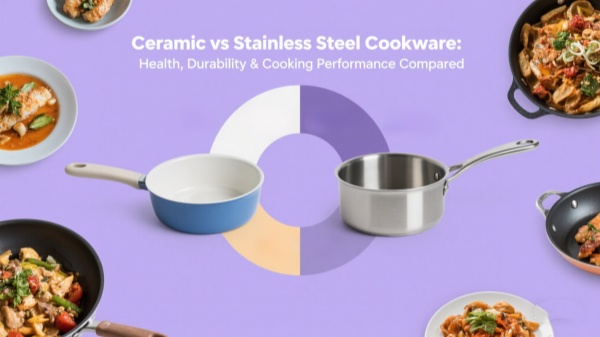
A. Ceramic vs Stainless Steel Cookware
When it comes to durability, stainless steel has a clear edge over ceramic cookware. Ceramic pans are prone to cracking or chipping if dropped or if they come into contact with hard surfaces. Even minor impacts can leave them damaged, reducing their lifespan. Stainless steel, on the other hand, can withstand bumps and drops without breaking.
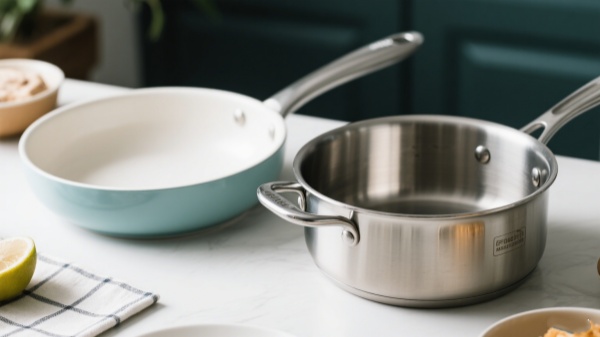
In terms of non-stick properties, ceramic often starts out with a better non-stick surface. It's great for cooking delicate foods like eggs without worrying about sticking. However, this non-stick coating can wear off over time, especially with frequent use or if metal utensils are used. Stainless steel, while not naturally non-stick, lasts much longer, and with proper technique, can achieve good results.
Both ceramic and stainless steel can handle high heat, but ceramic is more sensitive to sudden temperature changes. Placing a hot ceramic pan in cold water, for example, can cause it to crack. Stainless steel is more resilient in this regard, making it a better choice for cooks who may not always handle their cookware with extreme care.
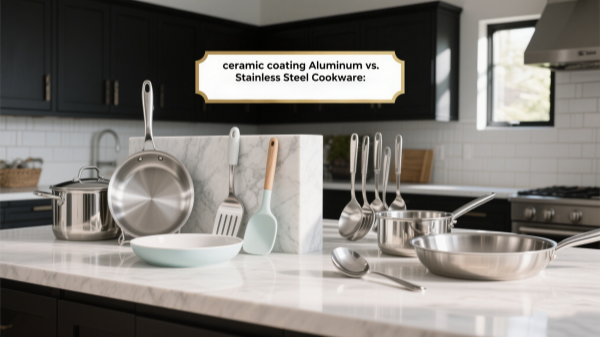
B. Aluminum vs Stainless Steel Pots and Pans
Heat conductivity is where aluminum shines. It conducts heat much better than stainless steel, resulting in more even heating across the pan. This makes aluminum a good choice for tasks that require precise temperature control, like making sauces. However, many stainless-steel pans now come with an aluminum core, which combines the durability of stainless steel with the heat conductivity of aluminum, bridging the gap.
Reactivity is a key difference, though hard-anodized aluminum or coated die cast aluminum cookware narrows the gap—it undergoes a treatment that creates a non-reactive oxide layer, reducing reactions with acidic foods. Still, stainless steel remains inherently non-reactive, making it a safer bet for consistent use with acidic ingredients.
For durability, stainless steel holds the edge, but hard-anodized aluminum and coated die cast aluminum closes the gap too. The anodizing process hardens its surface, making it more scratch-resistant and less prone to warping than regular aluminum. Even so, stainless steel’s tough composition still makes it more resilient to heavy, long-term use.
For durability, stainless steel holds the edge, but hard-anodized aluminum and coated die cast aluminum closes the gap too. The anodizing process hardens its surface, making it more scratch-resistant and less prone to warping than regular aluminum. Even so, stainless steel’s tough composition still makes it more resilient to heavy, long-term use.
V. Addressing Common Questions (People Also Ask)
Is stainless-steel cookware safe?
Yes, stainless-steel cookware is generally considered safe. It doesn't leach harmful chemicals into food, even when exposed to high heat. However, it's important to note that some low-quality stainless steel may contain small amounts of nickel. While nickel is generally safe for most people, those with nickel allergies may experience a reaction, so it's something to be mindful of when choosing cookware.
How do I choose the best stainless-steel cookware?
When choosing stainless-steel cookware, there are a few key factors to consider. First, look at the gauge of the steel—lower gauge means thicker steel, which is more durable and distributes heat better. Second, check for a core of aluminum or copper, which improves heat conductivity. Finally, pay attention to the handles and lids—handles should be sturdy and heat-resistant, and lids should fit tightly to lock in heat and moisture. Reading product reviews and looking for certifications from reputable organizations can also help ensure you're getting a quality product.
Can I use stainless-steel cookware on an induction cooktop?
Most stainless-steel cookware can be used on induction cooktops, but it depends on whether it's made of magnetic stainless steel.
VI. Conclusion
Stainless steel cookware shines with its durability, non-reactive surface, and versatility, though it has drawbacks like uneven heating and weight. When pitted against ceramic and aluminum (including hard-anodized), it balances longevity and safety well. Ultimately, its suitability depends on your cooking needs—whether you prioritize long-term use, acid-friendly cooking, or versatility across heat sources. Choose wisely, and it can be a kitchen workhorse for years.
Stainless Steel Cookware Pros and Cons: An Honest Guide for Home Chefs
Stainless Steel Cookware: Pros, Cons, Comparisons & How to Use It Well