18/8 vs 18/10 Stainless Steel for Cookware: Practical Buyer & Procurement Guide

A short, actionable guide for cookware buyers, product managers and QA teams. We focus on cookware use-cases first — material notes are brief but accurate.
“18/10” and “18/8” describe the stainless steel's approximate Chromium / Nickel ratio. 18/10 (≈ 18% Cr / 10% Ni) typically gives slightly better corrosion resistance and a shinier finish vs 18/8 (≈ 18% Cr / 8% Ni), but both are based on the 300-series (AISI 304 family) and are widely suitable for cookware. Use 18/10 when finish, corrosion resistance or branded premium claims matter; 18/8 is cost-efficient and very serviceable for heavy-duty or institutional cookware.
Introduction — Why the Grade Matters for Cookware Procurement
In cookware, material choices affect product lifetime, customer complaints, warranty returns and the brand's perceived value. For product teams and procurement, the “18/8 vs 18/10” question isn't academic — it directly influences surface finish, pitting resistance in aggressive kitchens (acidic food, dishwashers, chlorinated water), and final cost. This article frames the comparison through real procurement decisions and QA checkpoints rather than metallurgy theory.
What “18/8” and “18/10” Actually Mean
The two numbers refer to the approximate chromium and nickel percentages in the alloy. Historically these shorthand labels map to the familiar AISI/SAE 300-series alloys (commonly 304). In practice: 18/8 ≈ 18% chromium + 8% nickel; 18/10 ≈ 18% chromium + 10% nickel. The extra nickel in 18/10 contributes modestly to corrosion resistance, ductility and surface brightness.
How the Difference Shows up in Cookware — Real Use Cases
Durability & corrosion resistance (kitchen reality)
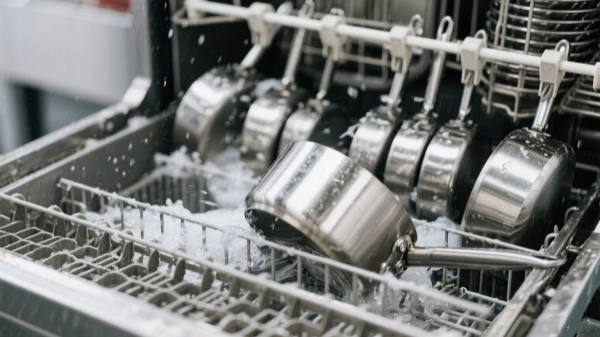
In everyday restaurant or home use, both grades hold up well. But in high-chloride or coastal environments and in heavy commercial dishwashing cycles, the small nickel increase in 18/10 can reduce early pitting or surface blemishes — this is why premium flatware and some high-end cookware specify 18/10.
Finish, polish and retail perception
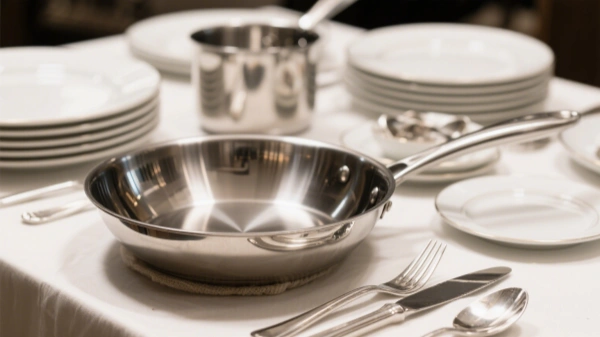
For retail cookware or flatware sold on finish/shine, 18/10’s additional nickel helps achieve and maintain a brighter mirror finish — useful for premium SKUs and hospitality accounts where perceived quality translates to price.
Manufacturing & forming behavior
Nickel improves formability slightly; that matters when stamping or deep-drawing flatware or when finishing thin gauge lids and rims. Manufacturers sometimes choose 18/10 when consistent polish and lower rework rates are a priority.
Compatibility with multi-ply (clad) cookware
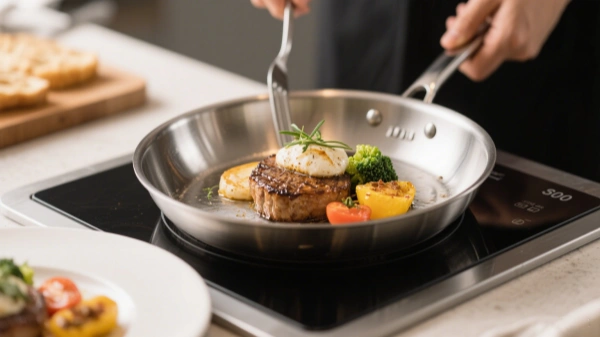
Multi-ply (3-ply, 5-ply) cookware commonly uses austenitic stainless (304 / 18/10 or 18/8) for the cooking surface(s) while the core(s) are conductive metals (aluminum or copper). Many premium tri-ply and 5-ply product lines explicitly state 18/10 as the cooking surface to combine the benefits of stable food-grade steel with superior heat distribution from the core.
B2B takeaway: when specifying materials in an RFQ, call out surface grade (e.g., “304 / X5CrNi18-10 finish” or plain “18/10”), and separately call out core construction (e.g., encapsulated full-clad aluminum or copper).
When 18/10 is Worth a Premium — Procurement Checklist
Choose 18/10 when one or more of the following apply:
- Product positioning requires a long-lasting glossy finish (premium retail or hospitality tableware).
- Customers demand reduced visible corrosion in aggressive environments (coastal markets, heavy dishwashing).
- You plan to market the product as “304 / 18/10” for resale differentiation.
3-ply & 5-ply cookware — where 18/10 often sits in the stack
Many reputable 3-ply (tri-ply) and 5-ply lines use 18/10 (or other 300-series stainless) as the cooking surface because it balances non-reactivity, finish and formability with a conductive core (usually aluminum). For example, popular tri-ply premium collections specify a 18/10 outer layer and an aluminum core for heat distribution. For some 5-ply offerings, the outer cooking surface is also 304/18-10 while the inner and exterior plies can include other stainless grades for magnetic/induction compatibility or strength. Always confirm supplier mill certificates (COA) to ensure the surface layer chemistry matches your spec.
Procurement checklist (short):
- Specify surface alloy explicitly in the PO (e.g., “X5CrNi18-10 / 304” or “18/10 for cooking surface”).
- State cladding construction: 3-ply full-clad vs encapsulated bottom vs 5-ply and identify core metals.
- Require batch COA and an incoming inspection sample for XRF or spectrometer verification.
Quality Assurance: Testing & Acceptance Checks
Quick field checks (useful for QC teams)
- Magnet test: Most 300-series austenitic stainless steels are weakly magnetic or non-magnetic. A magnet test can detect obviously wrong grades (but does not distinguish 18/8 vs 18/10 reliably). Use it as a first-pass only.
- Dimensional & finish inspections: rim flatness, weld seams, polish uniformity, plate thickness at critical areas.
Laboratory / factory verification
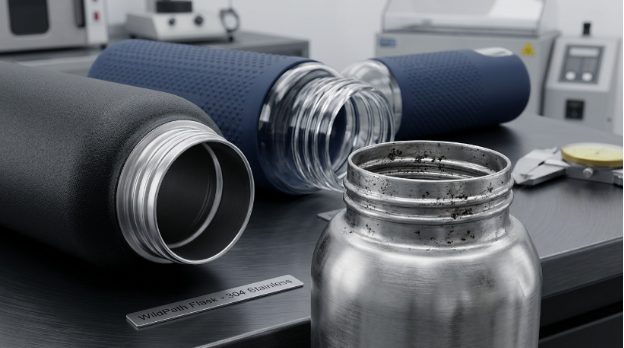
For definitive chemical verification, factory QA or incoming inspection teams should use non-destructive alloy analyzers: handheld XRF or a spectrometer (OES) to confirm chromium and nickel percentages on representative samples. Handheld XRF gives fast, accurate readings and is common practice for incoming material checks in production and distribution centers.
What to require from suppliers
- Mill Certificate (COA) for each batch (showing Cr/Ni ranges and trace elements).
- Sample XRF report or traceable lab test for initial lots and random lot checks.
- Clear statement of core construction for multi-ply items and a drawing or cross-section photo.
Nickel, Leaching & Safety — Short Practical Note
Nickel is present in 18/10 and 18/8 stainless steels, but high-quality 300-series stainless steels are well established for food contact. For most users, properly manufactured stainless steel cookware does not cause systemic harm; however, people with confirmed nickel allergic contact dermatitis may experience cutaneous symptoms on contact with nickel-releasing items. If your target market includes many nickel-sensitive consumers, consider product labeling, alternate surface finishes, or using a low-nickel option for vulnerable SKUs. For clinical context see major medical sources on nickel allergy.
Buyer practice: Don’t rely on “18/10” alone to guarantee low nickel release — require COA, and if the customer requests it, obtain leach testing data from the lab for repeat acidic cooking tests.
Quick Decision Matrix
| Use case | Recommended grade | Notes / QA checks |
|---|---|---|
| Retail premium flatware / polished cookware | 18/10 (304) + mirror finish | Require COA; XRF sample; visual finish spec |
| Restaurant / heavy duty commercial cookery | 18/8 (304) or 18/10 | Durability & cost focus — test pitting after dishwasher cycles |
| Institutional / cafeteria bulk pans | 18/0 or 18/8 (cost over finish) | Consider 18/0 for lower cost; specify surface treatment |
| Multi-ply high performance (frypan, saute) | Cook surface: 18/10 or 18/8; Core: aluminum/copper | Require cross-section photo and COA for surface ply |
FAQ
What does 18/10 stainless steel mean for cookware?
It means the alloy contains about 18% chromium and 10% nickel — a common 304/300-series stainless steel composition used as a cooking surface.
Is 18/10 better than 18/8 for pots and pans?
18/10 usually has slightly better corrosion resistance and a brighter finish, but both are appropriate for most cookware; choose 18/10 when finish and long-term surface appearance matter.
Can you use 18/8 stainless steel in a commercial kitchen?
Yes — 18/8 is commonly used in commercial settings; it is cost-effective and durable. For aggressive environments, consider 18/10 or additional surface finishes.
Does 18/10 stainless steel rust?
18/10 is highly corrosion-resistant but not immune; prolonged exposure to chlorides, poorly maintained dishwashers or very harsh chemicals can cause pitting. Proper care prevents most issues.
How to test if cookware is 18/10 or 18/8?
Quick field tests (magnet) only detect ferritic vs austenitic types. Definitive verification uses XRF or spectrometer testing and a supplier COA is the industry standard.
Next Steps for Procurement Teams
If you want a ready RFQ template, incoming inspection checklist or a sample COA review, Solamex can prepare a one-page procurement spec and a supplier test checklist tailored to your SKU and market.
Request RFQ template & QA checklistSources & Further Reading
- ASTM A240 — Standard for chromium and chromium-nickel stainless steel plate, sheet and strip (composition and spec ranges).
- Grade 304 Stainless Steel — AZoM (304 / “18/8” composition and properties).
- All-Clad D3 tri-ply collection info (example of tri-ply lines using 18/10 surface).
- XRF & spectrometer testing overview — VRXRF (incoming inspection & testing).
- Nickel allergy — Mayo Clinic (clinical guidance & context).
Note: Additional academic or regulatory references (leach testing, lab reports) can be attached per SKU on request — ask suppliers for COA and test reports when quality is critical.

Solamex — Wholesale Pots and Pans Expertise
Solamex offers diffenent grades stainless steel cookware and wholesale pots and pans, combining durable materials, precise craftsmanship, and flexible product customization. From premium stainless steel to advanced nonstick lines, our catalog is built for both retail distribution and demanding commercial kitchens — ensuring consistency in performance and presentation.
18/8 vs 18/10 Stainless Steel: What Every Home Cook Really Needs to Know
The Ultimate Guide to Custom Kitchenware: From Concept to Your Kitchen