5-Ply vs 3-Ply Stainless Steel Cookware: Which One Should You Buy?
Why "Ply" Matters
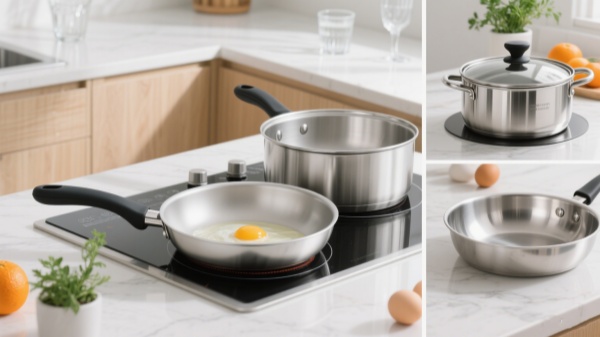
"Ply" refers to how many bonded metal layers make up a pan. Most stainless steel cookware is built as a sandwich: stainless outer layers surrounding conductive cores such as aluminum or copper. That construction determines how the pan heats, how quickly it responds to changes, how heavy it feels, and how resistant it is to warping. This article explains the practical differences between 3‑ply and 5‑ply, shows a quick comparison table, and gives straightforward buying recommendations.
What is 5‑ply?
5‑ply construction adds more metal layers—typically an arrangement that alternates stainless and conductive metals to increase total thickness and stiffness. The extra layers give the pan more mass and structural rigidity, which can help resist warping and provide a steadier heat when doing heavy searing or cooking at very high temperatures.
Pros: greater mass, stability and perceived durability. Cons: heavier, more expensive; more layers don’t automatically mean better heat if the conductive material is thin.
What is 3‑ply?
3‑ply (also called tri‑ply) normally means stainless on both the inside and outside with an aluminum core bonded between them. This creates a relatively thin, fast‑responding cooking surface that heats quickly and offers good value. It tends to be lighter and easier to handle for everyday use.
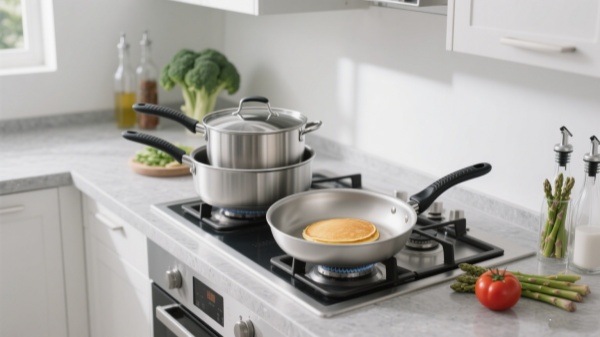
Pros: lighter, heats rapidly, lower cost. Cons: less mass for high‑heat searing on very large pans; quality varies by build and base thickness.
At-A-Glance Comparison
The table below shows typical differences to help you scan the main tradeoffs. Read it quickly, then continue for practical implications and buying tips.
| Ply | Typical build | Performance character | Weight | Best for | Price band |
|---|---|---|---|---|---|
| 5‑ply |
Stainless/Aluminum/Stainless/Aluminum/Stainless (varies)
|
Heavier, steadier heat, better warp resistance | Medium–heavy | High‑heat searing, large pans, professional-style use | Mid–Premium |
| 3‑ply (tri‑ply) | Stainless – Aluminum core – Stainless | Responsive, fast heat-up; good everyday control | Light–medium | Everyday home cooking, quick sautés | Low–Mid |
Science & Real‑World Performance: When Ply Count Matters
The critical technical point is this: the type and total thickness of the conductive material (usually aluminum or copper) determine heat distribution and responsiveness more than the raw number of plies. Aluminum conducts heat much faster than stainless steel, so a single thick aluminum core can outperform multiple thin layers whose combined conductive thickness is small.
Think of the pan as a road: a single wide lane (thicker conductive core) moves heat more efficiently than many narrow lanes (several thin layers) that don’t add up to the same cross‑section. That is why some high‑quality 3‑ply pans feel more even than lower‑grade multi‑ply pans.
Practical scenarios:
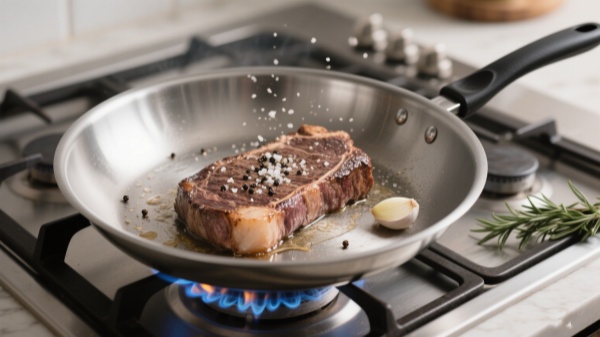
- Searing: Extra mass (5‑ply) helps stabilize temperature when you add cold food to a hot pan.
- Simmering/reductions: Both constructions work well; even heat matters, not ply count alone.
- High‑heat, quick flips: Lighter 3‑ply pans can be easier to maneuver.
Simple home test: heat an empty pan, sprinkle a few drops of water—observe whether droplets bead (good heat), spread, or instantly evaporate. Also check for flatness by placing the pan on a flat surface and seeing if it rocks; significant wobble can indicate base issues regardless of ply.
Weight, Handling & Ergonomics
Weight affects how you cook: flipping, tossing and single‑hand handling are all easier with lighter pans. If you often cook for one or two and prefer quick weekday meals, a well‑made 3‑ply skillet gives speed and agility. If you routinely cook large roasts or sear steaks in large skillets, the extra heft of a 5‑ply can be an advantage.
Durability & Warp Resistance
5‑ply pans often resist warp better due to increased stiffness from added layers. However, manufacturing quality—base gauge, proper bonding, and heat treatment—matters at least as much. A cheaply made 5‑ply will still warp sooner than a well‑engineered 3‑ply with a thick, well‑pressed base.
Tip: check warranty and return policies; brands that stand behind their geometry and flatness often build more reliable cookware.
Price & Value: When 5‑ply Pays off
Higher ply often means higher cost because of more material and complex bonding, but the premium only pays off for specific users: heavy‑use home cooks, pros who sear frequently and value the feel, or anyone who wants the longest possible service life and is comfortable with extra weight.
If you cook occasionally or prefer lightweight agility, investing in a top‑quality 3‑ply model usually delivers the best value.
Practical Buyer Checklist & Quick Recommendations
Before you buy, run through this checklist:
- Is the pan induction compatible if you need it?
- What is the total conductive thickness or base gauge (if listed)?
- Handle comfort and oven temperature rating.
- Warranty, brand reputation and user reviews.
- Return policy—test for flatness at home.
- Casual home cook: Choose a high‑quality 3‑ply for speed and value.
- Frequent searer / large pans: Consider 5‑ply for added stability.
- Want professional feel: 5‑ply offers the heavier hand and longevity—accept the weight and cost.
Maintenance & Care
Stainless‑clad pans are durable but benefit from gentle care: avoid thermal shock (don’t put a hot pan under cold water), deglaze rather than vigorous scraping, and use non‑abrasive cleaners to maintain shine. Most stainless‑clad cookware tolerates the dishwasher, but hand‑washing prolongs the finish. To remove stubborn burnt food, simmer water with baking soda, then scrape gently.
FAQ
- What is the difference between 3‑ply and 5‑ply?
- 3‑ply is typically stainless‑aluminum‑stainless; 5‑ply adds layers for mass and stiffness. Conductive core thickness matters more than the number of layers.
- Is 5‑ply cookware worth it?
- If you need heavier, warp‑resistant pans for frequent high‑heat cooking, it can be worth the extra cost; otherwise, a good 3‑ply is usually fine.
- Does more plies mean better heat distribution?
- Not necessarily—what counts is the type and thickness of conductive material (aluminum or copper) rather than the count of plies alone.
- Can 3‑ply/5‑ply be used on induction?
- Yes, if the outer stainless steel has magnetic properties—check the manufacturer’s specs for induction compatibility.
Conclusion
Bottom line: choose 3‑ply for responsive, lighter, and often better‑value cookware for everyday use. Opt for 5‑ply when you want added mass, stability and professional weight for high‑heat or heavy‑duty cooking. If in doubt, start with a well‑made 3‑ply skillet and upgrade only if your cooking style demands the heavier performance.

Solamex — Wholesale Pots and Pans Expertise
Solamex offers a comprehensive range of wholesale pots and pans, combining durable materials, precise craftsmanship, and flexible product customization. From premium stainless steel to advanced nonstick lines, our catalog is built for both retail distribution and demanding commercial kitchens — ensuring consistency in performance and presentation.
5-Ply vs. 3-Ply Stainless Steel: The Definitive Guide for 2025
How Are Cooking Pots Measured: The Complete Guide to Pot Sizing