Common Water Bottle Mistakes to Avoid. Tips to Fix Them!
Introduction
Rinsing rather than washing costs people hundreds each year in replacements. We rebuild lids for a living, so we are seeing the damage first hand. Most water bottle mistakes do not appear harmful on day one. At three months, they stink, leak, or permanently stain.
The Short Version
-
Refilled single use PET crazes around the shoulder area within about 40 fills.
-
Cold rinses cause the movement of debris around, and they kill nothing.
-
Gaskets and straws wear out months before the body of the bottle does.
-
On hot afternoons, the temperature in a car cabin reaches 140°F (60°C) in about an hour.
-
Wide necks over 50mm get cleaned adequately, narrow necks do not.
-
Steel wool scratches stainless for keeps, and scratches grip stains for all time.
Quick Answer
Most of the causes of bottle failure are habits, not hardware. Warm water and soap every night, remove all removable parts every week, dry upside down with the cap off, and change silicone gaskets twice a year. The whole routine addresses most grievances we receive.
-
Washing every night beats a deep clean once every month.
-
Air drying uncapped overnight avoids nearly all of the odor.
-
The cost of a gasket replacement is pennies against a full bottle replacement.
Which Bottle Materials Hold Up in a Lab, and Which Fail Early?
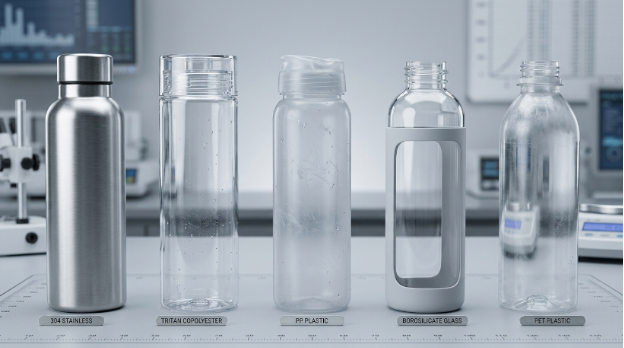
The type of material determines the leeway your bottle gives you when your habits go astray. Abuse that causes thin plastic to become cloudy in one season does not affect 304 stainless steel.
Tritan copolyester is more impact resistant than commodity resin and stays clear for a much longer period. Glass has an improved taste and does not survive drops. There are no bad materials here. Bad matches are the only ones that occur, between a material and a person's real-life trajectory.
We get more queries from buyers on the long-term side effects of drinking water in plastic bottles than on any other question we field. The truth is that it sits in the condition of the plastic, not the category.
Undamaged food grade plastic handles readily. Scratchy, hazy, heat damaged plastic acts poorly, and that shows up under a microscope long before it shows up in your mouth.
|
Material |
Typical wall spec |
Safe upper temp |
What fails first |
Realistic lifespan |
|
304 stainless, vacuum wall |
0.4 to 0.6mm inner |
212°F (100°C) |
Bleach pitting at the weld lines |
5 to 10 years |
|
Tritan copolyester |
1.8 to 2.5mm |
212°F (100°C) short dwell |
Surface crazing from abrasives |
3 to 5 years |
|
Food grade PP, code 5 |
1.5 to 2.0mm |
248°F (120°C) |
Lid warping in the dishwasher |
2 to 4 years |
|
Borosilicate glass + sleeve |
2.0 to 3.0mm |
302°F (150°C) |
Rim chipping at the neck |
4 to 8 years, if it survives drops |
|
PET, code 1 |
0.2 to 0.4mm |
122°F (50°C) |
Thread shoulder crazing |
One use only, honestly |
⚠ Warning: If the bottle looks cloudy around the neck, it has already micro cracked. Cloudy is damage to the structure, not cosmetic age.
Common Water Bottle Mistakes to Avoid!
Here are the nine most frequent ones, ranked by their actual quiet expense. Each of them appeared in warranty returns prior to the appearance in a blog post.
1. Refilling a Single-Use Bottle Until It Crazes
Thin PET bottles have been designed for one fill, not 40. As the neck is refilled, the area comes under stress, and the microcracks trap biofilm no rinse can reach. All returned samples are opened quarterly. Crazing always initiates at the thread shoulder, not at the base.
2. Leaving It Baking in a Parked Car
On a summer afternoon it is possible to reach 140°F (60°C) in the cabin in less than an hour. We are frequently asked by customers, is it safe to drink water from plastic bottles left in hot car heat, and the answer stays the same. Low grade resins leach out faster when the weather is warmer.
What heat actually does inside the bottle
-
Resin Softening: Low grade plastic becomes unstable in size above 122°F (50°C).
-
Flavor Transfer: Hot plastic produces that flat taste, sometimes described as slightly chemical, that water has when you drink out of it.
-
Bacterial Bloom: A half-filled bottle becomes a grow medium for bacteria with the help of warmth and backwash sugar.
3. Rinsing With Cold Water and Calling It Clean
A cold rinse moves any debris around, but it will not kill anything. Bacteria must be mechanically removed by scrubbing with a surfactant for 20 seconds in order for them to come off the wall. We swab returned bottles under warranty claims. Colonies are readily visible in the rinse only bottles within nine days, consistently.
The three surfaces a rinse never touches
-
Thread Valleys: The sugar residue hardens in the valley and so disrupts the seal over time.
-
Straw Bore: Film adheres to the inner wall where there is no water pressure.
-
Gasket Channel: The groove behind the silicone ring is always retaining moisture.
4. Ignoring the Gasket, the Straw, and the Threads
Three parts collapse before the body ever does. The silicone gasket grows, film forms on the straw inside bore, and the sugar residue on the threads hardens to create a seal breaking crust. Remove all detachable parts once a week. We find that gaskets alone are responsible for most smell complaints that come to our lab.
5. Trusting the Dishwasher With Every Component
Excess heat from the top warps polypropylene lids and dries silicone until it cracks along the sealing lip. Normally, bodies survive flawlessly. Lids rarely do. We test numerous wash cycles before any drinkware shipments, and lid failure tends to be first, before body failure.
6. Capping It Wet and Shutting It in a Bag
A clean bottle goes sour overnight due to sealed moisture. By morning, trapped water with leftover sugar equals biofilm, and no amount of hot water will cure it after that. Place it upside down with the cap off on a rack. Simply put, airflow does the job.
7. Pouring the Wrong Liquid Into Insulated Steel
Carbonation creates pressure in a sealed vacuum flask, and dairy stored warm for hours becomes a potential danger. Bleach and chlorine tablets permanently pit the inside weld line. Water, coffee, and tea are OK. Almost everything fizzy or dairy based is not.
Liquids we tell buyers to keep out
-
Carbonated Drinks: Pressure buildup can open caps at unanticipated moments.
-
Dairy And Smoothies: Protein residue lines the weld seam and spoils quickly.
-
Chlorine Tablets: The passive layer is destroyed with a sustained exposure.
8. Buying on Color Instead of Neck Diameter
A narrow mouth under 50mm (2 inches) keeps your hand from ever getting to the bottom. That is the greatest factor in determining whether a bottle is cleaned properly. That is why we encourage buyers to opt for wide neck tooling. Color goes away, and access remains.
9. Attacking Stains With Steel Wool or Bleach Soaks
Abrasives make scratches which remain as stain anchors in the passive chromium that covers stainless. Extended bleach soaking is more detrimental to the weld seam. Baking soda paste and a bottle brush handle nearly every one of them with no contact to the finish.
6 Tips to Fix Them, Ranked by How Fast They Work
The mistakes of water bottle ownership that involve real money are dull, humdrum ones. So are the fixes. All of these take only a few minutes, and the first one alone resolves about half of what comes back through our returns door.
1. Run the 60-Second Nightly Reset
Warm water, a drop of dish soap, one stroke of the long brush, then upside down on the rack. Cap off. There are no tricks, that is the entire procedure. Complete it at the sink while the kettle boils and it will no longer be a chore that you need to negotiate.
2. Retire Any Bottle With a Cloudy Neck
Cloudiness around the thread shoulder indicates that the polymer is past the stage of craze. None of the cleaning technologies can change that. Take it out of the rotation and use it for another purpose not intended for drinking. Tough, yes, but what is the other option?
3. Match the Bottle to Your Actual Daily Route
Do you leave the bottle sitting in a car for several hours? Is it hanging out in a gym bag, a desk drawer, or in the truck bed of a worksite? Answer truthfully and the material choice is clear.
Route-based picks that hold up
-
Car Commute: Insulated steel, because no heat gets to the water.
-
Desk And Office: Glass or Tritan, where there are minimal impacts.
-
Trail And Site: Plastic designed to be impact resistant, with a locking spout and a wide neck.
4. Replace Gaskets on a Calendar, Not a Feeling
As silicone gradually dries out, you do not realize the day the seal is broken. Set a reminder to change the ring every six months and avoid it leaking down the inside of a laptop bag. Spare gaskets are less expensive than a cup of coffee. Replacement bottles are not.
5. Break the Hot Car Habit With One Rule
The rule is simple. The bottle travels out of the vehicle with you. If you must, you can leave one in the door pocket, but definitely never drink from one that has been left in the afternoon sun. Steel bottles make this rule easy to follow.
6. Deep Clean Monthly With Acid, Not Abrasion
A two-hour soak in white vinegar and warm water, followed by a brush and a full rinse. That raises the mineral scale and the tannins of the coffee without damaging the finish. Stubborn rings are taken care of by baking soda paste. Do not even bother with the steel wool, it is a thing of the past.
⚠ Pro Tip: Put gaskets and straws into the same vinegar solution separately. They pack more residue per gram than the bottle body ever will.
Bottle Types We Test Hardest Before They Ship
Since 2006, Solamex has been producing drinkware, operating roughly 500,000 water bottles a month out of the Wuyi facility, with an in-house laboratory conducting the not so glamorous tasks of scratch tests and cavity inspections. There are different points of breakage for different builds, and we tool them each differently.
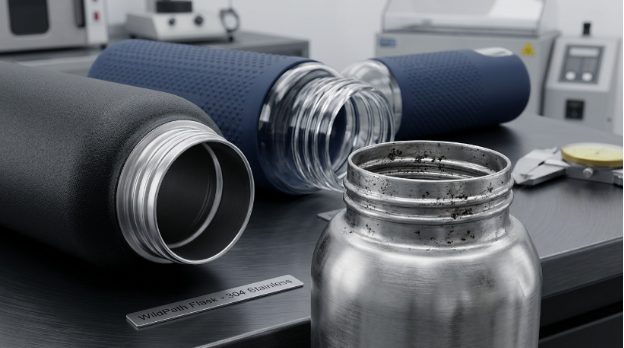
The pressure test of the seam, and not the shell, matters most, because vacuum insulated flasks such as the WildPath Flask work or do not work based on the integrity of the weld.
Thermal bottles like the Melbourne Thermo Bottle are judged on the length of time they hold temperature after 200 open close cycles, rather than on day one. Another kind of battle unfolds for sports bottles like the Santorini Ombre Sports Bottle, that of the locking spout mechanism and whether it stands up to concrete when knocked over with a full load of water in it.
I personally would opt for something a little heavier with a better lid over something lighter, every time. The problem is in the lid.
Cleaning Guides Nobody Reads Until Something Smells
Here is the thing about cleaning guides. They come in the box, they are thrown away in the garbage with the packaging, and then six weeks later somebody is asking me why their flask smells like a gym sock.
Here, standards come to the rescue. NSF/ANSI 53 sets the criteria for filtration performance claims, and FDA 21 CFR 177.1520 regulates the food contact resins that most bottle bodies are made with, while LFGB testing is required by European retailers prior to a drinkware line being put through their door.
Since 20 January 2025, Commission Regulation (EU) 2024/3190 has been in force and bans BPA in a broad variety of food contact materials, changing what half the industry can legally ship.
That does not resolve the issue if the gasket is three years old. Certification applies to the product when it is manufactured. Maintenance is your responsibility.
What Does Five Years of Bad Habits Cost You?
Bad habits amount to more than replacement bottles. They cost you the bottled water you purchase because yours has an odor, the bag you replace because it leaked, and the gasket failures that you count as whole bottle failures. Here is the math we walk retail buyers through when they ask us why quality drinkware is worth the extra money.
|
Habit |
Annual cost |
Cost over 5 years |
Cost to fix it |
|
Buying single use bottles when yours smells |
$180 to $260 |
$900 to $1,300 |
$0, wash nightly |
|
Replacing bottles annually due to neglect |
$25 to $45 |
$125 to $225 |
$0, plus 60 seconds a day |
|
Whole bottle replacement for gasket failure |
$25 to $45 |
$125 to $225 |
$4 to $8 per gasket set |
|
Leaky bag or laptop |
Widely fluctuating |
$200 to $900 |
$6, replacing the seal early |
Before you turn to that table as your gospel, one honest caveat. Ranges are based on retail prices in the USA and Canada, and UK prices are lower on single use water because tap water culture is stronger in that country. Your numbers will change. The direction of the numbers will not.
Tips for Long Term Ownership Beyond the First Year
Year one is easy. It is in year three that bottles are stashed away in cupboards, and the failing reason is almost never the bottle itself.
Using plastic on a daily basis is okay as long as it is food grade, undamaged, and kept away from heat. That is a powerful qualifier, and it is the common one that most people overlook after year two. When your bottle turns hazy, or marred with scratches, or smells a little sour, the material is telling you something is amiss.
Have a small kit in the kitchen drawer. Extra gaskets, a long bottle brush, a narrow straw brush, and baking soda. The total cost is less than $15, and it extends bottle life by years rather than months.
My former boss once claimed that a bottle you like is a bottle you clean, and all evidence points to him being right, at least in the statistics. Scarred and neglected bottles are returned by the people who find them to be ugly. Attractive bottles rarely come back at all.
People Also Ask
Does Drinking Water In Plastic Bottles Cause Cancer?
No evidence supports that today. Normal use of bottled water has not been declared cancer causing by regulators such as IARC and the FDA. Damaged, reheated, or highly reused plastic is a different element which should be avoided.
Which Water Bottle Bacteria Symptoms Nhs Pages Describe?
Nausea, cramps, and diarrhea are the most common symptoms. The signs are the same as those mentioned in NHS guidance on gastrointestinal upset after drinking from a contaminated bottle. If symptoms last longer than two days, see a doctor.
Is It Bad To Drink Out Of Plastic Water Bottles Everyday?
Intact, food grade bottles can be used daily. Issues begin when plastic becomes scratched, cloudy, and heat stressed. If the bottle is going to be in car rides during summer, change to a steel or Tritan bottle.
Which Plastic Bottles Are Safe For Drinking Water?
Resin codes 2, 4, and 5 rate safest for repeat use, along with BPA free Tritan copolyester. Do not use code 7 unless mention is made of the label Tritan. For single use only, code 1 PET suits.
How Often Should Silicone Gaskets Be Replaced?
Every six to nine months for daily drinkers. Silicone gets hard, loses its ability to rebound, and stops sealing before it wears down. Have an extra set in the drawer and change them on a regular basis.
Conclusion
Habits always defeat hardware. Replace the gasket, wipe dry the threads, and do not resupply broken plastic. Those three moves remove the majority of water bottle mistakes before they take their toll. Once you are ready, check out the drinkware pieces from Solamex Home. Your next bottle should outlive the habit that destroyed your previous one.
Deep Pots vs. Wide Pots. Which One Should You Buy for Your Cooking Style?
Titanium Cookware vs. Aluminum: Is the Lighter Option Worth the Higher Price?