Cookware Materials Explained: Stainless Steel, Copper, Ceramic & More
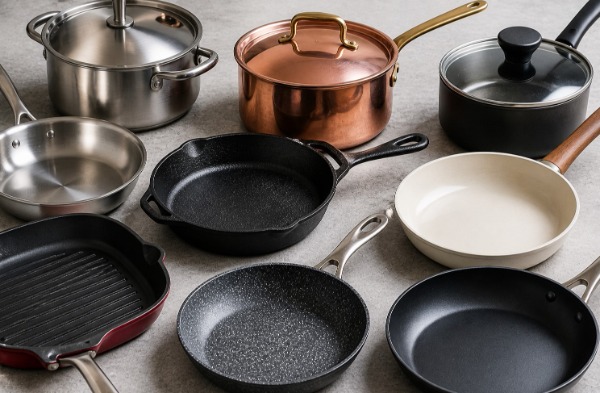
Stainless Steel
Best for: Everyday cooking, searing
Pros: Durable, non-reactive, dishwasher-safe
Cons: Food can stick, average heat conductivity
Bottom line: A versatile kitchen essential.
Copper
Best for: Precise temperature control
Pros: Excellent heat conductivity, even heating
Cons: Expensive, high maintenance
Bottom line: Ideal for experienced cooks.
Ceramic (Nonstick)
Best for: Low-fat cooking, easy cleanup
Pros: Easy to clean, less oil needed
Cons: Wears out over time, not for high heat
Bottom line: Convenient but less durable.
Cast Iron
Best for: High-heat cooking, baking
Pros: Great heat retention, long-lasting
Cons: Heavy, requires maintenance
Bottom line: A long-term investment.
Aluminum
Best for: Lightweight, budget cooking
Pros: Affordable, good heat conduction
Cons: Less durable, can react with food
Bottom line: Great for beginners.
Nonstick (Traditional)
Best for: Eggs, pancakes
Pros: Easy to use, minimal oil
Cons: Scratches easily, low heat tolerance
Bottom line: Best for delicate foods.
Carbon Steel
Best for: Searing, stir-frying
Pros: Heats quickly, very durable
Cons: Needs seasoning, can rust
Bottom line: A favorite for high-heat cooking.
Final Thoughts
No single material does it all. A good kitchen combines:
- Stainless steel for versatility
- Nonstick/ceramic for convenience
- Cast iron or carbon steel for high heat
Choose based on your cooking style, budget, and maintenance preference.
Cookware Set For Retail: Which Die-Cast Types Sell Best?
Best Drinkware for Travel, Hiking, and Outdoor Adventures