Kitchenware Distributor USA: How to Partner for Retail?

Introduction
Stock shortages constantly hurt retail store margins and ruin customer satisfaction during peak shopping seasons. Finding a reliable kitchenware distributor USA changes everything for global inventory flow because retail buyers require consistent supply chains. Quality cookware drives customer retention every single day. Let us explore actionable procurement strategies to scale your retail operations seamlessly today.
Why Partnering with a Kitchenware Distributor USA is Critical?
Partnering with a top kitchenware distributor USA remains absolutely critical for many different retail growth reasons. The reliability of the entire domestic supply chain stays vital for smooth daily retail business operations. Unpredictable shipping routes around the world force procurement managers to constantly reevaluate their current inventory strategies.
Sourcing products directly from factories abroad causes huge shipment delays and massive port congestion problems. Switching your main operations to a domestic sourcing location instantly reduces all of these major shipping risks. Retail operators will experience much quicker turnaround times and improved quality control with simplified daily communication.
During my years analyzing strict metallurgical standards for high-performance cast metal components, I learned that material integrity dictates everything. This exact same principle applies directly to the rigorous CNC machining processes used for premium die-cast aluminum cookware today.
Does your current domestic supply chain partner actually understand the technical difference between forged and cast aluminum properties?
The Impact of Localized Supply Chains on Inventory Management
Space inside the commercial warehouse absolutely never comes for free in this modern retail economy. Excess inventory wastes precious company money, and low inventory makes loyal customers angry enough to leave. Retail buyers can safely use smart Just-In-Time stock levels when they partner with localized distribution centers.
Warehouse managers complete their daily ordering according to the actual selling figures from the retail floors. As Apple CEO Tim Cook famously stated, "Inventory is fundamentally evil," which perfectly explains why retailers must minimize excess stock.
Navigating High Consumer Demand in the Cookware Sector
Consumer shopping trends remain very dynamic and change rapidly throughout the busy holiday shopping seasons. Certain cooking products go viral on social media overnight, and demand for ceramic non-stick skillets explodes. Retail store managers enjoy inventory agility as their biggest strength against massive corporate e-commerce competitors.
-
Inventory Velocity: Fast moving consumer goods must move quickly from the warehouse racks to the retail sales floor.
-
Margin Protection: Localized distribution protects company margins from sudden freight rate spikes during the peak holiday shopping seasons.
-
Demand Forecasting: Store managers use regional sales data to determine the exact ordering patterns for specialized kitchen tools.
Bridging the Gap Between Overseas Manufacturing and US Retail
Experienced wholesale distributors handle complex international freight forwarding tasks and execute the initial quality checks. Retail stores get palletized and retail-ready merchandise without handling any complicated government import paperwork whatsoever.
|
Sourcing Metric |
Domestic Distributor |
Direct Overseas |
|
Average Lead Time |
3-7 Business Days |
45-60 Business Days |
|
Minimum Order Quantity (MOQ) |
Low to Medium Flexibility |
Extremely High Volume |
|
Freight Cost Predictability |
Highly Stable |
Volatile and Fluctuating |
|
Quality Control Resolution |
Immediate Credit/Replace |
Difficult and Prolonged |
Identifying the Right Kitchenware Distributor USA for Your Business Model!
Different wholesale kitchenware suppliers possess completely different operational capabilities and specific manufacturing skill sets. Procurement directors must thoroughly audit all potential distribution partners before signing any long-term service agreements. Retailers should evaluate the warehousing facilities and the financial status of the chosen B2B cookware suppliers.
Do they focus on budget-friendly stamped aluminum, or do they offer premium die-cast cookware? Does your current supplier possess an in-house laboratory for scratch resistance testing? Otherwise, retail managers can definitely expect disastrous consumer return rates and ruined store brand reputations.
Evaluating Production Capacity and Scalability Metrics
Your chosen kitchenware distributor USA must easily expand and adapt to your aggressive retail expansion plans. A distributor supplying one small boutique may fail to handle a sudden rollout for 50 stores. Procurement teams must thoroughly research the physical size of the warehouses and outbound daily freight capacity.
The Role of OEM and Private Label Customization Services
High retail profitability usually comes directly through strategic brand differentiation and clever packaging design choices. Private label programs let retailers sell exclusive designs without investing millions of dollars in factory molds.
-
Custom Tooling: Professional engineers tweak existing CAD designs to develop highly unique and ergonomic pan handle profiles.
-
Pantone Matching: Modern factories accurately color-match the exterior silicone coating to your specific corporate brand guidelines.
-
Packaging Design: White label offerings include custom corrugated retail boxes and detailed printed instructions for consumer use.
Assessing Material Specialties: From Forged Aluminum to Cast Iron
Actual product performance ultimately depends on the specific metallurgical competency of the chosen manufacturing facility. Forged aluminum always provides superior heat distribution for high-quality non-stick cooking applications in busy kitchens.
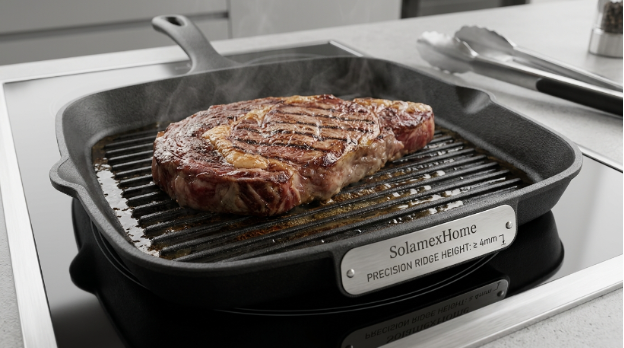
Cast iron delivers completely unmatched thermal heat retention for searing expensive meats on the stovetop. Your kitchenware distributor USA needs to completely understand the different manufacturing processes of these specific materials. Testing the thermal retention of the Jakarta Hammer Pattern Casserole proves the pure value of superior die-cast engineering.
Essential Compliance and Quality Assurance Standards in the US Market!
Strict government compliance perfectly helps your business avoid massive product recalls and expensive consumer litigation. The federal government enforces very strict rules regarding all commercial food contact surfaces and cooking materials. Ignorance of these important safety laws provides absolutely no excuse in a federal court of law. Retail buyers must require full laboratory testing documentation for all individual SKUs carried in the store.
Understanding FDA and LGA Food Safety Requirements
The Food and Drug Administration requires certain chemical tests to ensure toxic chemicals avoid the food. LGA testing represents a strict German testing standard that verifies mechanical safety and long product life.
Implementing Ceramic Scratch and Bottom Cavity Testing Protocols
Intense mechanical testing remains absolutely necessary with modern non-stick coatings before they reach the retail shelves.
-
Abrasion Resistance: Laboratory technicians put the cooking surfaces through thousands of rigorous cycles of abrasive pad testing.
-
Thermal Shock: Inspectors drop heated pans into freezing ice water to assess the resistance to structural warping.
-
Handle Adhesion: Powerful hydraulic presses use a heavy shear force to verify the mechanical safety of rivet joints.
Navigating Import Tariffs, Customs, and Logistics
Experienced distribution teams easily navigate the highly complex Harmonized Tariff Schedule to save significant company money. They sort all incoming kitchenware correctly to reduce the import tax for the retail buyers. According to McKinsey, companies that aggressively digitize supply chains boost annual earnings.
|
Certification Standard |
Regulatory Focus |
Retail Application Relevance |
|
FDA Compliance |
Food Contact Safety |
Mandatory legal requirement for all US sales. |
|
LGA Certification |
Durability & Toxicity |
Signals premium quality and competitive edge. |
|
ISO 9001:2015 |
Quality Management |
Ensures consistent factory production lines. |
|
BSCI Audit |
Social Compliance |
Validates ethical factory labor practices. |
Integrating B2B Wholesale Logistics with Retail Operations!
Seamless digital data movement between the purchasing department and the distributor prevents catastrophic out-of-stock situations. Modern API integrations and solid software systems currently form the ultimate backbone of modern supply chains. Manual purchase orders allow regular human workers to make simple mistakes and cause unnecessary shipping delays.
Streamlining Order Processing via ERP and CRM Systems
Enterprise Resource Planning systems directly link the warehouse inventory with various regional sales channels easily. As soon as the loaded pallet leaves the dock, your software system reflects the arrival projections.
Strategies for Effective Warehouse and SKU Management
Optimizing your busy receiving dock significantly speeds up the physical process of stocking the retail shelves.
-
Barcode Integration: Standardized retail UPC codes completely end manual data input errors at the busy receiving dock.
-
Cross-Docking: Urgent consumer shipments bypass the deep storage areas and go right to outbound retail delivery trucks.
-
Pallet Optimization: Standardized wooden pallet heights allow for maximum vertical storage in a high-bay storage rack system.
Consolidating Freight: FCL (Full Container Load) vs. LCL
Freight economics completely determine your final landed cost per unit inside the retail store environment. Full Container Loads provide the most cost-effective shipping rate, but they require massive upfront volume commitments. Less than Container Loads cost much more money per unit and take much longer to ship. A strong domestic partner absorbs the FCL risk so you can buy pallets at cheaper rates.
Common Procurement Challenges and Strategic Solutions!
Global supply chains frequently break down because equipment wears out and massive cargo ships hit storms. Professional business procurement managers always expect these common failures and work diligently to create solid contingency plans. Retailers need to strictly test a distributor's overall ability to deal with sudden adversity during operations.
Mitigating Supply Chain Disruptions and Delays
Smart retail buyers vary the manufacturing materials they need to avoid sudden global material shortages. If a sudden aluminum price surge happens, you should immediately push your carbon steel product lines. Retailers keep rolling sales forecasts with their distributor to ensure guaranteed production slots many months ahead.
I recently audited a massive shipment of non-stick pans where the factory spray line calibration failed entirely. A reliable domestic kitchenware distributor USA instantly quarantined the bad batch and issued a full credit the same day.
Balancing Premium Product Quality with Competitive Pricing
Retail store operators always fight hard against the constant margin squeeze from cheaper online corporate competitors. Consumers want luxury options like induction-compatible bases, but they actively refuse to pay the high luxury price.
-
Value Engineering: Clever factories make the pan wall slightly thinner and the rim stronger to maintain perceived weight.
-
Packaging Reduction: Using much less plastic wrap means lower material costs and a much eco-friendlier brand image.
-
Material Substitution: Replacing costly phenolic resin handles with heat-resistant silicone handles significantly reduces the final production costs.
Products like the Die-Cast Red With S/S Handle showcase exactly how smart factory engineering balances a premium feel with total affordability.
Maximizing Profit Margins Through Strategic Partnerships!
Your chosen kitchenware distributor USA should seamlessly act as an extension of your business development team. Transactional business relationships usually yield very average financial results for the busy retail store owners. Strategic business partnerships provide exclusive volume rebates, extra marketing support, and highly profitable exclusive product allocations.
Can your current logistics framework absorb a sudden 15% tariff hike on imported aluminum goods? Robust distribution partners like SolamexHome easily dampen these massive macroeconomic shocks because of their large operational scale.
Are you currently leveraging your supplier's massive digital asset library to boost your own online e-commerce sales?
Negotiating Volume Discounts and Flexible Payment Terms
Retail business survival completely revolves around maintaining a very healthy and positive daily cash flow. Negotiating Net-30 payment terms means retailers can quickly sell the inventory before the final payment hits. Distributors gladly extend these favorable payment terms to retail buyers who have established solid credit histories.
Co-Marketing Opportunities and White-Label Packaging
Many modern distributors possess extensive product photographs, professional video footage, and highly detailed technical marketing copy. Retail managers use these free digital resources to quickly fill their profitable online ecommerce sales channels.
-
Digital Asset Management: Accessing pre-rendered digital 3D product models drastically speeds up your new e-commerce website product launches.
-
In-Store Displays: Generous wholesale distributors co-fund custom endcap store displays to successfully promote heavy retail foot traffic.
-
Sales Training: Experienced factory representatives train your retail staff on metallurgical benefits, resulting in much higher conversions.
Leveraging Data Analytics for Better Inventory Turnover
Retail store managers must completely cease to speculate on what modern consumers actually want to buy. Store owners monitor the Point-of-Sale data to quickly determine the slow-moving and unprofitable SKUs. Managers eliminate the colors that lack profit and move the capital to the top three products.
Distributors have national-level market data to help retail managers make highly profitable decisions for their regions. As Forbes magazine published, "Data analytics is the key to unlocking hidden profitability within complex retail supply chains."
Conclusion
Establishing highly profitable global supply chains requires adequate strategic planning and careful inventory management execution daily. Finding a reliable kitchenware distributor USA truly guarantees your long-term retail success and consistent profit margins. Discover our extensive catalog at SolamexHome today to scale your inventory fast. Visit our website to secure your retail operations against market volatility.
5 Must Know FAQs!
What Are The Standard Lead Times For A Kitchenware Distributor USA?
Palletized wholesale retail deliveries generally arrive within 7 business days from the local domestic distribution centers. Fast shipping times rely heavily on smart freight consolidation and the close proximity of regional warehouses.
How Do Private Label Agreements Work With Wholesale Distributors?
Retailers choose a factory mold that already exists and then add their own unique brand logo. Buyers securely determine which specific pantone colors to use and agree to the minimum order quantities. Customizing a high-volume item like the Athens Elegant Beige Deep Frying Pan builds instant brand equity easily.
Which Certifications Should Retail Buyers Prioritize For Non-Stick Cookware?
Legally mandated FDA compliance remains absolutely required for any store selling cooking products in the country. German LGA certification offers much greater scratch resistance, high mechanical safety, and complete chemical non-toxicity guarantee. The 3-Ply White Ceramic Pan represents a perfect example of meeting stringent global non-toxicity standards correctly.
What Are The Typical MOQs Required For Custom Forging And Die-Casting?
Your kitchenware distributor USA typically requires 500 units of a particular SKU to start the custom production. This minimum quantity helps the factory cover the initial costs of setting up the custom branding.
How do distributors handle defective units and consumer returns?
Professional distributors immediately provide financial credits or ship replacement products when a product defect is confirmed. The retail partner simply provides clear photographic proof of a manufacturing defect to process the return. Reliable partners easily stand behind durable items like the Granistone Tube with hassle-free warranty fulfillment daily.
Kitchenware Wholesale Guide: Why Choose Solamex Home?
Eco-Friendly Water Bottles: The Ultimate B2B Buyer's Guide!