PTFE Vs PFOA Free: What’s The Difference?
Introduction
Just how safe is your kitchen, anyway? When navigating modern pans, thoroughly understanding the Difference between PTFE and PFOA remains absolutely vital. This comprehensive guide uncovers safety concerns, chemical blends, and alternative materials to help you make informed, safe cooking decisions every single day.
Key Takeaways
-
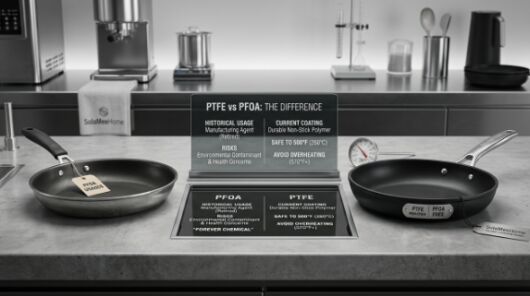
The Coating vs. The Chemical: This difference lies in the plastic polymer coating that makes the pans non-stick; the coating is known as PTFE, and the chemical surfactant that was once used to make it was known as PFOA. In 2015 major manufacturers discontinued the use of PFOA.
-
Label Reality: Be careful with the label reality: a "PFOA-free" label does not mean PTFE-free. The pan likely still contains PFAS chemicals—even newer replacement chemicals, such as GenX, are currently under active investigation for longer-term safety.
-
Heat Limits: Toxic fumes from PTFE release will come off the pan when it's hotter than 500°F (260°C).
-
Environmental Impact: PFAS are resilient and persistent, so the issue is not just about what gets on your stove, but throughout the entire manufacturing process – and this is why they are referred to as "forever chemicals."
PTFE vs PFOA: What's the Difference?
Cookware is as critical and important as ingredients when it comes to cooking, both for safety and health. You have likely purchased a non-stick pan these days and noticed it was labeled as "PFOA free." You may have said to yourself, "Well, that's one scary chemical that I'm not getting."
Then from somewhere you read that PTFE is still there, and it gets confused. I know exactly how frustrating it is when marketing labels mislead you into a false sense of security. Knowing what these products contain and what they do to your health and the environment is important in deciding to buy some of the best cookware for your kitchen.
So, what is the difference between PTFE and PFOA, and why are home chefs flocking to other materials? It's a conundrum that any health-conscious cook has to ask him or herself: Just how safe is my kitchen, anyway?
The answer is not that simple as a sticker. In this comprehensive guide, you'll learn about all of the safety concerns, chemical blends and alternatives that allow you to make more informed choices for safe and healthy cooking. The crux of cookware safety is understanding the difference between the nonstick coating and the chemical that is applied to it. Let's go over the composition, uses and risk differences in detail.
1: Chemical Comparison
|
Chemical Profile |
Structural Identity |
Molecular Bonding & Composition |
|
1. Identity of the chemical PFOA |
Perfluorooctanoic Acid (PFOA) is a perfluorinated octanoic acid, a kind of FluoroAlkanoic Acid. An environmental contaminant, a surfactant and a xenobiotic. |
Made up of perfluorinated n-heptyl tail group. Contains a carboxylic acid head group. The head group is polar; the fluorocarbon tail is polar, non-polar and lipophobic. |
|
2. The chemical composition of PTFE |
PTFE is a synthesized fluoropolymer which is comprised of tetrafluorolefin (TFE). It smooths the surface to the point that there are hardly any available spots to hold onto, making food glide off with ease. |
Chains of carbon atoms, with a pair of fluorine atoms attached to each carbon atom. The carbon-fluorine bonds are extremely strong, resulting in a stable compound that is not reactive. Normally resistant to heat and chemical reactions. |
2. The Association Of PFOA With Historical Industrial Applications
PFOA has been known to exist since the 1940s and historically it was used in a wide range of industries prior to understanding the health effects.
Previous Applications
-
For repellency to water and oil in fabrics, in leather and in waxed papers.
-
Used in the manufacture of insulators for electric wires and outdoor clothing.
-
Widely used in the production of aqueous film-forming foams (AFFs) for firefighting.
3. PTFE In Non-Stick Cookware
The most popular use of PTFE is for non-stick cookware, such as a Non-Stick Cookware Series, transforming the way people cook by minimizing the need for excess oil and butter. In my own testing, I completely ruined several cheap pans before realizing precise temperature control was the absolute key.
Kitchen Benefits
-
Water-repellent and oil-repellent and best used as a surface for frying pans or baking trays.
-
Permits some of the application of fats for cooking, entailing some of the healthier cooking practices.
-
Large food releases and extremely easy to clean up vs raw metals.
4. PFOA And Severely Compromised Health
PFAS' resilience and persistence in the environment also pose significant health risks. Due to its negative effects, it is not allowed to be used to manufacture modern cookware. According to federal health databases, these effects are systemic.
Documented Health Risks
-
Present in the blood of over 98% of the general population within the United States of America. The data unequivocally shows widespread contamination.
-
They are associated with high cholesterol, high uric acid and chronic kidney disease.
-
Listed by the International Agency for Research on Cancer as "carcinogenic to humans."
5. Processing Technology Of PTFE
To mitigate PTFE coating dangers, it is important to know about the limits of PTFE's stability when over temperatures but PTEF is well known for its non-stick properties and is safe for general use. Furthermore, managing heat remains your primary defense mechanism.
Temperature Thresholds
-
Remains stable and safe up to 500°F (260°C).
-
Starts to become undesirable when heated above 570°F (300°C).
-
When degraded, releases toxic fumes into the air, some people experience flu like symptoms for a short time. This happens because the polymer chains literally break apart under severe thermal stress.
6. "Forever Chemical" Environmental Problem
PFOA and PTFE are part of a family of chemicals called PFAS (Per- and polyfluorocarbons). The "forever chemicals" is the label they have received for their ability to persist indefinitely in the environment. They are "forever" literally because they do not naturally biodegrade over time.
Ecological Impact
-
Bio-concentrate in local water and soil in the vicinity of production facilities.
-
Persistent in the environment, and maintain a food chain.
-
These systems are specifically expensive and technical in nature and are used by cities to remove.
7. Repairing Genx And Newer Replacements
The industry replaced PFOAs with other PFAS compounds when it ceased using PFOAs. Hexafluoropropylene oxide dimer acid is the trade name, known as GenX, to fill the manufacturing void.
Replacement Risks
-
May have similar health impacts as PFOA, but data on humans is limited.
-
Found in drinking water in homes surrounding manufacturing facilities.
-
Is ongoing chemical cousin game, replacing a regulated chemical with an unregulated chemical.
Safe PTFE Cooking Guidelines
For those who prefer to use pans coated with PTFE, like a Die Cast Alu Series, there needs to be a plan to reduce the risk of thermal degradation.
Safety Protocols
-
1. Never preheat a pan without oil or food; add small amounts of food or a splash of oil 1st.
-
2. Use low or medium heat on stove-top.
-
3. Use an exhaust fan or open window to help ventilate your kitchen thoroughly.
Chemical Safety And Modern Manufacturing Processes
To understand what does PFOA free mean, it is important to examine the process for making non-stick coatings. The PFOA free cookware meaning is simply defined as cookware manufactured without this specific surfactant. The production of such materials includes extremely complicated chemical reactions which create specific problems in respect to environmental safety and industrial hygiene.
Historically, PFOA was manufactured using various production methods including electrochemical fluorination (ECF) and telomerization, which led to high concentrations in the environment and consumer products. The PFOA used as a dispersant is a kind of "chemical glue" that was used to suspend slippery PTFE in water and spray it evenly on to the bare metal of a pan.
The PTFE without surfactant (PFOA) would clump and would not adhere to any cookware. Without it, the coating fails entirely.
However, after spraying a high-temperature sintering process is performed (baking at approximately 800°F). This scientific fiction would supposedly etch out the PFOA in theory, leaving just the PTFE coating on the pan you purchase at the grocery store. But during their manufacture, application and baking, vast quantities of fluorinated compounds are released into the air and wastewater.
That meant that the greatest risk from PFOA was not the finished product on your kitchen's shelf, but rather the environmentally devastating contamination taking place at the factory level. Most people don't realize the manufacturer actually vents these invisible gases directly outside during the baking phase.
Both ECF and PFOA are no longer used to make cookware now in the United States and Europe, but the underlying method of attaching the coating of PTFE to the metal hasn't changed. Today a different surfactant has been employed to enable the same dispersion effect (such as "GenX" or "PFBS"). The latter are new chemicals designed to be less persistent in the human body than PFOA but with the same extreme persistence in the environment.
They will not decompose in the environment. Therefore, the production of PTFE pans still remains a significant pathway for the release of PFAS into the environment worldwide and chemical safety demands that one thinks beyond the final consumer product and its full industrial supply chain.
The Big Regulatory Shift – The Environmental Laws
In the early 2000s, independent studies and high-profile lawsuits connected PFOA to some serious health effects, such as developmental toxicity and kidney cancer, and as a result, public pressure triggered a massive regulatory shift. These chemicals were becoming more and more ubiquitous in the world and due to their persistence, concentrations were accumulating, which led to intervention by key worldwide environmental organizations.
To address these growing health issues, the Environmental Protection Agency (EPA) launched the PFOA Stewardship Program in 2006. This program compelled the 8 major chemical companies to agree to phase out the discharge of PFOA emissions and use of PFOA in consumer products. The cookware industry got the switch over complete by 2013 to 2015.
This concerted phase-out shall have reduced some of the near-term potential hazards posed by older non-stick cookware products – hence the emphasis today on "PFOA-free" and its bold print on every box! It became a "must have" manufacturing standard that just turned into an overnight marketing signal. Imagine a local bakery being forced to replace all their legacy baking sheets overnight to comply.
But regulations are constantly changing. EPA established new human health advisory values for GenX and other PFAS alternatives in drinking water in 2022 and tightened the HAs in 2024. They also want to add older chemicals such as PFOA and PFOS to the Superfund list of hazardous chemicals.
Although these regulatory changes are significant progress towards improving the health of people exposed to PFAS, a large gap remains: more than 12,000 different compounds fall under the category of PFAS, and only a small number of them are subject to regulation. Critics might say these regulations are too strict for manufacturers, but the resulting health data proves otherwise.
Is PTFE Safe? What The Real Story Is On Teflon Flu And Overheating
Many wonder, is PTFE safe? For cookware, safety is a critical factor when considering whether to use PTFE because of the temperature restrictions. PTFE non-stick cookware is considered to be safe for using in everyday home cooking up to temperatures of 500°F (260°C). The risk from the solid polymer to humans is very low, according to agencies such as the American Cancer Society. "Heat management is everything," notes leading chemical safety experts.
The potential for hazard only occurs if the pan becomes too hot. PTFE is beginning to decompose at temperatures greater than 500°F. If you have ever accidentally left a pan on the burner, you will have noticed a slight smoky residue and an unusual sharp smell – that is when the fumes begin to be released.
Breathing such polluting fumes could result in a condition known as polymer fume fever, or "Teflon flu." The symptoms of this condition appear to be temporary, flu-like, with severe heads, chills, and body aches. The PTFE pan emits these exact fumes rapidly.
Additionally, pet birds have very delicate respiratory systems and are susceptible to the effects of these fumes within minutes of exposure and can die. So, the question of real safety is not related, in and of itself, to the PTFE, it's a question of usage.
If you don't look after a pan for a few minutes, most contemporary kitchen stovetops, particularly gas cooktops or strong induction burners, can quickly get over 500°F when on high heat and the pan is empty. It is negligence, not the stable coating, which accumulates the acute risk. Never leave an empty non-stick pan on a high-heat burner.
But Being "PFOA-Free" Does Not Mean PFA-Free
Even if you watch what you put on the stove and never overheat a pan, the general problem of which chemicals stick around is a problem. PTFE itself contains PFCs since they are used with great frequency in the process of making PTFE. PFOA has been in the news worldwide since the infamous DuPont contamination case in the US State of West Virginia was the topic of the film Dark Waters.
It was only chapter 1, though. Alternate compounds used by the manufacturers may be similarly persistent, but less thoroughly studied. GenX, a product marketed by DuPont (now Chemours) has been detected in drinking water in residential areas. Independent laboratory and Environmental Working Group (EWG) studies indicate these newer chemicals are also bioaccumulative.
Children exposed to a variety of PFAS have been associated with reduced vaccine response and alteration in liver enzymes. Recent studies show up to a 74.3% retention rate of certain micro-compounds in local ecosystems over a decade.
As a user it's extremely important: A "PFOA-free" stamp doesn't indicate if other fluorinated chemicals are used in the pan. It basically means that one, and only one, out of thousands of chemicals was removed. The only way to avoid PFAS completely is to select cookware that is specifically stated as being PFAS-free or fluorine free or to opt for different classes of cookware materials. I call this the "Total Material Avoidance Protocol."
Finding The Right PFOA And PTFE-Free Cookware
Yes, there are 100% PFAS-free options in the kitchen. Such choices are made due to awareness of the environment and individual well-being and thus enhance the daily value of information in decision making.
If you're ready to take the leap away from PTFE altogether, there are a number of great non-toxic cookware alternatives and non-stick coating types available:
Material Alternatives
|
Material |
Non-Stick Mechanism |
Durability |
Best Used For |
|
Ceramic-coated |
Silica-based (sand) sol-gel layer |
1-2 years (as coating wears away) |
Eggs, pancakes, low-heat cooking |
|
Stainless steel |
Requires oil and temperature control |
Lifetime (coating improves with use) |
Searing meats, acidic sauces, de-glazing |
|
Cast iron |
Polymerized oil layer |
Lifetime (coating improves with age) |
Stir-frying, professional kitchen use |
|
Carbon steel |
Polymerized oil layer |
Lifetime |
Stir-frying and cooking in the pro kitchen |
The Ceramic Cookware Collection
When evaluating Teflon vs ceramic safety, Ceramic Cookware is one of the most sought-after alternatives to a non-stick product, if taking a step away from them is what you want. When heated to extremely high temperatures, Chelsea Frye Ceramic Cookware will not emit toxic vapors like other non-stick pots and pans on the market. They consist of natural minerals and are free of PFOA and PTFE as well as, in most cases, heavy metals such as cadmium, lead.
Pros and Cons
-
Pros: 100% PFAS-free, entirely safe at higher temperatures.
-
Cons: Non-stick properties degrade much faster.
The down side is that ceramic's nonstick properties fade quickly when compared with PTFE. However, many users have very visible stickiness after 2 months of use, daily cooking, after 6 months and 12 months. You're giving up durability for transparency. Honestly, scrubbing a stuck egg off a worn ceramic pan is a total pain.
Traditional Metals
The most inert of which is Stainless Steel Cookware or cast iron. They conduct heat exceptionally well, and possess very versatile properties, so searing, braising, steaming and slow cooking will all have no effect on the coatings. Requiring slightly more technique than other skillets and a little bit of cooking fat to avoid sticking, they are unmatched in their durability, making them a safe addition to any healthy kitchen, especially precision-crafted lines like the Forge Alu Series.
People Also Ask
Is It Possible To Cook With PTFE Coated Cookware?
Yes, it is safe for daily use in the home if used within safe temperature. Never heat the pan beyond 500°F (260°C) and discard the unit if the coating scratches, peels or flakes off.
What Is Cookware That's PTFE And PFOA Free?
In the case of "PFOA-free" these are just labels saying that the particular PFC, Perfluorooctanoic Acid, has not been used in the manufacture of the pan. If it is a traditional non-stick pan, it likely still has a coating of PTFE, and was produced with another PFAS chemical. If it is truly fluoropolymer free, then it should state so: "PTFE-free" or "PFAS-free."
What Are The Signs That A Non Stick Pan Is Bad For You?
If smoke is rising from a pan without any oil or fat in it or a sharp and 'burnt plastic' smell is present the oil stove temperature has risen beyond the safe limits and is emitting harmful fumes. Also, when you see that your pan has a deep scratch, peeling or large areas where the non-stick coating is gone, it's time to replace the pan as it will heat unevenly and bring out the base materials. Use a standard infrared surface thermometer to verify your exact stovetop heat.
So, Why Was PFOA Eliminated?
The reason PFOA is being phased out is that it is a molecule which is so persistent in the environment that it poses serious health effects. It was proven to bioaccumulate in the human body and the environment, as well as being scientifically observed to be associated with chronic kidney disease and thyroid problems and some forms of cancer.
What About The PTFE's Environmental Safety?
Although pots and pans made of solid PTFE are not chemically active themselves, the eventual impact of PTFE can be a concern for the environment. It is one of the "forever chemicals," which are not biodegradable. The production methods for making and using PTFE release a variety of PFAS chemicals into local water systems and the air and thus help spread them worldwide to the environment.
Remember: Heat control dictates safety. Never let a dry pan begin to smoke.
Conclusion
Used cookware directly impacts your health because it cooks your daily food. Grasping the reality of PTFE vs PFOA empowers you to choose healthier alternatives, actively moving away from harmful forever chemicals. Cultivate a truly safe, healthy kitchen today. Please visit SolaMexHome to explore reliable, innovative cookware options carefully designed for your family's long-term safety.
Now that you know the chemical risks, audit your kitchen cabinets today and discard any deeply scratched non-stick pans.
What Cookware Do Professional Chefs Use At Home?
Minimalist Cookware For Small Apartments! A Pro Guide