The Benefits of Using a Reusable Water Bottle! The Ultimate Guide!
Introduction
Most people purchase three bad bottles before they purchase their first good one. We see that error in our returns bin every quarter. A good reusable water bottle is cheaper than the failures it displaces, and it tastes much better.
What You Actually Need to Know
-
Myth: all stainless steel is the same. Fact: only 304 and 316 grades are resistant against pitting.
-
Myth: dishwashers are bad for insulation. Fact: the lid gasket is the first thing to fail when it is heated repeatedly.
-
Myth: the larger the bottle, the better. Fact: a 24 oz bottle is carried; a 40 oz bottle is abandoned.
-
Myth: mold begins in the body. Fact: it begins in the sleeve of the straw.
-
Myth: leaks arrive at random. Fact: hinge failures tend to occur within 90 days.
Bottom Line Up Front
-
Two store bottles a day will cost approximately $900 a year.
-
A good bottle runs $15 to $40, once.
-
Ice will stay in vacuum steel for 18 to 24 hours.
-
The weight of glass is 40% more than steel of the same capacity.
-
Replacement filters cost approximately $6 to $12 every two months.
Materials That Survive Real Use, and the Ones That Quietly Don't
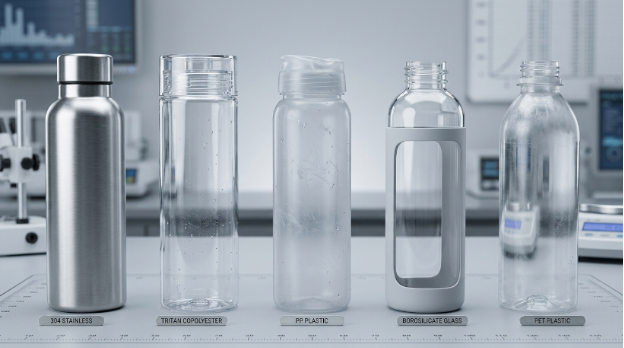
Food grade 304 stainless steel survives real use best, borosilicate glass tastes cleanest, and certified Tritan plastic carries lightest. Single wall metal and unmarked 201 grade steel are the ones that quietly fail, usually around the threads and usually within months of daily use.
So, this is not something from a brochure. We test drinkware for scratch, drop, and salt each week. Downstream, the type of material determines it all: flavor, weight, durability, and if it still seals after a year in the backpack.
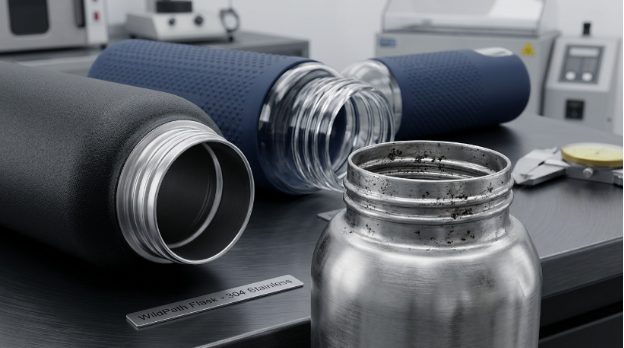
Most buyers will want a food grade 304 stainless steel reusable water bottle, and it deserves to be the top choice. Neutral flavor. True to its name, difficult to kill. That is where a double wall construction like WildPath Flask comes in, as it will shrug off the scuffs that a car cupholder deals out on a daily basis, thanks to its powder finish.
The purist's answer is glass. A glass reusable water bottle ranks as the cleanest of all the items tested, and it stays transparent about its own state of cleanliness. But it breaks. Yes, glass does need help, and that help comes in the form of silicone sleeves.
Then there is plastic. A certified Tritan copolyester plastic reusable water bottle is extremely light when you are already carrying a laptop, and that lightweight reusable water bottle material is not appreciated as much as people think. The chemical questions also focus on reusable water bottle plastic constructions, so certification is not an option to skip here.
|
Material |
Weight (24 oz, empty) |
Lifespan |
Flavor transfer |
Price |
|
Silicone rubber |
Light |
Approximately two years |
Good transfer |
$1.50 to $3.50 each in bulk |
|
304 stainless, vacuum |
12 to 14 oz |
8 to 12 years |
None |
$22 to $40 |
|
Single wall metal |
6 to 8 oz |
6 to 10 years |
None |
$12 to $20 |
|
Borosilicate glass |
16 to 19 oz |
3 to 6 years |
None |
$18 to $30 |
|
Tritan plastic |
5 to 7 oz |
2 to 4 years |
Mild after year two |
$8 to $16 |
With the banning of bisphenol A in all food packaging in Commission Regulation (EU) 2024/3190, the entire category was pushed toward bisphenol free water bottles and the correct certification of BPA free drink bottles. Check the base for LFGB or FDA compliance. If they cannot show that, we do not quote them, and you should not buy them.
⚠ WARNING: Unmarked stainless bottles from anonymous sellers frequently contain 201 grade steel. Around the threads it pits within months, and these pits are where the bacteria live.
How Do You Pick the Right Size Before You Buy?
Most adults should buy 24 oz. Desk workers do well under 18 ounces, commuters sit in the 24-ounce to 32-ounce bracket, and hikers or job site crews are the only people who carry over 32 ounces without complaint. Weight determines habit, not capacity.
Choose the size you will actually be carrying, since an 18 ounce to 24-ounce reusable water bottle will be refilled twice a day, and a 40 oz monster will virtually sit on the kitchen counter by week three.
An under 18-ounce reusable water bottle, or a reusable 16 oz water bottle, is a good choice for the desk worker whose refill is 20 steps away. Commuters hit the sweet spot in the 24-ounce to 32-ounce reusable water bottle bracket. Hikers and gym buffs are the only people who do not find an over 32-ounce reusable water bottle bulky.
|
Capacity |
Best for |
Refills per day |
Portability |
|
8 to 16 oz |
Desk, toddlers, purses |
4 to 6 |
Excellent |
|
500 ml (17 oz) |
Commuting, school |
3 to 4 |
Excellent |
|
24 to 32 oz |
Office, gym, driving |
Two |
Good |
|
40 oz and up |
Hiking, job sites |
One |
Heavy once it is filled |
A reusable 8 oz water bottle is ludicrous until you have been shopping for a preschooler. For this reason, the default quantity that covers the vast majority of consumers across Europe and the UK is that 500 ml reusable water bottle.
Benefits of Using a Reusable Water Bottle!
1. You Simply Drink More, Without Trying Harder
Water that is available and within easy reach means water intake increases. Warehouse work crews increased from two glasses a day to almost two liters after switching. Nothing on earth changed in regard to willpower. On the bench there stood a bottle, ready, cold, and filled. This is because convenience does the job.
2. The Money Stops Leaking Out Weekly
Savings are never a preserve of willpower, and the money stops leaking out the week you stop buying the same water twice a day. In most of the stores in the US and UK, bottled water costs $1.20 to $2.50 per unit. Two a day would be close to $900 a year. A solid bottle will cost you $15 to $40 one time. Payback is as quick as within one month, hence the finance teams keep them free.
3. Plastic Waste Drops the Same Week You Switch
You will also discover that your plastic waste decreases the week you make the switch. With a single switch, these 156+ single use bottles are reduced to zero in your footprint.
That figure comes from the average consumption of the beverage, not from marketing. Only a small number of areas have recycling rates for PET higher than 30%, which means that it is better not to source the bottle at all.
Where the reduction actually shows up
-
Household Bin Volume: Significantly reduced after 14 days.
-
Car Footwells: Accumulation in the car's footwells stops altogether.
-
Office Kitchens: Case deliveries are reduced by 50% or more.
4. Temperature Control Changes What You Reach For
Double wall 304 keeps ice stored for 18 to 24 hours, and hot tea at 140 degrees Fahrenheit for eight hours. Cold water just drifts into the body quicker. Plastic bottles filled with warm water do not. This is the one reason an insulated reusable water bottle earns its extra weight.
5. You Control the Chemistry, Not a Bottling Plant
There is no bisphenol controversy with food grade 304 stainless, borosilicate glass, and certified Tritan materials. The body, the seal, and the frequency with which the entire mess is properly scrubbed are controlled by you. None of those three controls exist in store bought water, and neither does that visibility.
6. Taste Improves, Which Sounds Trivial Until You Try It
Taste is not a trivial sense. Flavor gets into the plastic in a hot car within hours, and most people just quietly say goodbye to drinking. Glass and steel remain neutral over the course of years. Water that tastes better is water that is finished, and water that is finished is all it is about.
7. Fewer Spills, Fewer Ruined Bags, Fewer Angry Mornings
Leaking lids and ruined laptop bags are more expensive than the bottle ever was. All the caps we certify are leak tested and will withstand the pressure for 24 hours upside down in our laboratory. That test will continuously be failed by cheap flip tops, at some point around the hinge, typically within 90 days of being used daily.
The three lid styles we trust
-
Threaded Screw Cap: Takes longer to open and is never leaky.
-
Locking Flip Straw Water Bottle Lid: Fast, with gasket cleaning once a week.
-
Bayonet Lock Spout: The best compromise for a one-handed drinking solution while driving.
8. A Bottle You Like Becomes a Habit You Keep
Oddly enough, after affection comes habit. Whether buyers choose their color reusable water bottle, a green reusable water bottle or a pink reusable water bottle, makes a huge difference every day. Those who go with pink or deep green reuse daily, and those who go with whatever bottle is over there leave it in the drawer. If color sells, color continues to sell.
Types We See Come Back for Repair, and What Fails First
This is the bit competitors skip, as most of them have never opened up a returned bottle. We have opened thousands.
-
Insulated Steel Flasks: The vacuum seal is lost at the base weld, which is usually following a hard drop onto concrete. After condensation has formed on the outside, there is no turning back from the loss of the insulation. No repair exists.
-
Straw Reusable Water Bottle Designs: Silicone tubing will turn color after about four months. In the cheap versions it cracks at the straw neck, in the vicinity of the bite valve. Replaceable straw kits are a cheap solution, so make sure to purchase a straw reusable water bottle that provides them.
-
Filtered Water Bottles Reusable Bottle Builds: An area with hard water uses up the cartridges more quickly than indicated by the packaging. You start losing flow before you lose taste, and that is your real replacement signal.
-
Sports Reusable Water Bottle Models: Squeeze valves last longer than anything, and the cap is easily misplaced. That is why Santorini Ombre Sports Bottle comes with a tethered cap.
-
Glass Water Bottle With Silicone Sleeve UK Style: It withstands waist height drops with ease. Counter to tile is another thing entirely. A sleeve is used for cushion; it does not defy physics.
Taking reusable metal water bottles as a whole, there is more failure in the lid than in the bottle's body. One thing should dictate your shopping, and that is it. A beautiful body with a $0.30 cap is a bottle with a 12-month life wearing the disguise of a 10-year lifetime.
Care Tips for the First 90 Days
Rinse and air dry inverted after each use. That single habit is the sole cause of most of what we see in the returns bin. You can tell a specialist in his own right by the splitting he does, the glass bottle which is kept in his office and the steel one kept there in the truck.
Remove the gasket from the lid weekly. Each lid that is worth owning has a removable gasket. Clean it in warm soapy water separately, and then dry it up before resetting it. There the mold lives, far before the body is aware of a thing.
Single wall bottles and Tritan with a dishwasher designation can be used in the dishwasher. Vacuum insulated bodies are more of a close judgment call, as the steel body is fine, but the lid seal gets hard when subjected to repeated 160 degrees Fahrenheit cycles and its lifespan decreases. Melbourne Thermo Bottle can be put in the top rack of the washing machine without a fuss, although the cap is hand washed.
⚠ Pro Tip: Coffee stains in steel can be stubborn, and they can be removed overnight with two tablespoons of baking soda and hot water. Skip bleach entirely. Stainless means passive, and chlorine attacks the passive layer, which is what makes stainless stainless.
If you are in a hard water area, descale monthly. White vinegar for 30 minutes and a thorough rinse. If the water supplied from your tap is soft, should you be concerned? Honestly, probably not. If your kettle can be scaled, then use that as your signal, and work with it.
What Does a Reusable Water Bottle Actually Cost Over 5 Years?
A high-quality bottle will cost between $15 and $40 at the time of purchase and approximately $8 in accessories over five years, which puts the total cost in the region of $48. The habit of consuming two bottles daily at $1.50 a bottle puts the total cost at approximately $5,475. The difference is not insignificant. It pays for a holiday.
|
Spending path |
Year 1 |
Year 5 total |
|
Two store bottles daily |
$1,095 |
$5,475 |
|
Quality bottle with refills |
$32 |
$48 |
|
Filtered bottle with cartridges |
$58 |
$274 |
|
Cheap bottle replaced yearly |
$14 |
$70 |
Look for a reusable water bottle sale in January, and again in late August, when back to school supplies go on sale. There is a reusable water bottle under $4 that can be purchased, but it is a freebie, not a purchase. Realistically, the best water bottle under 10 dollars territory is single wall plastic, good for the locker at the gym, but not for a decade.
There are constant questions about reusable water bottle bulk pricing from bulk buyers. Reusable plastic water bottles in water bottles plastic 40 pack configurations ship flat to be displayed in retail stores, and they become cost effective at volume, with pricing less than $3 per bottle.
Buying Guides for Kids, Sports, and Air Travel
-
Choosing for Children Without Guessing
There are three key components to look for in a toddler reusable water bottle: a spout the toddler can use independently, a body that the toddler can hold when it is filled, and a size that is less than 12 oz so it does not get heavy. These kids' water bottles reusable bottle designs are sold in packs of two, and they help make weekdays less crazy.
The best childrens water bottles are similar to the patterns of school age children. Mouths wide enough that a dishwasher will really clean them. Printed names, not stickered ones.
A blue reusable water bottle or a purple reusable water bottle is easy to find in a crowded cafeteria, whereas a black reusable water bottle is not. Small things like that save big money on replacements. Bali Kids Bottle covers all three of those points in one build.
-
Gym, Trail, and Job Site
Sports bottles are given a rough ride. Find a reusable water bottle body that is light and has a large base, as narrow bottles have a tendency to spill in car cupholders. Do not let the appearance fool you, a cute reusable water bottle is in no way too fragile for the gym.
-
Can You Bring a Reusable Water Bottle on a Plane?
Yes, empty bottles do pass security in all major jurisdictions, as the restriction is not on the container but on the contents. Empty it completely before screening and refill at the fountain air side. Here is why a reusable water bottle for travel usually comes in steel: it is insulated and will not deform with cabin pressure changes.
Here is one honest downside, prior to clicking the big blue button. With its 32 oz insulated capacity loaded, it comes in at just about 2.5 lbs, and that is definitely exhausting during a day's hike, or on a commute when it is heaped with gear. In case ounces are an issue to you, adapt a plastic body and accept a shorter life. This is a legitimate trade.
A quick search for a reusable water bottle nearby will most likely yield own brand bottles from the supermarket. They are acceptable. In no way do they match the standards a serious brand reusable water bottle maintains, and you can tell after about 18 months.
People Also Ask
What Is The Safest Reusable Water Bottle Material?
Food grade 304 stainless steel is the safest reusable water bottle material in terms of overall quality. Borosilicate glass is as pure, although it is less break proof. Both obviate the bisphenol issues associated with the previous generation of polycarbonates.
Are There Real Dangers Of Stainless Steel Water Bottles?
Not from a certified food grade one. The risk is associated with the use of unmarked alloys and the utilizing of cheap lead solder in no name imports. Prior to any purchase, please review if it is compliant with LFGB, FDA, or EN 12875.
How Often Should A Water Bottle Be Washed?
Daily, without exception. Wash and air dry after each use, and also remove and thoroughly clean the lid gasket every week. Mold starts to grow in the seal before there is any obvious indication.
Do Filtered Bottles Cost More Over Time?
Yes, a reusable water bottle with filter runs $36 to $72 a year for cartridges. Unless the tap water is actually bad, it would not make sense to spend money on this when you can fill up from untreated sources regularly.
Which Capacity Suits Most Adults Daily?
For adults, a figure of about 24 oz is right. Two refills are sufficient to reach the usual standard of intake, since larger bottles are likely to get abandoned on kitchen counters.
Conclusion
When it is bought right, it is bought once, and that is the end of it. Steel for all your everyday needs, glass for taste, plastic for weight. A Universal Water Bottle will last longer than the water drinking routine you have developed around it. When you are ready, check out Solamex Home's drinkware selection. After six months, water will no longer be a thing you worry about.
What Is a Grill Pan and What Is It Good For? A Guide to Indoor Grilling!
Deep Pots vs. Wide Pots. Which One Should You Buy for Your Cooking Style?