Choosing Between a Wok and a Frying Pan — Practical Advice for Home Cooks

Every home cook eventually reaches that pivotal moment when they're standing in the cookware aisle, wondering which piece of equipment will transform their kitchen adventures. The decision between a wok and frying pan isn't merely about preference; it's about understanding how each tool can elevate your cooking game in completely different ways.
Throughout my years of experimenting in various kitchens—from cramped studio apartments to spacious family homes—I've discovered that this choice often defines not just what you cook, but how you approach food itself. The curved elegance of a wok whispers promises of high-heat stir-fries and authentic Asian flavors, while the familiar flat surface of a frying pan offers comfort and versatility that feels like home.
What Makes Each Pan Unique: Design and Construction
Wok: The Ancient Powerhouse
Picture this: over 2,000 years ago, Chinese cooks discovered that a simple curved metal bowl could revolutionize cooking. The wok's distinctive round-bottomed design wasn't born from artistic inspiration—it emerged from pure necessity and brilliant engineering.
The secret lies in its geometry. That dramatic curve creates what experienced chefs call "heat zones"—the scorching bottom for searing, the sloped sides for tossing and mixing, and the cooler upper rim for keeping cooked ingredients warm. Traditional carbon steel woks develop a natural non-stick patina over time, creating what the Chinese call "wok hei"—the breath of the wok that imparts a unique smoky flavor impossible to replicate with other cookware.
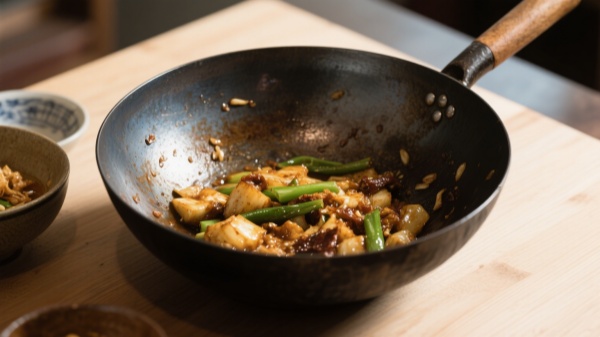
Modern woks come in various materials—stainless steel for durability, cast iron for heat retention, and even non-stick versions for convenience. However, purists argue that nothing matches the performance of traditional carbon steel, which heats quickly, responds instantly to temperature changes, and develops character with each use.
Frying Pan: The Western Kitchen Staple
The frying pan's flat-bottomed design might seem mundane compared to the wok's dramatic curves, but this simplicity masks sophisticated engineering. That level surface ensures even contact between food and heat source—crucial for achieving perfect browning and caramelization.
Modern frying pans showcase incredible material innovation. Hard-anodized aluminum distributes heat evenly, while ceramic-titanium coatings promise both non-stick convenience and durability. The handles have evolved too, with heat-resistant materials and ergonomic designs that reduce wrist strain during lengthy cooking sessions.
Performance Comparison: Where Each Excels
Heat Distribution and Cooking Speed
Here's where things get fascinating. A wok's curved bottom concentrates intense heat at a single point, creating temperatures that can exceed 1,200°F in restaurant settings. This extreme heat enables the lightning-fast cooking that defines authentic stir-frying—vegetables stay crisp, proteins sear instantly, and flavors lock in rather than leaching out.
Frying pans take a different approach entirely. Their flat surface spreads heat evenly across the entire cooking area, maintaining consistent temperatures that excel for browning meats, cooking eggs, or creating perfect pancakes. While they might not achieve the wok's scorching peaks, they offer something equally valuable: predictability.
| Aspect | Wok | Frying Pan |
|---|---|---|
| Heat Distribution | Concentrated at bottom, multiple zones | Even across entire surface |
| Maximum Temperature | Extremely high (1000°F+) | Moderate to high (400-500°F) |
| Heat Response | Instant changes | Gradual, controlled changes |
| Energy Efficiency | High (with gas), Limited (with electric) | Excellent with all heat sources |
Cooking Technique Mastery
Mastering a wok feels like learning to conduct an orchestra. The constant motion—tossing, flipping, stirring—requires rhythm and timing. You're not just cooking; you're choreographing a dance between ingredients, heat, and momentum. The learning curve is steep, but the rewards include textures and flavors that simply can't be achieved through other methods.
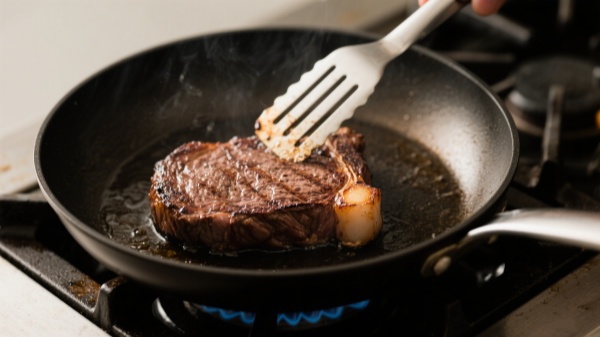
Frying pan mastery, by contrast, focuses on patience and precision. Perfect caramelization requires understanding exactly when to flip that steak, how to regulate heat for delicate fish fillets, or the precise moment when onions transform from sharp to sweet. It's less theatrical than wok cooking, but equally demanding in its own subtle way.
Best Cooking Methods for Each Pan
Wok's Versatile Applications
The wok's reputation as a one-trick pony couldn't be further from the truth. Yes, it excels at stir-frying, but its capabilities extend far beyond that single technique.
Stir-frying mastery begins with understanding that authentic wok cooking happens in stages. Aromatics hit the oil first, filling the kitchen with fragrance. Proteins follow, searing in seconds before moving to cooler zones. Vegetables enter in order of cooking time, each addition precisely timed to achieve that perfect balance of tender and crisp.
Deep-frying in a wok (also can use deep fry pan) uses significantly less oil than traditional deep fryers, thanks to its tapered shape. The narrow bottom requires less oil to achieve proper depth, while the flared sides provide extra space for food to float without overcrowding.
Wok Advantages
- Lightning-fast cooking preserves nutrients
- Superior "wok hei" flavor development
- Excellent for steaming with bamboo inserts
- Energy efficient with gas burners
- Naturally develops non-stick properties
Wok Challenges
- Steep learning curve for proper technique
- Requires high-output burner for best results
- Round bottom unstable on some stoves
- Regular seasoning maintenance needed
- Can be overwhelming for beginners
Frying Pan's Specialized Strengths
While woks dance with fire, frying pans excel at controlled, methodical cooking. Their flat surface creates maximum contact between food and heat, making them unbeatable for achieving golden-brown crusts and even cooking.
Searing and browning reach perfection in frying pans. That Maillard reaction—the chemical process that creates complex flavors and appealing colors—depends on consistent heat and intimate contact between protein and pan surface. Woks simply can't replicate this level of even browning across larger pieces of food.
Sauce making becomes intuitive with frying pans. The flat bottom allows for easy whisking, while the relatively low sides provide excellent visibility and access. Deglazing—scraping up those flavorful browned bits—works best with the even surface area that frying pans provide.
When to Choose Which: Situation-Specific Guide
Kitchen Setup Considerations
Your kitchen itself often dictates which pan will serve you better. Gas burners and woks share a natural affinity—the flames wrap around the curved bottom, creating the intense, even heating that wok cooking demands. Electric and induction cooktops, however, favor the flat-bottomed frying pan's complete surface contact.
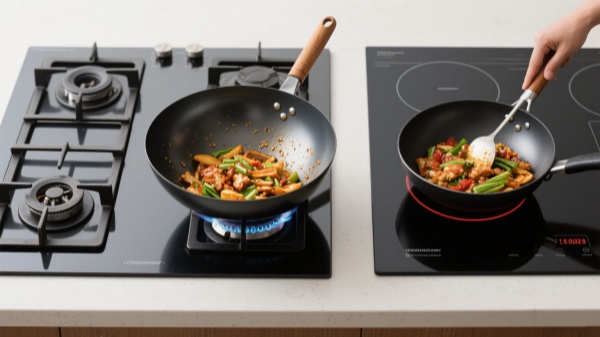
Space considerations matter more than many realize. Woks require generous clearance for proper tossing technique, along with powerful ventilation to handle the inevitable smoke and steam. Frying pans work comfortably in tighter spaces and generate less dramatic cooking byproducts.
Cooking Style and Preferences
Your culinary ambitions should heavily influence this choice. Aspiring masters of Asian cuisine will find a wok indispensable—not just for stir-fries, but for developing the techniques and understanding that make authentic dishes possible. The wok teaches you to cook with urgency and precision, skills that transform your entire approach to food.
Those drawn to European techniques, comfort foods, or methodical cooking will discover that frying pans offer superior control and predictability. They excel at the slow, steady processes that develop deep flavors—caramelizing onions, building complex sauces, or achieving restaurant-quality sears on steaks.
Frequently Asked Questions About Woks vs Frying Pans
Practical Ownership Guide
Maintenance and Care
Here's where the rubber meets the road in practical ownership. A well-maintained wok becomes a family heirloom, developing character and improved performance with age. The seasoning process—building up layers of polymerized oil—transforms the surface into something better than any manufactured non-stick coating.
Caring for a wok means never using soap (it strips the seasoning), drying immediately after cleaning, and applying a thin oil layer before storage. This might sound intimidating, but it becomes second nature quickly, and the reward is cookware that improves with every use.
Frying pan maintenance varies dramatically by type. Non-stick pans require gentle handling and replacement every few years, while stainless steel versions can last decades with proper care. Cast iron frying pans fall somewhere between, requiring seasoning like woks but offering more forgiveness in daily use.
Investment and Longevity
Quality woks represent exceptional value. A restaurant-grade carbon steel wok costs less than many premium frying pans but can outlast multiple generations of cooks. Professional kitchens often use the same woks for decades, with older, well-seasoned examples being prized above new ones.
Frying pan longevity depends heavily on construction and coating. Budget non-stick pans might last 1-2 years, while professional-grade stainless steel or carbon steel pans can serve for decades. The key is matching your investment to your cooking frequency and style.
The Verdict: Making Your Decision
Quick Decision Framework
Let's cut through the complexity with five essential questions that will guide your choice:
- What's your primary cooking style? Asian-inspired, high-heat cooking favors woks; Western techniques and comfort foods lean toward frying pans.
- How much time do you spend cooking? Daily cooks benefit from wok versatility; occasional cooks might prefer frying pan simplicity.
- What's your heat source? Gas burners work brilliantly with woks; electric and induction favor frying pans.
- How's your ventilation? Strong ventilation handles wok cooking; limited ventilation suggests frying pan practicality.
- What's your skill level? Confident cooks enjoy wok challenges; beginners often prefer frying pan predictability.
Can You Have Both?
The honest answer? Most serious home cooks eventually acquire both. They serve different purposes and excel in complementary areas. A 12-inch frying pan handles daily tasks—eggs, burgers, quick sautés—while a 14-inch wok tackles special occasions, large batches, and experimental cooking.
Conclusion: Your Culinary Journey Awaits
The choice between a wok and frying pan ultimately reflects your culinary aspirations and cooking reality. Neither is universally superior—they're different tools designed for different approaches to food.
If you're drawn to the dynamic energy of high-heat cooking, love experimenting with Asian flavors, and enjoy the challenge of mastering traditional techniques, a wok will transform your kitchen adventures. Its learning curve is steep, but the journey teaches skills that elevate everything you cook.
If you prefer controlled, methodical cooking that builds flavors slowly, appreciate predictable results, and want cookware that simplifies rather than challenges, a quality frying pan will serve as your trustworthy kitchen companion for years to come.
Remember, the best cookware is the one that inspires you to cook more often. Whether you choose the theatrical flair of wok cooking or the steady reliability of frying pan mastery, you're investing in more than kitchen equipment—you're choosing a path toward better meals, improved skills, and deeper connection with the ancient art of cooking.
What resonates with your cooking style? The high-heat excitement of wok cooking, or the steady mastery of frying pan techniques? Whatever you choose, you're about to embark on a delicious journey that will transform not just your meals, but your entire relationship with food.

Solamex — Wholesale Pots and Pans Expertise
Solamex offers wholesale pots and pans, combining durable materials, precise craftsmanship, and flexible product customization. From premium stainless steel to advanced nonstick lines, our catalog is built for both retail distribution and demanding commercial kitchens — ensuring consistency in performance and presentation.
Flat-Bottom Wok vs Round Wok: Which Shape Should You Buy?
Beyond the Shape: How Woks and Frying Pans Actually Cook Differently