Commercial Cookware: The Ultimate Guide for Professional Kitchens
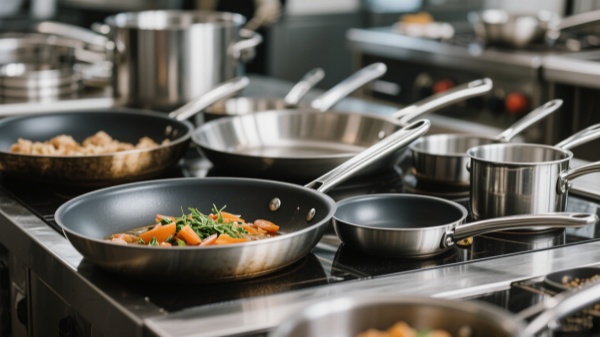
Table of Contents
- What Is Commercial Cookware?
- Why Choose Commercial-Grade over Home-Grade Cookware?
- How to Select the Best Commercial Cookware
- What Are the Most Common Commercial Cookware Materials?
- How to Maintain & Care for Commercial Cookware
- Common Mistakes When Using Commercial Cookware
- Pro Tips for Maximizing Performance & Longevity
- Frequently Asked Questions
Commercial cookware consists of heavy-duty pots, pans, and specialty vessels engineered for high-volume, high-heat use in restaurants and institutional kitchens. Made of robust materials like stainless steel, carbon steel, and aluminum, it delivers consistent heat distribution, superior durability, and easy maintenance for demanding foodservice environments.
What Is Commercial Cookware?
Commercial cookware refers to professional-grade pots, pans, and specialized cooking vessels specifically designed to withstand the rigorous demands of restaurant kitchens, catering operations, and institutional foodservice facilities. Unlike home kitchen equipment, commercial cookware is built with thicker gauge metals, reinforced handles, and specialized construction to endure constant heavy use and higher temperatures.
The design specifications of commercial cookware address critical needs in professional settings:
- Large Batch Sizes: Designed for cooking larger quantities, with capacities often double or triple consumer equivalents
- Continuous Duty Cycles: Engineered for 8-16 hours of daily use without warping or degradation
- High Temperature Tolerance: Handles commercial induction ranges (up to 650°F/343°C) and open-flame burners
- Stackability & Space Efficiency: Designed for vertical storage in crowded commercial kitchens
Why Choose Commercial-Grade over Home-Grade Cookware?
Selecting professional-grade cookware for your restaurant or kitchen might have a higher upfront cost, but the long-term benefits significantly outweigh the initial investment. Here's why industry professionals swear by commercial cookware:
| Feature | Commercial-Grade | Home-Grade |
|---|---|---|
| Material Thickness | 2.5-5mm thick (resists warping) | 1-2.5mm thin (prone to warping) |
| NSF Certification | Industry standard for safety & sanitation | Generally not certified |
| Handle Strength | Reinforced rivets, stay-cool designs | Smaller handles, lower heat resistance |
| Durability | 10-20+ years under heavy use | 3-7 years in professional settings |
| Heat Responsiveness | Excellent heat retention & distribution | Uneven heat, frequent hot spots |
The cost-per-use equation tells the real story: while consumer cookware may cost $50-$150 per piece, commercial-grade ranges from $90-$400. However, with professional equipment lasting 4x longer in demanding environments, you're actually saving money over time while preventing cookware failures during service.
How to Select the Best Commercial Cookware
Choosing the right commercial cookware requires careful consideration of your specific operational needs. Ask yourself these key questions before investing:
- What types of food do we primarily prepare?
- What are our peak-time batch sizes?
- What heat sources do we use (gas, induction, electric)?
- How much space do we have for storage?
For Restaurant Kitchens
Restaurant operators should prioritize:
- Volume Requirements: Select pan depths and capacities based on your menu's highest-turnover items
- Heat Compatibility: Induction-compatible options are essential for modern kitchens (magnetic properties)
- Workflow Integration: Long handle designs, helper handles, and stackability save time during busy services
- Menu Alignment: Stock pots for soups/stews, sauté pans for proteins, rondeau pans for braising
For Retail Stores
Retailers should consider:

- Customer Profiles: Distinguish between home chefs wanting commercial durability and actual professional users
- Display Impact: Feature pieces with beautiful finishes (polished copper, brushed stainless)
- Entry-Level Options: Offer quality mid-range lines with good warranties (2-5 years)
- Retail-Friendly Packaging: Protective packaging that survives customer handling
What Are the Most Common Commercial Cookware Materials?
Commercial kitchens rely on specialized materials designed to withstand demanding conditions. Here's a comparison of the top materials:
| Material | Best Uses | Heat Conductivity | Maintenance Level | Price Range |
|---|---|---|---|---|
| Stainless Steel | Sauces, stocks, braising | Medium (with aluminum core) | Low (dishwasher safe) | $$-$$$ |
| Die Cast Aluminum | Griddles, stock pots | Excellent | Medium (avoid abrasives) | $-$$ |
| Carbon Steel | Sauté pans, woks | Very Good | High (requires seasoning) | $$ |
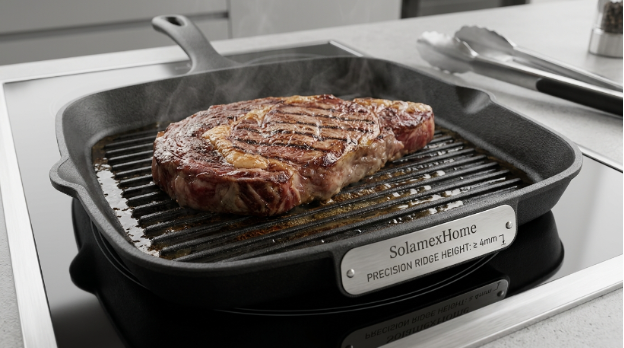
| Cast Iron | Grilling, searing, baking | Excellent retention | High (requires seasoning) | $-$$ |
| Copper | Precision cooking, confectionery | Superb | Very High (polishing) | $$$$ |
Material Deep Dives:
- Multi-Ply Stainless Steel: Industry standard with aluminum or copper cores that won't react to acidic foods
- Hard-Anodized Aluminum: Twice as hard as stainless steel, found in high-end commercial fry pans
- Carbon Steel: The professional chef's secret weapon - lighter than cast iron but with similar seasoning properties
- Enameled Cast Iron: Provides the heat retention of cast iron without seasoning requirements, perfect for presentation dishes
- Ceramic Coating: An inorganic, non-metallic layer composed primarily of silicon dioxide (SiO₂) and titanium dioxide (TiO₂), chemically bonded to form a non-toxic (PFAS/PFOA-free), hydrophobic surface. Ideal for ceramic stock pots and fry pans due to its non-reactive nature with acidic ingredients and effortless food release

How to Maintain & Care for Commercial Cookware
Proper maintenance significantly extends the lifespan and performance of commercial cookware. Follow this professional maintenance protocol:
Daily Cleaning:
- Use mild, NSF-approved detergents - avoid bleach at all costs
- Soak baked-on food instead of aggressive scrubbing
- For stainless steel, use specialized cleaners monthly to restore shine
- Dry thoroughly before storage - air dry rack recommended
Seasoning Carbon Steel & Cast Iron:
- Clean pan thoroughly and dry completely
- Apply thin layer of high-smoke-point oil (canola, grapeseed)
- Heat in 400°F (200°C) oven for 1 hour upside-down
- Repeat 2-3 times for optimal seasoning build-up
Proper Storage: Use protective pan protectors between stacked cookware, hang heavier pieces to avoid dents, and store lids separately to prevent scratches. Never stack hot cookware as it can cause thermal warping.
Common Mistakes When Using Commercial Cookware
Adding food to cold pans causes sticking and uneven cooking.
Fix: Heat empty pan over medium heat for 2-3 minutes until water droplets sizzle and dance
Scratches the coating, reducing nonstick properties and contaminating food.
Fix: Use wood, silicone, or nylon utensils exclusively
Adding cold liquids to searing hot pans causes warping.
Fix: Deglaze with room temperature liquids or reduce heat first
Lowers temperature dramatically, causing steaming instead of searing.
Fix: Cook in batches leaving 30-40% surface area exposed
Carbon steel and cast iron lose effectiveness without proper care.
Fix: Reseason monthly in commercial kitchens or after scrubbing
Pro Tips for Maximizing Performance & Longevity
- Preheat shells before adding fats - When using stainless steel, heat the pan first, then add oil and let it heat until shimmering
- Rotate pans regularly - Swap positions on burners to ensure even wear across your inventory
- Use liners for acidic foods - Simmer tomatoes, wine, and citrus in stainless steel or enamel-lined pans only
- Monitor handle rivets - Tighten any loose rivets immediately to prevent catastrophic failures during service
- Map your cooking surface - Identify hot spots on your burners with flour or oil tests and position pans accordingly
- Invest in infrared thermometer - Track pan temperatures precisely for consistent results
- Establish dedicated cleaning protocols - Train every kitchen staff member on proper cleaning techniques
For sauté pans showing seasoning loss, create a "burn-in" schedule: heat pan with 1/8" layer of coarse salt until smoking, then scrub with paper towels to restore surfaces. For stainless steel with stubborn stains, simmer equal parts vinegar and water for 10-15 minutes before scrubbing with baking soda paste.
Frequently Asked Questions
Most modern commercial cookware is induction compatible, especially stainless steel and carbon steel options. Look for NSF-certified induction-ready labels or test with a magnet - if it sticks firmly to the base, it's induction compatible.
For sauté applications, many professional chefs prefer carbon steel for its lightweight maneuverability and excellent searing capabilities. For sauce work and versatile applications, stainless steel dominates. The majority of commercial kitchens maintain both types.
With proper care, commercial cookware should last 8-15 years in restaurant environments. Higher-end tri-ply stainless steel and hard-anodized aluminum can often exceed 15 years of service life. Proper maintenance can double the lifespan compared to neglected pieces.
Absolutely! Many home chefs invest in commercial cookware for superior performance. However, consider weight and size - commercial pieces are heavier and may not fit residential stovetops. Professional-grade cookware provides an excellent upgrade for serious home cooks.
Commercial cookware features extended handles to provide better leverage and heat protection when maneuvering heavy, food-filled pans in high-traffic environments. The longer reach also allows safer positioning over intense heat sources.
The Ultimate Guide to Non Toxic Pans: From Materials to Maintenance
Commercial Cookware 2025: Complete Guide to Materials, Selection & Maintenance