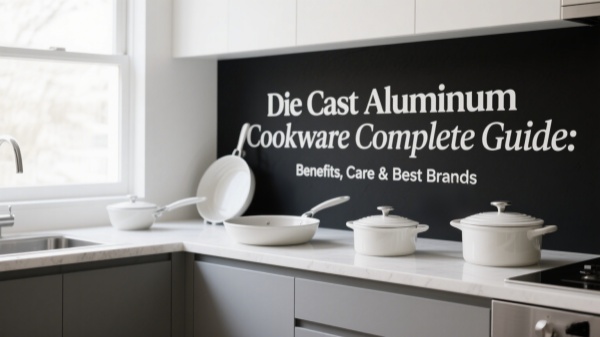
Die Cast Aluminum Cookware Complete Guide: Benefits, Care & Best Brands
Die cast aluminum cookware heats 40% faster than stainless steel and is 30% lighter than cast iron, making it ideal for quick, even cooking.
Discover why professional chefs choose die cast aluminum, how to care for it, and which brands offer the best value and performance.
Why Die Cast Aluminum Dominates Modern Kitchens
Die cast aluminum cookware has surged in popularity due to its lightweight design, superior heat distribution, and eco-friendly attributes. With thermal conductivity at 205 W/(m/K)—far exceeding stainless steel (16 W/(m/K))—these pans deliver uniform heating for perfect searing, sautéing, and baking.
Ideal for delicate recipes requiring precise temperature control
Anodized or ceramic coatings protect against acidic foods
Affordable compared to stainless steel while offering comparable longevity with proper care
FDA and ROHS ensure safety, debunking myths linking aluminum to health risks
Die cast aluminum cookware is created by forcing molten aluminum into steel molds under high pressure. This manufacturing process results in seamless construction with no joints or weak points, and thicker walls (typically 2.5-4mm) compared to traditional aluminum cookware.
Buying Guide: Matching Cookware to Your Needs
Opt for 99% pure aluminum or 6061 alloy for optimal conductivity and resistance to warping
Minimum 3mm for even heat retention; All-Clad's D3 series uses 3-ply bonded construction
Choose PFOA-free ceramic (GreenPan) or diamond-reinforced nonstick (Swiss Diamond)
Ergonomic, heat-resistant handles (e.g., Solamex's stay-cool stainless steel)
Scenario-Based Recommendations
Daily Home Use
Tramontina's 14-piece ceramic nonstick set combines affordability with versatility. Ideal for everyday cooking with even heat distribution and easy cleanup.
Professional Use
Calphalon's Signature Hard-Anodized Nonstick line, trusted by chefs for its 1.5x durable coating. Withstands high heat and frequent use in commercial kitchens.
Maintenance & Longevity Guide
Heat Management
Preheat on medium heat to prevent discoloration; avoid abrupt temperature changes. Aluminum heats up faster than a microwave pizza, so keep an eye on the temperature.
Cleaning Routine
Daily: Use non-abrasive sponges and mild soap. Stubborn Stains: Soak in warm water with baking soda or use a bamboo scraper. Dry thoroughly and store in a cool, dry place to prevent oxidation.
Coating Care
Initial Seasoning: Rub with oil and heat gently to enhance nonstick properties. Repair: Minor scratches can be buffed with beeswax; replace pans with peeling coatings immediately.
Troubleshooting Guide
| Issue | Cause | Solution |
|---|---|---|
| Sticking Food | Coating wear or poor preheating | Replace pan or use silicone utensils; try Tramontina's ceramic-coated pans |
| Bottom Warping | Excessive heat or low-quality alloy | Use induction-compatible pans with thick bases |
| Metallic Odor | Acidic food contact | Boil lemon water for 10 minutes; avoid storing acidic foods long-term |
| Scratches | Metal utensils | Opt for wooden or silicone utensils to avoid scratching the surface |
Aluminum vs. Stainless Steel
| Aspect | Die Cast Aluminum | Stainless Steel |
|---|---|---|
| Heat Speed | 30% faster heating; ideal for stir-fries | Slower but better for slow-cooking sauces |
| Durability | 5–8 years with proper care; recyclable | Longer lifespan (10+ years) but harder to clean |
| Cost | 60–70% cheaper upfront; requires coating replacement | Higher initial cost; better resale value |
| Health Safety | FDA-approved; minimal aluminum leaching | Non-reactive; suitable for acidic recipes |
| Weight | Lightweight (30% lighter than cast iron) | Heavier, requires more effort to handle |
Aluminum is naturally occurring and extracted from bauxite ore, while stainless steel is man-made by combining iron with chromium, nickel, and other elements. Aluminum is non-magnetic, making it ideal for specific applications, while stainless steel's magnetic properties vary by composition.
Expert Q&A
Look for magnetic bases, such as Tramontina's induction-ready sets with tri-ply construction. Standard die cast aluminum won't work on induction, but many brands now offer induction-compatible versions with magnetic stainless steel bases.
Avoid metal on ceramic coatings (e.g., Solamex). For hard-anodized pans like Calphalon's Signature, metal utensils are safe. Opt for wooden or silicone utensils to avoid scratching the surface.
Every 2–3 years with regular use. Consider Swiss Diamond's diamond-reinforced coatings for extended lifespan. The aluminum base itself can last decades, but non-stick coatings typically wear out sooner.
Top Brands & Product Reviews
Conclusion: Elevate Your Cooking Experience
Die cast aluminum cookware combines efficiency, affordability, and sustainability—perfect for home cooks and professionals alike. By selecting brands like All-Clad for precision, Calphalon for durability, or Solamex for eco-friendliness, you can unlock culinary excellence.
Aluminum is highly recyclable, making die cast cookware an environmentally friendly choice. Its production requires only 5% of the energy needed to produce new aluminum, significantly reducing carbon footprint.
Best Die Cast Aluminum Cookware in 2025: Features, Upkeep & Brand Picks
Die Cast Aluminum Cookware: Ultimate Guide to Benefits, Care & Top Brands