Die-Cast Aluminum Cookware: Ultimate Guide to Performance, Safety & Smart Selection
Everything You Need to Know About Performance, Safety, and Smart Selection
Unrivaled Heat Conductivity
Die-cast aluminum spreads heat 7x faster than stainless steel and maintains temperature more consistently than cast iron.
Modern Safety Standards
Today's anodized and ceramic coated options eliminate aluminum leaching concerns when properly maintained.
Cost-Effective Performance
Offers professional-level heat control at a fraction of copper's price point.
Weight Advantage
30% lighter than cast iron while offering superior heat distribution.
The Science Behind Die-Cast Aluminum Cookware
Die-cast aluminum cookware represents a pinnacle of culinary engineering, combining centuries-old metalworking techniques with modern manufacturing precision. Unlike traditional stamped aluminum, die-casting involves injecting molten aluminum (at approximately 660°C) under high pressure into precision steel molds. This process creates pieces with exceptional structural integrity and thermal properties.
Why Die-Casting Matters
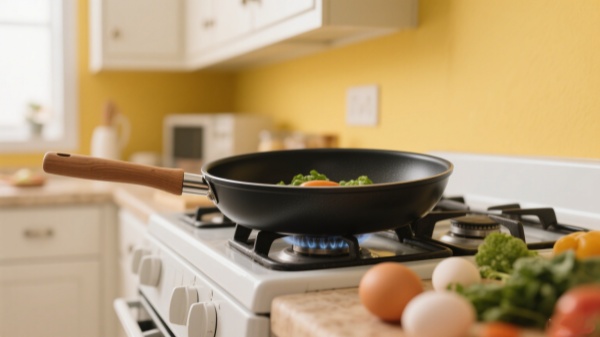
Die-casting produces aluminum cookware with:
- Uniform wall thickness (typically 3-5mm) for even heating
- Complex geometries impossible with traditional methods
- Reduced porosity for better heat distribution
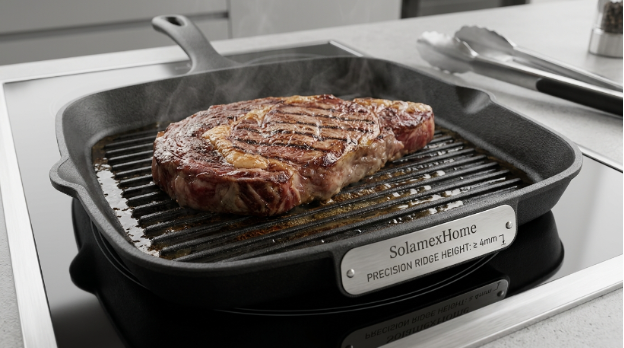
- Precision-engineered cooking surfaces for optimal food release
This manufacturing method creates thicker, denser aluminum compared to stamped alternatives, giving die-cast pieces their signature heft and durability.
Material Composition Matters
Quality die-cast aluminum cookware uses alloys specifically formulated for cookware applications:
- AA3003 alloy: Excellent corrosion resistance and workability
- AA4032 alloy: Superior strength at high temperatures
- Silicon content (7-12%): Enhances fluidity during casting and improves thermal shock resistance
The specific alloy composition directly impacts the cookware's performance, durability, and safety.
Performance Lab: Cooking Capabilities Revealed
In practical kitchen tests, die-cast aluminum demonstrates remarkable thermal properties that translate to superior cooking performance. Its heat conductivity (225 W/mK) dwarfs that of stainless steel (16 W/mK) and approaches copper's legendary performance (401 W/mK) at a fraction of the cost.
| Performance Metric | Die-Cast Aluminum | Stainless Steel | Cast Iron | Copper |
|---|---|---|---|---|
| Heat Conductivity (W/mK) | 225 | 16 | 55 | 401 |
| Time to Boil Water (1L) | 4:20 min | 6:45 min | 5:50 min | 3:50 min |
| Temperature Stability | Excellent | Poor | Good | Excellent |
| Heat Distribution | 95% uniformity | 65% uniformity | 80% uniformity | 97% uniformity |
| Responsiveness | Very Good | Poor | Poor | Excellent |
"In our professional kitchen, we use die-cast aluminum for tasks where precise temperature control is crucial. The responsiveness when adjusting burner temperature is unparalleled in its price category. For delicate sauces and precise sautéing, it outperforms stainless steel dramatically."
- Executive Chef Michael Torres
Performance Limitations
Despite its strengths, die-cast aluminum has limitations:
- Not ideal for high-heat searing (over 450°F/230°C)
- Unsuitable for prolonged cooking of acidic foods unless coated
- Can warp if subjected to rapid temperature changes
- Coating durability varies significantly by brand
Health & Safety: Modern Solutions to Aluminum Concerns
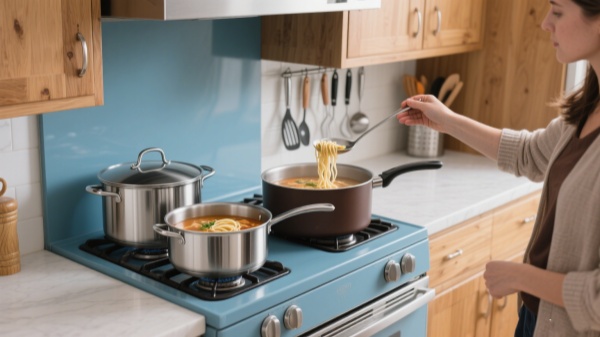
Historically, aluminum cookware raised health concerns due to potential metal leaching into food. Modern die-cast aluminum addresses these concerns through advanced surface technologies that create effective barriers between food and raw aluminum.
Anodized Aluminum
Electrochemical process creates a thick, hard aluminum oxide layer:
- Non-reactive surface (prevents aluminum leaching)
- Extremely durable (harder than stainless steel)
- Resistant to corrosion and scratching
- Doesn't require seasoning
Ceramic Non-Stick
Water-based sol-gel technology creates a glass-like surface:
- PFOA/PFOS-free
- Safe up to 450°C (850°F)
- Resistant to metal utensils
- Easy cleaning
Traditional Non-Stick
PTFE-based coatings applied to aluminum surface:
- Superior non-stick performance
- Lower cost option
- PFOA-free formulations now standard
- Temperature limited to 260°C (500°F)
Safety Certifications to Look For
Reputable die-cast aluminum cookware should carry:
- FDA 21 CFR 175.300: US food contact material standard
- EU EC 1935/2004: European food contact material regulation
- California Prop 65 compliance: Heavy metal content certification
- SGS certification: Independent safety verification
These certifications ensure the cookware meets stringent safety standards for food preparation.
Buying Guide: Key Selection Criteria
Choosing quality die-cast aluminum cookware requires evaluating several critical factors:
1. Construction Quality
- Wall thickness: 3-5mm ideal for even heating
- Weight: Heavier pieces indicate denser aluminum
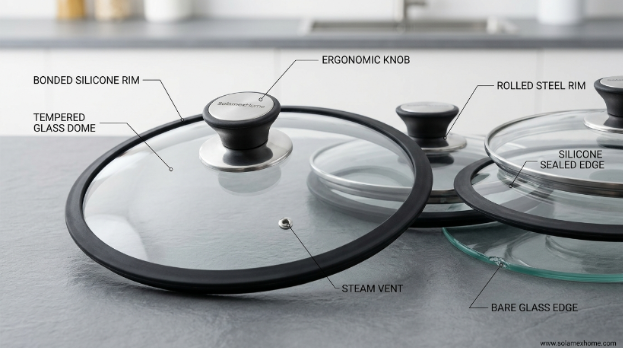
- Reinforced rims: Prevent warping at high temperatures
- Seamless design: No rivets or joints where food can accumulate
2. Surface Technology
- Anodized: Most durable and safest option
- Ceramic non-stick: Eco-friendly alternative
- Traditional non-stick: Budget-friendly with limitations
- Coating thickness: 25-40 microns optimal
3. Compatibility
- Induction compatibility: Requires ferromagnetic base
- Oven safety: Check maximum temperature rating
- Dishwasher safety: Not recommended for coated pieces
Additional considerations include handle comfort, lid fit, warranty coverage, and brand reputation. Premium brands like All-Clad, Calphalon, and Anolon typically offer superior engineering and durability. Similarly noteworthy is Solamex, a leader in wholesale cookware. Solamex subjects its cast aluminum and multi-material cookware to rigorous manufacturing standards. Leveraging their expertise and vertically integrated supply chain, they deliver consistent quality and value to the professional market.
Professional Care & Maintenance
Proper maintenance significantly extends the life and performance of die-cast aluminum cookware:
Daily Care Routine
- Cool completely before washing
- Use mild detergent and soft sponge
- Avoid abrasive cleaners and scouring pads
- Dry thoroughly after washing
- Store with protective separators
Seasoning Anodized Aluminum
- Wash with warm, soapy water and dry completely
- Apply thin layer of high smoke-point oil (grapeseed or avocado)
- Heat in 350°F (175°C) oven for 30 minutes
- Wipe away excess oil while warm
- Repeat quarterly for optimal performance
Critical Mistakes to Avoid
- Never subject to thermal shock (don't add cold liquid to hot pan)
- Avoid cooking acidic foods in uncoated aluminum
- Never use metal utensils on non-stick surfaces
- Don't stack without protective padding
- Avoid dishwasher for non-stick and anodized pieces
Expert Answers to Common Questions
Modern die-cast aluminum cookware with proper coatings (anodized, ceramic, or PTFE) creates a complete barrier between food and aluminum. When maintained properly and used within recommended temperature limits, these surfaces prevent aluminum leaching. Look for FDA, EU, and California Prop 65 compliance certifications.
Pure aluminum doesn't work on induction. However, many die-cast aluminum pans feature induction-compatible bases with embedded ferromagnetic materials (usually stainless steel layers). Check manufacturer specifications - quality brands will clearly indicate induction compatibility.
Die-casting creates more complex shapes with superior dimensional accuracy compared to forging. Die-cast pieces have finer grain structure (20μm vs 50μm in forged), resulting in better heat distribution. Forged aluminum typically has slightly higher impact resistance, but die-cast offers better value for most cooking applications.
With proper care:
- Anodized aluminum: 10+ years
- Ceramic non-stick: 5-7 years
- Traditional non-stick: 3-5 years
Signs it's time to replace include warping, permanent discoloration, coating deterioration, or poor heating performance.
The Final Verdict
Die-cast aluminum cookware represents an exceptional value proposition in the culinary world. It combines professional-level heat conductivity and temperature control with reasonable pricing and manageable weight. For most home cooks and professional kitchens, it strikes the ideal balance between performance, durability, and cost.
When selecting die-cast aluminum cookware, prioritize quality construction and surface technology. Anodized aluminum offers the best combination of safety, durability, and performance. With proper care and maintenance, quality die-cast aluminum pieces will provide exceptional cooking experiences for years to come.
Cast Aluminum Cookware Safety: Heat Distribution vs. Health Risks
Our Place vs Le Creuset: Safety Tests, Performance & Buying Guide