Flat-Bottom Wok vs Round Wok: Which Shape Should You Buy?
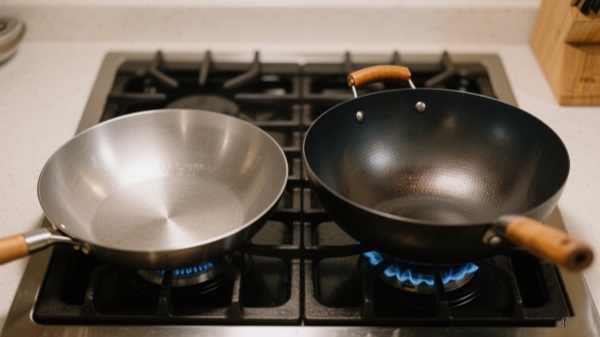
If you cook on a modern home stove (gas, electric or induction), a flat-bottom wok is usually the most practical choice—stable, compatible with cooktops, and easy to season. A round-bottom wok can deliver stronger heat concentration and better tossing dynamics on high-output burners, but it needs a wok ring or dedicated burner to shine.
This guide compares shape, stove compatibility, cooking uses, maintenance, and buying tips for both consumers and B2B/pro buyers. Short answers are placed at the top of each section to help skim readers and search features.
Quick Comparison — at a Glance
| Feature | Flat-bottom wok | Round-bottom wok |
|---|---|---|
| Stability | Sits flat — most stable on home ranges | Needs ring or special burner to avoid wobbling |
| Stove compatibility | Works on gas, electric, and induction | Best on high-output gas burners or outdoor burners |
| Heat concentration | Good surface contact; less dramatic center heat | Concentrates heat in the center and up the sides |
| Tossing & technique | Good for stir-fry; easier for beginners | Superior for rapid tosses and traditional wok technique |
| Maintenance | Easier to season and keep on flat stovetops | Seasoning similar but handling may be trickier on flat ranges |
| Best for | Home kitchens, induction, electric ranges | Restaurants and high-BTU home burners |
Use the table above if you want a rapid decision. For most home cooks, the flat-bottom option reduces hassle and gives broad compatibility.
How Each Shape Affects Heat and Technique
Short answer: Shape changes how heat is held and where you place food — round woks funnel heat to the center and up the sides for rapid searing and tosses, while flat woks give more direct contact with a cooktop and better stability for consistent home use.
Round-bottom: heat concentration and tossing
Round woks focus intense heat at the center, which is perfect for very fast sears and for quick tossing techniques that move ingredients through the hot zone. The steep sides also let you toss food with momentum rather than sliding it on a flat surface. That said, that center heat depends on a burner that can deliver a compact, powerful flame.

Practical reality: many Western kitchens lack the high-BTU, bowl-shaped burners used in professional Asian kitchens, so a round wok often requires a ring or a dedicated outdoor/portable burner to work at its best.[1]
Flat-bottom: contact heat and stability
Short answer: Flat bottoms sit directly on the cooktop and deliver steady, even contact — this makes them much better for electric and induction cooktops and simpler to use for most home cooks.
The flatter base spreads heat across the bottom surface rather than concentrating it at a single point. That gives more predictable temperature control when searing or frying on modern stoves. It also reduces wobble and makes it easier to move the wok between stove and counter safely.[2]
Stove Compatibility and Practical Constraints
Short answer: Match wok shape to your stove: flat for electric/induction and most home gas ranges; round only if you have a high-output (BTU) ring burner or plan to use a wok ring and accept the extra setup.
Here’s a short checklist to test fitment at home:
- Measure burner diameter vs wok base. If the wok’s base is tiny compared with the burner, heating will be uneven.
- Wobble test: place the wok on the grate and push gently — if it wobbles, add a ring or choose flat base.
- Induction: ensure the base is magnetic and designed for induction — not all carbon steel woks are equal.[3]
Cooking Performance: What Each Shape is Best at
Short answer: For fast stir-fry and intense searing, round woks (on the right burner) have the edge; for general versatility — deep frying, steaming, braising, and induction use — flat woks are typically better for home kitchens.

Stir-fry & wok-hei
Wok-hei — the smoky, seared note in a proper stir-fry — is primarily a product of high heat and quick cooking. While a round wok over a restaurant burner makes wok-hei easier to achieve, a flat wok can still produce it if you manage very hot heat, small batches, and fast motion. Some home cooks use a torch or induction wok burner to concentrate heat briefly and boost flavor.[4]
Deep-frying, steaming, braising
Flat woks are more user-friendly for deep-frying on home stoves because they sit flat and maintain steady oil depth across the base. Both shapes can steam and braise well, but the flat wok’s broad contact area is often easier to heat steadily for longer cooks.
Materials, Size, and Wall Thickness — Shape is Not the Only Factor
Short answer: Material (carbon steel, cast iron, 3-ply stainless steel, nonstick) and thickness matter as much as shape for heat response and seasoning. Carbon steel with a medium thickness is the classic balance for responsiveness and durability.
Carbon steel heats quickly and responds to changes in flame; it also seasons into a naturally nonstick surface. Cast iron holds heat but is slower to respond; stainless and nonstick have use cases but often sacrifice flavor development or seasoning potential. When choosing a wok, treat shape + material + wall thickness as a combined spec, not independent choices.[5][6]
Maintenance & Seasoning Differences (Flat vs Round)
Short answer: Seasoning steps are nearly identical for both shapes. Flat woks are slightly simpler to re-season on a home stove because they sit flat for even heating during oil polymerization.
- Remove factory coating (if present) by scrubbing with hot soapy water and drying thoroughly.
- Heat the wok until it’s very hot, add a thin layer of high-smoke-point oil, and rub it across the surface; repeat in thin layers until a dark patina forms.
- Avoid aggressive soap after seasoning; use hot water and a soft scrub, then dry and oil lightly.[7]

Buying Guide — Consumer and B2B
Short answer: For most home buyers choose a 12–14 inch flat-bottom carbon-steel wok with sturdy riveted handles. For restaurants and wholesale buyers, prioritize thicker steel (for heat retention), handle strength, and consistent flatness tolerances.
For home cooks
- Size: 12–14 in (30–36 cm) suits 2–4 people. Larger is heavier and harder to toss.
- Material: carbon steel for best balance of responsiveness and seasoning.
- Base: flat for electric/induction; check magnetic compatibility for induction models.[2][3]
- Handle: long handle + helper handle for safety.
For B2B / professional kitchens
Buyers ordering in bulk woks should request a spec sheet showing: material grade, wall gauge (mm), base diameter tolerance, rivet/handle load test results, surface finish, and packaging details. Recommend minimum thickness of ~2.0–2.5 mm for high-use professional woks, and request pre-shipment flatness checks if flat bases are specified. Including these specs on product pages helps both buyers quickly evaluate suitability.
Quick Decision Flow
- Is your cooktop induction or electric? — Yes → choose flat; No → go to #2.
- Do you have a high-output gas burner (>12,000 BTU) or outdoor wok burner? — Yes → round is an option; No → choose flat.
- Do you need high volume, restaurant-style speed? — Yes → consider pro round or induction wok burner; No → flat is safer and more flexible.
Rule of thumb: choose the shape that reduces friction between your cooking goals and your stove. For most home kitchens that’s a flat wok.
Common Buyer Questions
Flat Bottom Wok vs Round — Which is Better for Home Stoves?
Answer: For most home stoves a flat-bottom wok is better — it sits securely and works on electric and induction cooktops without extra hardware. Round woks are best if you have a high-output ring or outdoor burner.
Can a flat bottom wok get wok-hei?
Answer: Yes. Achieve it with very high heat, quick small-batch cooking, and fast tossing. If your stove lacks power, a brief torch blast or a portable induction wok burner can help simulate the effect.[4]
Do you need a wok ring for a round wok?
Answer: If you’re using a round wok on a standard flat grate, a wok ring stabilizes the wok and concentrates flame contact; without a ring the wok will wobble and heat unevenly.
Which wok works best on induction?
Answer: Flat-bottom carbon-steel woks designed for induction are the best choice. Ensure the base has enough flat area and is magnetic to couple with the induction coil.[3]
How do I season a carbon steel flat wok?
Answer: Scrub off factory oils, dry the wok, heat until smoking, then rub a thin layer of high-smoke-point oil and repeat until a dark patina builds. Use the wok regularly to maintain the seasoning and avoid aggressive soap once seasoned.
Final Recommendation
If you cook mostly at home on electric, induction, or common gas ranges, buy a quality flat-bottom carbon-steel wok (12–14 inches). If you run a professional kitchen or have a high-BTU burner and want the most authentic technique, a round wok (with proper burner or ring) will reward the investment.
If you’re unsure: buy a flat-bottom carbon-steel wok now. It will work on more stoves and still deliver authentic wok cooking when handled properly.
- Serious Eats — Best Carbon Steel Woks (review & buying guide). [Flat bottoms recommended for most home cooks]
- NuWave — Induction wok buying guide. [Induction compatibility notes]
- Serious Eats — "Torch Hei" and techniques for approximating wok-hei at home. [Technique to boost wok-hei]
- Epicurious — Why induction wok burners can help home cooks. [Induction wok burner context]
- Serious Eats — How to buy, season, and care for a wok. [Seasoning & care guidance]
- Food & Wine — Kenji López-Alt on wok cooking at home. [Practical cooking recommendations]

Solamex — Wholesale Pots and Pans Expertise
Solamex offers wholesale pots and pans, combining durable materials, precise craftsmanship, and flexible product customization. From premium stainless steel to advanced nonstick lines, our catalog is built for both retail distribution and demanding commercial kitchens — ensuring consistency in performance and presentation.
Flat Bottom Wok vs. Round: Which One Should You Actually Buy?
Choosing Between a Wok and a Frying Pan — Practical Advice for Home Cooks