Granite vs Ceramic Cookware: Differences, Safety, Durability & Which to Choose
Choosing between "granite" and ceramic cookware is confusing because product marketing, coatings, and materials vary widely. This guide cuts through the noise: short answers up front for quick decisions, then practical details — construction, heat limits, cleaning, durability, and buyer tips for both home cooks and procurement teams.
What are “Granite” and Ceramic Cookware?
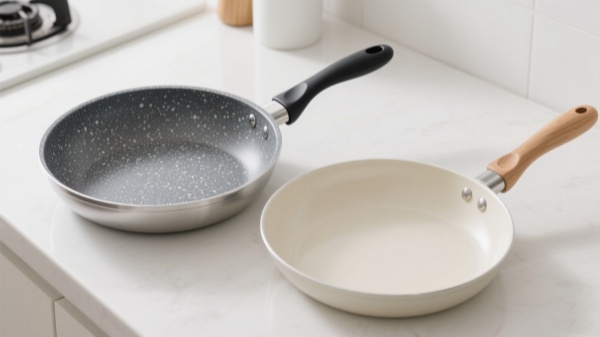
“Granite” is a market name for pans with a speckled, stone-like finish (often enamel or a composite nonstick); ceramic describes a silica-based coating applied as a nonstick surface — the two are defined more by coating chemistry than by the pan’s metal body.
The word “granite” is commonly used in product marketing to describe a speckled finish that looks like stone. In practice, a so-called granite pan will usually be an aluminum or other metal base coated with either porcelain enamel or a multi-layer nonstick system (some of which contain PTFE). Ceramic cookware, by contrast, is usually a metal pan with an inorganic silica (sol-gel) coating baked on to produce a smooth, nonstick surface.
Because cookware manufacturers use different processes and names, always read the product specifications and look for explicit statements such as “porcelain enamel”, “PTFE”, “ceramic nonstick (sol-gel)”, or test certifications.
Heat Performance and Cooking Behavior
Short answer: Ceramic coatings tolerate moderate heat well but lose nonstick properties at sustained high temperatures; granite-style pans behave depending on whether the coating is enamel, PTFE-based, or reinforced — check the manufacturer's temperature limits.
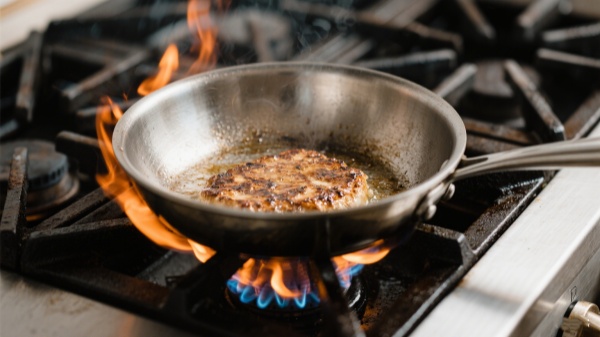
In everyday cooking, both types handle typical stove-top tasks such as eggs, pancakes, and light sautéing. For high-heat searing or repeated high-temperature use, coatings matter: PTFE-based nonsticks (including some granite-style finishes) have a practical limit and should not be heated empty to extreme temperatures; ceramic coatings will degrade if repeatedly stressed above their rated limit.
Practical tip: if your cooking frequently involves searing at very high heat, favor heavy metal cookware (3-ply stainless or cast iron) or choose a pan with an explicitly high oven/heat rating from the maker.
Safety: Chemicals, PFAS, and What to Worry About
Short answer: ceramic coatings are typically PTFE-free and marketed as "PFOA/PFAS free," but regulatory guidance shows PFAS use is still permitted in some food-contact applications — verify certifications and temperature limits before trusting safety claims.
Regulatory bodies have complex rules: for example, the U.S. Food and Drug Administration (FDA) authorizes specific PFAS uses in certain food-contact applications, so “PFAS-free” claims should be checked against certificates and test results when safety is critical. In practice, buying reputable brands that publish testing (LFGB, third-party lab reports, or clear FDA compliance claims) reduces risk.
- Look for explicit materials statements (PTFE, sol-gel ceramic, enamel).
- Check max recommended temperature on box/spec sheet.
- Prefer brands that publish third-party compliance or lab test summaries.
Cleaning, Care, and How to Extend Lifespan
Short answer: gentle hand-washing, soft utensils, and staying within temperature guidelines are the simplest ways to keep either coating alive — avoid metal spatulas and abrasive cleansers.
Everyday care is simple: wash with warm water and a mild dish soap, wipe or air-dry, and avoid sudden thermal shocks. For browned-on food, soak first; use a paste of baking soda and water for stubborn residue. Don’t use steel wool or harsh scouring powders on either ceramic or granite coatings — those are the main culprits for early wear.
Note: some manufacturers mark their pans dishwasher-safe. Even when labeled safe, dishwasher detergents and high detergent heat can accelerate coating wear — hand-wash if longevity matters.
Durability and Common Failure Modes
Short answer: the dominant factors are coating chemistry and manufacturing quality — ceramic can chip or scratch under rough use, while granite-style coatings vary (some are durable enamel, some are PTFE-based and wear similarly to other nonstick coatings).

Typical failure modes:
- Scratching or abrasion from metal utensils.
- Peeling or flaking when coating adhesion is poor or thermal cycling is severe.
- Loss of nonstick as the coating microscopically degrades with time and use.
When you see visible flaking, persistent food sticking, or cracking of the coating, it's time to replace the pan — continued use of a degraded coating is a hygiene and performance concern.
Quick comparison at a glance
| Feature | Granite (market term) | Ceramic (sol-gel) |
|---|---|---|
| Typical base | Cast Aluminum or steel with enamel/nonstick finish | Aluminum or stainless with silica (ceramic) coating |
| Typical heat tolerance | Varies — follow label; some are oven safe, some not | Moderate heat; often rated to ~200–250°C depending on brand |
| Durability | Varies widely by coating type (enamel > PTFE nonstick) | Good if used gently; abrades with rough use |
| Typical safety claim | Depends — may be PTFE-based or enamel (check spec) | Often marketed PTFE/PFOA-free |
Buying Guide — How to Choose for Home or for Procurement
Short answer: choose by use-case — for lightweight, easy clean daily cooking, a high-quality ceramic or enamel granite is convenient; for heavy searing or commercial use, prioritize robust metal cookware or a pan with documented high temp ratings and a warranty.
For consumer buyers:
- Decide by cooking style: gentle sautéing vs frequent high-heat searing.
- Check the stated maximum temperature and whether handles are oven-safe.
- Read independent tests and reviews; prefer warranties of 2+ years for coated pans.
For B2B/procurement:
- Require material spec sheets and third-party test reports (LFGB, FDA statements, or ISO where applicable).
- Request sample batches for in-kitchen testing (thermal cycling, abrasion tests).
- Specify replacement policy / MOQ and packaging for resale (if applicable).
Frequently Asked Questions
Q: What’s the main difference between granite and ceramic cookware?
A: Granite is a marketing term for a speckled finish (enamel or multi-layer nonstick); ceramic is a silica-based coating and often PTFE-free. See product specs before buying.
Q: Which is more durable?
A: Durability depends on build quality; some granite/enamel systems are very robust, some ceramic coatings perform well if used gently — check independent tests and warranties.
Q: Are ceramic pans safer than granite?
A: Ceramic coatings avoid PTFE in general, which addresses some chemical concerns, but safety depends on the specific product and how it's used. Confirm certifications and max temperatures.
Conclusion
If you want lightweight, colorful, easy-to-clean pans for moderate-heat home cooking: consider a high-quality ceramic or enamel/granite-style pan with a good warranty. If you routinely cook at very high temperatures or require commercial durability: choose heavy metal cookware (stainless or cast iron) or high-spec pans with explicit high-temperature ratings and independent test results.
Sources & further reading
- FDA — Authorized uses of PFAS in food contact applications — regulatory context for PFAS/PFAs in food contact materials.
- Consumer Reports — You Can't Always Trust 'Non-Toxic' Cookware — notes on independent testing and comparative performance.
- Industry overview: what "granite" cookware typically means — explanation of enamel and composite finishes.
- Food & Wine — Non-toxic cookware testing & recommendations — test-based recommendations to consider when choosing cookware.

Solamex — Wholesale Pots and Pans Expertise
Solamex offers wholesale pots and pans, combining durable materials, precise craftsmanship, and flexible product customization. From premium stainless steel to advanced nonstick lines, our catalog is built for both retail distribution and demanding commercial kitchens — ensuring consistency in performance and presentation.
Granite vs. Ceramic Cookware: The 2025 Honest Comparison
What is Cast Aluminum Cookware — Who Should Buy, and How to Use