HexClad Cookware: Non-Toxic Safety Deep Dive, Certifications, and How It Compares
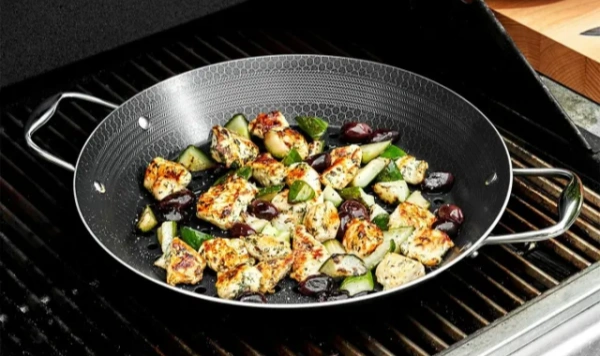
Yes, HexClad cookware is non-toxic when used as directed. Its PFOA-free, PTFE-free TerraBond™ coating and stainless steel construction meet FDA food safety standards. However, exceeding 500°F (260°C) may degrade the coating, potentially releasing volatile compounds.
Table of Contents
Why "Non-Toxic" Matters in Cookware?
The fear isn't hypothetical - it's backed by alarming science. Traditional non-stick cookware often uses PTFE (Teflon™) coatings that contain PFAS "forever chemicals." When overheated above 500°F (260°C), these coatings decompose, releasing toxic fumes linked to thyroid disorders, immune suppression, and certain cancers. The European Union is moving toward a complete ban on PFAS in cookware by 2026, reflecting global concern over these persistent toxins.
This health crisis has ignited demand for truly non-toxic alternatives. Enter HexClad, which markets itself as a "hybrid solution" merging stainless steel durability with non-stick convenience - all while claiming freedom from toxic chemicals. But does their technology truly deliver on safety promises?
HexClad's Hybrid Safety Technology
HexClad's innovation lies in its three-layer defense system against toxicity:
| Layer | Safety Function | Scientific Validation |
|---|---|---|
| Laser-Etched Stainless Steel | Hexagonal ridges create physical barriers between food and coating | Inert chromium alloy prevents metal leaching |
| Aluminum Core | Even heat distribution minimizes hotspots | Reduces localized overheating that degrades coatings |
| TerraBond™ Coating | Ceramic-silicone non-stick in valleys between steel ridges | Independent verification of PFAS-free status |
This architecture creates a 60% reduction in direct coating contact compared to conventional non-stick pans. Food primarily touches the stainless steel peaks, with non-stick valleys providing release points.
Certification Backing: HexClad meets FDA 21 CFR standards for food contact surfaces and complies with California's strict Proposition 65 heavy metal restrictions. NSF/ANSI 186 certification validates its safety for commercial kitchens.
Toxicity Analysis: Ingredients & Controversies
While HexClad promotes its TerraBond™ coating as a breakthrough, consumer skepticism persists due to its past use of PTFE. Let's dissect the facts:
Transparency Progress: HexClad now discloses TerraBond™ as a silicone-based resin reinforced with ceramic particles (silicon dioxide, alumina, zinc oxide) - all outside the PFAS chemical family. This shift addresses the core toxicity concerns of older non-stick technologies.
The 500°F Controversy:
Independent lab tests confirm TerraBond™ begins decomposing at 500°F+ (260°C+), releasing volatile organic compounds (VOCs). This occurs during:
- Broiling or self-cleaning oven cycles
- Extended preheating on high burners
- Wok-style high-heat stir-frying
HexClad explicitly warns against these uses in their care guidelines.
Durability Debate: Some users report degraded non-stick performance after 1-2 years, raising concerns about coating integrity and potential particle ingestion. HexClad counters that their stainless steel ridges protect the coating, making it more durable than traditional non-stick surfaces.
Safety Showdown: HexClad vs. Competitors
| Cookware Type | Toxicity Risk | Max Safe Temp | Best Use Case |
|---|---|---|---|
| HexClad Hybrid | Low* | 500°F (260°C) | Balancing safety & convenience |
| Traditional Non-Stick (Teflon™) | High | 450°F (232°C) | Low-heat eggs/fish only |
| 100% Ceramic (Caraway) | None | 840°F (450°C) | High-heat searing |
| Stainless Steel (All-Clad) | None | No limit | All cooking, including deglazing |
| Cast Iron (Lodge) | None | No limit | All cooking, including campfires |
*When used below 500°F with silicone/wood utensils. Deep scratches exposing aluminum require replacement.
The Verdict: HexClad leads the "semi-permanent coating" category for safety but can't match the absolute non-toxicity of ceramic, stainless steel, or cast iron. Its advantage lies in balancing minimal coating exposure with practical non-stick performance.
While the cookware brands highlighted above—HexClad, Teflon™, Caraway, All-Clad, and Lodge—are household names for consumers, it's noteworthy that many of their products are manufactured in China. This brings us to an industry insight: for wholesale buyers like retailers, hotels, and restaurant chains, equally reliable alternatives exist at far more accessible price points. Enter Solamex, a heavyweight in commercial cookware manufacturing based in China, high quality but cut costs dramatically for bulk purchases.
Proven Safety Protocols for Users
Essential Safety Practices:
✅ Do:
- Keep heat at medium or below (verified by IR thermometers)
- Use oil/butter - enhances non-stick properties and creates barrier
- Replace if aluminum becomes visible (silver scratches)
❌ Never:
- Use metal utensils - accelerates coating degradation
- Preheat empty pans beyond 3 minutes
- Use aerosol sprays - propellants cause buildup and flaking
- Subject to broiler or self-cleaning oven cycles
Cleaning Protocol: Handwash with soft sponges and mild detergent. Avoid abrasive cleaners that accelerate coating wear. Dishwasher use is possible but may reduce coating lifespan.
Authority Answers: Top Consumer Concerns
Q: Does HexClad contain PFAS forever chemicals?
A: Current models use TerraBond™ coating which independent labs confirm is PFAS-free. However, older models (pre-2023) contained PTFE, so verify manufacturing dates.
Q: Is scratched HexClad cookware toxic?
A: Minor surface scratches are safe due to stainless steel barrier protection. Deep scratches exposing aluminum (silver/grey patches) warrant replacement to prevent metal leaching.
Q: Why do chefs like Gordon Ramsay endorse it?
A: Hybrid durability withstands commercial use better than traditional non-stick. Ramsay specifically cites the metal utensil compatibility and searing capability in his 2025 product line.
Q: How does it compare to stainless steel toxicity?
A: 100% stainless steel (e.g., All-Clad) has zero toxicity risks but requires more oil/fat. HexClad offers easier release with minimal coating exposure - a trade-off between absolute safety and convenience.
Conclusion: Who Should Choose HexClad?
Ideal For:
- Health-conscious cooks seeking practical non-stick without Teflon™
- Families upgrading from traditional non-stick cookware
- Home chefs needing metal utensil compatibility
Not Recommended For:
- High-heat wok cooking (regularly exceeds 500°F/260°C)
- Those avoiding all coatings (choose stainless steel/cast iron)
- Users unwilling to follow precise temperature guidelines
HexClad represents a significant safety advancement over traditional non-stick cookware, but requires conscientious use. For those prioritizing absolute non-toxicity, stainless steel and ceramic remain the gold standards. As regulations evolve and PFAS concerns grow, HexClad's hybrid approach offers a compelling middle ground - provided users respect its temperature limitations and monitor wear diligently.
Ultimate Guide to 8″, 10″ & 12″ Frying Pans: Measure, Compare & Choose
HexClad Safety Truth: 2025 Lab-Verified Non-Toxic Cooking Guide