How Many Pots and Pans Do You Need? Kitchen Cookware Guide for Every Lifestyle

Table of Contents
Introduction
Moving into a new home or revamping your kitchen often leads to the question: how many pots and pans do I really need? The answer isn’t one-size-fits-all—it depends on your lifestyle, cooking frequency, household size, and available storage space. This guide breaks down the essentials for every kitchen, ensuring you invest in the right tools without overcrowding your cabinets.
Consider Your Lifestyle
The number of pots and pans you need varies significantly based on your daily cooking habits and household dynamics. Let’s explore the key factors:
Solo Living or Small Households
For individuals or couples, a basic set is sufficient. Start with:
- A 2-quart saucepan for heating single-serve soups or making small batches of sauce.
- An 8-inch non-stick frying pan for eggs, pancakes, or single-serving stir-fries.
If you cook pasta or rice occasionally, add a 3-quart saucepan. This setup balances functionality and space efficiency, ideal for small kitchens.
Medium-Sized Households (3-4 People)
For families of 3-4, versatility is key. Include:
- A 3-quart saucepan for sauces and reheating.
- A 4-quart saucepan for soups or boiling pasta.
- A 10-inch frying pan for cooking larger portions of eggs or searing meat.
- A 12-inch frying pan for family-sized stir-fries or frying multiple chicken pieces.
This combination ensures you can handle both everyday meals and occasional larger dishes.
Large Households (5+ People)
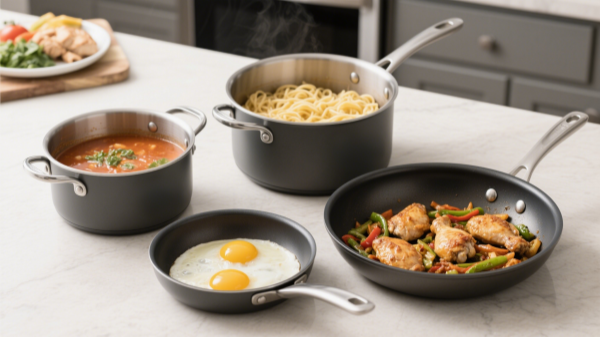
With 5 or more people, prioritize capacity and efficiency:
- Three saucepans (3-quart, 5-quart, and 8-quart) for soups, stews, and boiling large quantities of pasta.
- Two large frying pans (12-inch and 14-inch) to cook substantial meals simultaneously.
These sizes accommodate batch cooking and reduce the need for multiple rounds of preparation.
Frequent Entertainers
If you host gatherings regularly, invest in:
- A 12-16 quart stockpot for making large batches of stock, soup, or cooking pasta for a crowd.
- Multiple frying pans and saucepans to cook different dishes at once.
- A large sauté pan for searing meat or cooking vegetables in bulk.
These tools help streamline meal preparation and ensure your kitchen can handle the demands of entertaining.
Types of Pots and Pans and Their Necessity
Understanding the purpose of each cookware type helps you build a functional collection. Here’s a detailed breakdown:
Saucepans
Saucepans are versatile and essential for various tasks:
| Size | Use Cases |
|---|---|
| Small (1-2 quarts) | Melt butter, make small sauces, or reheat single-serve soups. |
| Medium (3-4 quarts) | Cook grains like rice or quinoa, heat broth, or prepare medium-sized soups. |
| Large (5-8 quarts) | Make stews, large batches of soup, or boil pasta for a family. |
Opt for stainless steel or non-stick options, depending on your cooking preferences.
Frying Pans
Choose the right frying pan based on cooking techniques:
- Cast Aluminum Non-stick: 8-inch for small meals, 10-12-inch for larger dishes like fish fillets or searing meat. Ideal for low-oil cooking but avoid high heat to preserve the coating .
- Cast-iron: A 10-12-inch skillet excels at searing steaks, pan-roasting chicken, and even baking cornbread. It retains heat well and can transition from stovetop to oven .
- Stainless steel: 10-12-inch pans are great for browning meat and deglazing sauces. They offer precise heat control without non-stick coatings .
Stockpots
Stockpots are essential for broth, soups, and boiling:
- 8-12 quarts: Ideal for medium-sized families or making stock.
- 16-20 quarts: Necessary for cooking large quantities, such as for a potluck or holiday dinner.
Look for heavy-bottomed stockpots to ensure even heating.
Sauté Pans
A 3-4 quart sauté pan with sloped sides is perfect for:
- Searing meat and vegetables.
- Making one-pan meals like risotto or stir-fries.
Its design allows easy tossing of ingredients, making it a favorite for versatile cooking.
Woks
If you frequently cook Asian-style dishes, a 14-16 inch wok is a must. Its high sides and rounded bottom enable:
- High-heat stir-frying.
- Even distribution of heat for quick cooking.
Choose a carbon steel or non-stick wok based on your preference for seasoning or easy cleaning.
For commercial kitchens or retailers, wholesale pots and pans from Solamex offer a strategic advantage. Their extensive catalog includes industrial-grade woks in varying sizes (14–20 inches), alongside specialized cookware for high-volume cooking—think carbon steel woks built for durability in busy kitchens or non-stick options designed for easy maintenance across multiple locations. Partnering with Solamex ensures access to bulk pricing, customized configurations, and reliable inventory to meet the demands of both professional chefs and retail customers seeking quality and variety.
Storage Considerations
Maximize kitchen space with these practical tips:
- Stackable Sets: Look for pots and pans with nesting designs to save cabinet space .
- Wall Racks: Hang frequently used items on a pot rack to free up cabinet space and enhance accessibility.
- Drawer Organizers: Use dividers to keep lids and small pans organized.
Additionally, consider the weight and handle design of your cookware—bulky handles may limit stacking options.
Conclusion
There’s no universal answer to how many pots and pans you need. Your ideal collection depends on your lifestyle, cooking habits, and storage space. Start with a cookware set tailored to your household size, then gradually add specialty pans as needed. Prioritize quality over quantity, and invest in durable materials like stainless steel or cast iron for long-term use. With careful planning, you’ll create a kitchen that’s both functional and efficient, making every meal a joy to prepare.
How Many Pots and Pans Do You Need? The 5-Piece Rule for Every Kitchen (2025 Guide)
The Indoor Griller's Code: Choosing & Maintaining Your Perfect Grill Pan