How to Clean a Wok: From Seasoning to Rust Removal
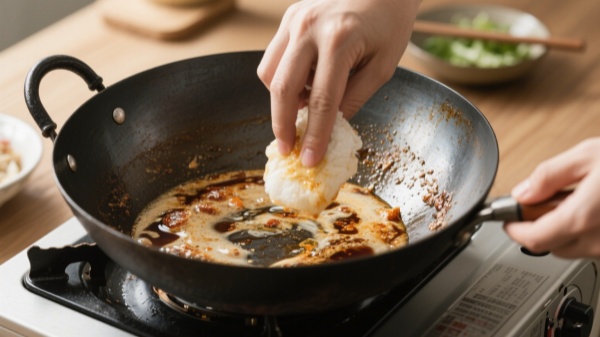
You’ve just finished creating a culinary masterpiece. The kitchen is filled with the incredible, smoky aroma of wok hei from your perfectly seared beef and broccoli. You feel like a master chef. But as the satisfaction settles, you glance at the wok sitting on the stove, coated in remnants of your delicious sauce. A question arises: How do I clean this beautiful piece of cookware without ruining it?
Many people invest in a fantastic carbon steel wok, only to see it become sticky, dull, or even rusty due to common cleaning mistakes—like attacking it with a steel wool pad or letting it soak in the sink. Trust me, I made that soaking mistake once and was greeted by a sad, spotty orange patina the next morning.
But don't worry. Caring for a wok is simpler than you think. It's not a chore; it's a ritual. In this guide, I'll share everything I've learned from chefs and my own kitchen trials. Whether you're unboxing a new wok or trying to rescue an old friend, you'll find your answers here.
Chapter 1: The First Step is the Deepest - Seasoning Your New Wok
Before you even think about stir-frying, your new wok needs a proper "spa treatment." This process, called seasoning, is the most critical moment in your wok's life. It's about transforming it from a piece of raw metal into a true cooking vessel.
Why do I have to season my wok? It's about building its soul.
First, you need to scrub off the inedible factory coating that prevents it from rusting in transit. Second, and more importantly, you are creating the foundation of the patina—a natural, non-stick layer formed by polymerizing thin layers of fat. This slick, black surface is what gives you effortless food release and that coveted wok hei.
Your Step-by-Step Guide to a Perfect Seasoning
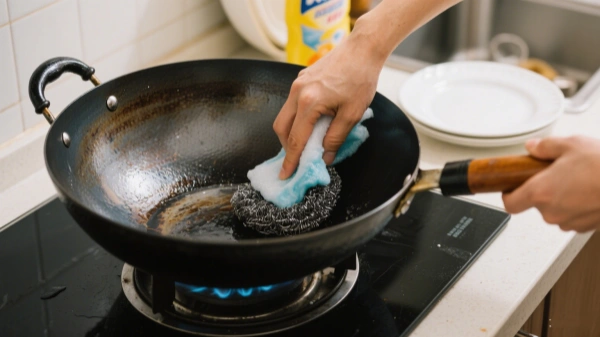
Step 1: The Initial Scrub - The 'Exfoliation'
This is one of the very few times you'll use soap and an abrasive scrubber on your wok. Grab some dish soap and steel wool, and scrub the living daylights out of it, inside and out. Your goal is to remove every trace of that factory oil. Here's a pro tip: How do you know it's clean enough? Dry it and wipe the inside with a clean paper towel. If the towel comes away clean (no grey or black residue), you're good to go.
Step 2: The 'Bluing' - Heating the Bare Metal
Dry the wok completely and place it on your most powerful burner over high heat. Be sure to open a window or turn on your exhaust fan! As the wok heats up, you'll witness a cool transformation. The silver metal will begin to change color, shifting through yellow and brown until it settles into a beautiful, dark bluish-black hue. Tilt and rotate the wok to make sure every square inch of the interior goes through this "bluing" process. This burns off any final impurities and opens the microscopic pores of the steel, getting it ready to accept the oil.
Step 3: The First Oiling - The 'Moisturizer'
Reduce the heat to low. Now it's time to build that first layer of seasoning. The traditional choice is pork fat, but any high-smoke-point oil like canola, grapeseed, or peanut oil works great. Add about a tablespoon of oil. Using a folded paper towel held securely with tongs, carefully wipe the oil all over the interior surface. It will start to smoke, which is exactly what you want. Continue to wipe and heat the wok for about 5-10 minutes. The surface will begin to darken and take on a slick, satin sheen. Let it cool, and you're done. Your wok is now ready for action.
Chapter 2: The Daily Ritual - How to Clean Your Wok After Each Use
Your wok thrives on consistency. If seasoning is the baptism, then daily cleaning is the meditation. The golden rule is simple: Clean it while it's still hot. Don't let it sit and fester.
The 3-Step Daily Cleaning Ritual
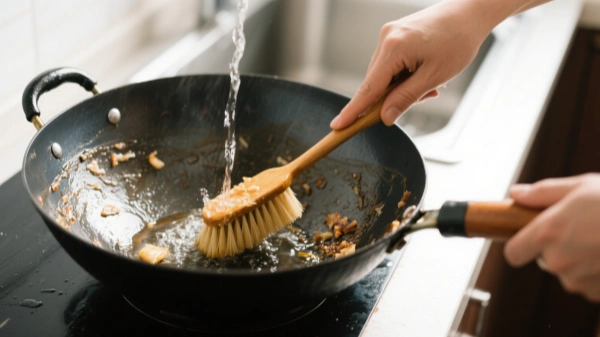
- Hot Water Rinse: Right after you've plated your food, take the still-hot wok to the sink. Run hot water into it. You'll hear a satisfying sizzle as the water hits the metal, instantly deglazing the pan and lifting most of the food particles off.
- A Gentle Scrub: Use a traditional bamboo wok brush or the rough side of a sponge to gently scrub away any remaining bits. The key word here is gentle. You're cleaning, not scouring.
- Dry and Oil: This is the most crucial step to prevent rust. Place the clean wok back on the stove over low heat for a minute or two until every last drop of water has evaporated. Then, turn off the heat, add a teaspoon of oil, and use a paper towel to wipe a micro-thin layer over the entire inner surface. This keeps it protected and ready for your next meal.
The Great Debate: Can I Use Soap on My Wok?
The short answer: It's best to avoid it. The long answer is more nuanced. For a brand new or developing patina, soap is the enemy; it will strip away the fragile oils you're working so hard to build up. However, on a very mature, well-established wok, a tiny drop of mild soap once in a while won't kill it. My advice? Stick to hot water and a brush. You're trying to remove food, not the essential layer of seasoning.
Chapter 3: Wok ER - How to Fix Common Problems
Even with the best care, things can sometimes go wrong. Don't panic! Most wok problems are easily fixable.
Condition 1: "Help, My Wok is Rusty!"
- The Cause: Usually from being left to soak or not being dried properly.
- The Fix: Grab your steel wool (yes, it's making a comeback for this emergency). Add a little water and scrub away every trace of rust. Once it's gone, wash and dry the wok. Congratulations, you've essentially reset your wok to factory settings. Now, simply head back to Chapter 1 and give it a full re-seasoning. It will be as good as new.
Condition 2: "I've Got Burnt, Stuck-on Food."
- The Wrong Way: Trying to chisel it off with a metal spatula.
- The Right Way: Add an inch or two of water to the wok, place it on the stove, and bring it to a boil. Let it simmer for a few minutes. The boiling water will soften and lift the burnt-on gunk, allowing you to easily scrub it away with your wok brush. For extra tough spots, you can make a paste of coarse salt and a little oil and use it as a gentle abrasive.
Condition 3: "Why is My Wok Surface Sticky?"
- The Cause: This usually happens from using too much oil during maintenance, or from old oil going rancid. The seasoning should be a hard, slick polymer, not a sticky, greasy layer.
- The Fix: Give the wok a very firm scrub with hot water and a stiff brush to remove the sticky residue. Dry it thoroughly on the stove and apply a fresh, paper-thin coat of oil.
Chapter 4: The Wok Cleaning Dos and Don'ts
If you only remember a few things, remember these.
The DOs ✅
- DO clean it immediately after use, while it's still warm.
- DO use hot water to make cleaning effortless.
- DO dry it completely on the stovetop after every wash.
- DO wipe a thin layer of oil on it before storing.
The DON'Ts ❌
- DON'T ever let it soak in the sink. This is the #1 cause of rust.
- DON'T ever put it in the dishwasher (click here to find dishwasher safe cookware).
- DON'T use harsh detergents or soaps regularly.
- DON'T use cold water on a very hot wok (risk of warping).
Chapter 5: Frequently Asked Questions (FAQ)
How often do I need to re-season my wok?
You generally don't need to perform a full re-seasoning unless you've had to aggressively scrub away rust or a major burnt-on disaster. With proper daily cleaning and maintenance, the seasoning layer will build up and improve over time.
Does this cleaning method apply to non-stick or stainless steel woks?
Not exactly. This guide is specifically for traditional carbon steel and cast iron woks. Non-stick woks (like ceramic coating) require gentle cleaning with a soft sponge to protect the coating, and stainless steel woks are durable enough to handle soap and scouring pads without issue.
What is 'wok hei' and how does proper cleaning help it?
'Wok hei' translates to 'the breath of the wok.' It's the complex, smoky flavor and aroma imparted to food when stir-fried in a well-seasoned wok at very high temperatures. Proper cleaning protects and nurtures the slick patina (the seasoning layer) that is essential for achieving wok hei.
Conclusion: Your Wok is a Partner, Not Just a Pan
Caring for a wok isn't a set of rigid rules; it's a relationship you build over countless meals. The core principles are simple: wash hot, dry hot, oil lightly.
When you see your wok transform over time, developing that deep, semi-glossy black patina that no factory coating can ever replicate, you'll feel a tremendous sense of accomplishment. That wok is no longer just a tool; it's a reflection of your cooking journey. Now go on, fire it up, and cook with confidence. You've got this.

Solamex — Wholesale Pots and Pans Expertise
Solamex offers wholesale pots and pans, combining durable materials, precise craftsmanship, and flexible product customization. From premium stainless steel to advanced nonstick lines, our catalog is built for both retail distribution and demanding commercial kitchens — ensuring consistency in performance and presentation.
Beyond the Shape: How Woks and Frying Pans Actually Cook Differently
How to Clean a Wok — Simple, Practical Methods for Everyday Care