How to Clean Ceramic Cookware (Quick & Deep Methods That Protect the Coating)
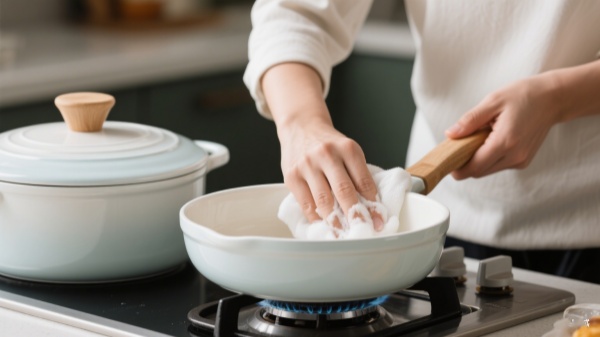
Ceramic cookware shares many cleaning basics with multi-ply stainless steel, cast iron, carbon steel and die cast aluminum — but ceramic coatings are more sensitive to abrasives, strong alkalis and rapid temperature changes.
Quick answer: Hand-wash ceramic cookware with warm, soapy water and a soft sponge for everyday cleaning. For stuck food, soak 20–30 minutes then use a baking-soda paste or a short vinegar soak; avoid metal scouring pads and harsh oven cleaners.
1. What “Ceramic” Means
This article covers both ceramic-coated nonstick pans (the most common retail type) and fully ceramic cookware. Ceramic-coated pans have a fragile nonstick surface that performs well when treated gently; full ceramic (solid ceramic) cookware is more like glazed bakeware and has different thermal properties. The practical cleaning rules below apply mainly to ceramic-coated nonstick cookware unless noted otherwise.
Cookware manufacturers vary — check your brand’s care instructions for model-specific guidance. For example, GreenPan lists hand washing with a soft sponge as the preferred method while noting many of their lines are dishwasher-safe but still recommend gentle hand care to preserve performance.
2. Everyday Cleaning — The Routine (Fast, Safe)
Start with the least aggressive method and progress only if needed. Follow these simple steps for daily cleanup:
- Allow the pan to cool — never plunge a hot ceramic pan into cold water (thermal shock risk).
- Discard loose food and rinse with warm water.
- Wash with a few drops of dish soap and a soft sponge or microfiber cloth. For light soils, 1–3 minutes is often enough.
- Rinse thoroughly and dry with a towel or air-dry upside down.
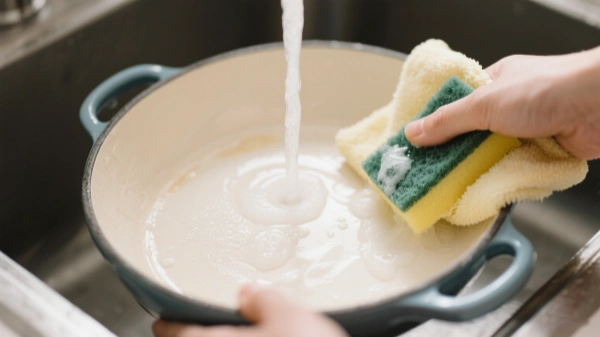
Manufacturer guidance often labels the dishwasher “acceptable” for some ceramic lines but still recommends hand washing to preserve the coating and avoid detergent wear. If in doubt, hand-wash.
3. A Progressive Approach: Quick Clean → Deep clean → Stain removal
Work top-to-bottom: if the quick routine removes the residue, stop there. If not, use the deeper methods below in the order shown — each is progressively stronger but still safe when used correctly.
- Quick clean: warm soapy wash + soft sponge.
- Deep clean: soak, baking-soda paste, nylon scraper if needed.
- Stain removal: vinegar soak, lemon/baking soda, or short peroxide treatment for stubborn discoloration.
4. Deep Cleaning Methods — Step-by-Step (Safe and Repeatable)
Soak method (first line of defense)
- Fill the pan with hot tap water and a few drops of dish soap.
- Let it soak 20–30 minutes for stuck-on food; for heavy residue, soak longer (up to several hours or overnight).
- Use a soft sponge to lift loosened particles, rinse and dry.
Baking-soda paste (gentle abrasion)
Make a paste of 1 tablespoon baking soda + just enough water to form a spreadable paste. Apply, wait 15–30 minutes, then rub gently with a soft circular motion and rinse. Boiling a weak baking-soda solution (e.g., 4 tbsp baking soda in ~½ cup water added to the pan, then topped with water and simmered) is a commonly recommended way to loosen tough stains.
Vinegar soak (grease and mineral deposits)
For greasy build-up or mineral spotting, mix 1 part white vinegar + 3–4 parts water, bring to a simmer for a few minutes (or soak at room temperature for 10–30 minutes), then rinse and wash as usual. Many cleaning guides recommend this for burnt or sticky grease.
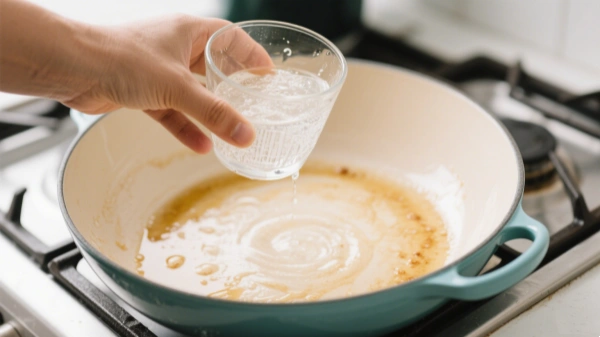
Boil + baking soda for heavy residue
When light scrubbing won’t do, add water to cover burnt areas, stir in 1–2 tablespoons baking soda, bring to a low simmer 5–10 minutes, let cool slightly, then wipe. This method loosens carbonized residues without harsh scrubbing.
Do not use metal scouring pads, steel wool, or harsh powdered oven cleaners — they can scratch or remove ceramic coatings. If the coating shows deep scratches or flaking, stop aggressive treatments and consider replacement.
5. Stain & Yellowing Removal (Targeted Remedies)
For discoloration or yellowing: soft acids and oxidizers are commonly recommended with caution.
- Lemon + baking soda: rub lemon halves dipped in baking soda across the stain, rinse.
- Hydrogen peroxide (spot test first): short peroxide soaks can reduce yellowing and lighten discoloration; follow product safety guidance and rinse thoroughly. Several home-care guides recommend peroxide for stubborn ceramic discoloration.
- Avoid prolonged exposure to strong acids or concentrated bleach: these can damage some coatings.
6. When the Coating is Damaged — How to Tell and What to Do
Signs that a coating is compromised: visible flaking, deep scratches that catch a fingernail, or pieces of coating in food. These are functional failures — stop using that pan for cooking. Replacement is the safest option when flakes or delamination appear.
7. Do’s & Don’ts — Quick Checklist
- Allow pans to cool before washing.
- Use wood, silicone, or heat-proof nylon utensils.
- Use a soft sponge or microfiber cloth; dry thoroughly.
- Perform a gentle deep clean every 1–3 months if frequently used.
- Don’t use metal scouring pads or steel wool.
- Don’t use high-alkali oven cleaners on ceramic coatings.
- Don’t overheat an empty ceramic pan — high heat can degrade coatings.
- Be cautious with the dishwasher — detergents and high drying heat can dull some ceramic coatings over time.
8. Troubleshooting Matrix (Problem → Likely Cause → Quick Fix → Next Step)
Use this table to pick a quick fix first. If the quick fix fails, follow the "next step" column.
| Problem / Symptom | Most likely cause | Quick fix (do this first) | If not fixed — next step | When to replace / safety note |
|---|---|---|---|---|
| Light stuck-on food | Food dried/hardened | Soak 20–30 min in hot soapy water; wipe with soft sponge | Baking-soda paste 15–30 min, gentle nylon scraper | Replace only if coating scratched through or flakes appear |
| Greasy, cloudy film | Polymerized oils (cooking spray / repeated oil buildup) | Hot soapy wash; wipe with microfiber | Vinegar (1:3) soak 10–20 min; follow with baking-soda rinse | If surface remains tacky or uneven after cleaning, consider replacement |
| Dark brown burn marks | High heat sugar or burnt food | Boil water + 1–2 tbsp baking soda 5–10 min; cool & wipe | Apply paste & repeat; gentle nylon scraper | Replace if pan surface pitted or coating peeling |
| Yellow stains / discoloration | Mineral deposits or heat exposure | Baking soda + lemon rub; rinse | Short hydrogen-peroxide soak (spot test first) | Replace if coating integrity weakens or flakes |
| Scratches visible / flaking | Metal utensils or abrasive pads | Stop using metal utensils; switch to silicone/wood | Use pan only for non-food storage or recycle | Replace — flakes may contaminate food |
9. Maintenance & Long-Term Care
Small consistent habits preserve coating life: avoid cooking sprays that polymerize, don’t preheat empty pans on high, and store pans with soft protectors between them if stacked. For heavy users, plan a controlled deep clean every 1–3 months to remove polymerized oil build-up and inspect for coating wear. Trusted cookware reviews and tests highlight that careful use and gentle cleaning lengthen useful life of ceramic sets.
10. FAQ
Can I put ceramic pans in the dishwasher?
Some ceramic lines are labeled dishwasher-safe, but many manufacturers still recommend hand-washing to preserve the coating and avoid detergent wear — hand-wash when possible.
Can I use baking soda on ceramic cookware?
Yes — baking soda is a mild abrasive and works well as a paste or in a simmering solution to loosen burnt food. Use gentle pressure and follow with a rinse.
Will vinegar damage a ceramic coating?
Short vinegar soaks (diluted) are safe for most ceramic cookware and effective for grease/mineral deposits; avoid leaving concentrated acid in contact for long periods and always rinse thoroughly.
How long should I soak a pan with stuck food?
Start at 20–30 minutes; for heavy residue, soak several hours or overnight and then use a baking-soda paste as needed.
11. Sources & “How we verified”
This article’s practical guidance is based on manufacturer care instructions and widely cited home-care references. Core sources used:
- The Spruce — How to Clean Ceramic Pans (practical step methods including baking soda and vinegar).
- Real Simple — Baking soda & vinegar for burnt pans.
- GreenPan — Official care & use guide (manufacturer recommendations for ceramic-coated cookware).
- Good Housekeeping — Ceramic cookware testing & picks (testing results and long-term use notes).
How we verified: the recommendations above are synthesized from manufacturer care pages and multiple reputable cleaning guides (linked above). Where manufacturers differ (for example, dishwasher-safe labeling), the article highlights the conservative approach (hand washing) to preserve coating longevity.
12. Closing & internal links (brief)
Want related resources? See our best soft sponges for nonstick pans and how to choose cookware by material. Bookmark this guide and try the mild methods here first — they resolve most issues while keeping your coating intact.

Solamex — Wholesale Pots and Pans Expertise
Solamex offers wholesale pots and pans, combining durable materials, precise craftsmanship, and flexible product customization. From premium stainless steel to advanced nonstick lines, our catalog is built for both retail distribution and demanding commercial kitchens — ensuring consistency in performance and presentation.
Ultimate Guide to Cleaning Ceramic Cookware: From Stubborn Stains to a Like-New Shine
Stock Pot Sizes — How to Choose the Right Size (4, 6, 8 qt and beyond)