How to Identify Cast Iron Skillets: Master the Basics of Material, Design & Brand Clues

How to Identify Cast Iron Skillets: A Comprehensive Guide
Table of Contents
- 1. Introduction: The Timeless Appeal of Cast Iron
- 2. Material and Texture: The Foundation of Authenticity
- 3. Design and Construction: Clues in Shape and Structure
- 4. Branding and Markings: Decoding Manufacturer Signals
- 5. Age and Condition: Signs of Wear and Value
- 6. Cast Aluminum Non-Stick vs. Cast Iron: A Comparative Analysis
- 7. Regional and Stylistic Variations
- 8. Common Pitfalls: Avoiding Fakes and Replicas
- 9. Maintenance and Care: Preserving Your Skillet
- 10. Conclusion: The Joy of Owning a Genuine Cast Iron Skillet
1. Introduction: The Timeless Appeal of Cast Iron
Casting a nostalgic spell in kitchens worldwide, cast iron skillets are more than tools—they’re culinary legacies. From searing steaks to baking bread, their versatility and durability make them a cornerstone of home cooking. But with modern imitations flooding the market, how do you distinguish a true cast iron skillet from its impostors? This guide equips you with the knowledge to identify authentic cast iron, from its material composition to its historical quirks, while exploring modern alternatives like cast aluminum non-stick cookware that cater to contemporary lifestyles.
2. Material and Texture: The Foundation of Authenticity
At its core, cast iron is defined by its density and porosity. A genuine cast iron skillet feels heavy in hand, with a surface that’s slightly rough to the touch, especially in vintage models. Unlike stainless steel or cast aluminum non-stick, cast iron is magnetic—so a simple magnet test can quickly rule out fakes. Older pans often bear visible sand-casting marks, small pits, or uneven surfaces from Handmade, while modern cast iron may have smoother finishes due to machine polishing. Enameled cast iron, popularized by brands like Le Creuset adds a glossy, non-porous layer but lacks the raw texture of uncoated iron.
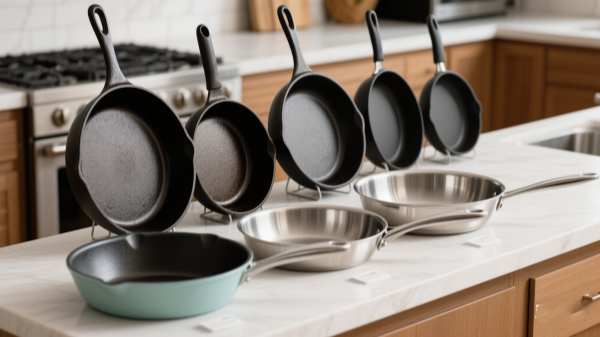
Pro Tip: If a skillet feels light or non-magnetic, it’s likely not cast iron. Always test with a magnet!
3. Design and Construction: Clues in Shape and Structure
Vintage and modern cast iron skillets reveal their age through design nuances. Pre-1950s pans often feature dual pouring spouts, grooved handles, and heat rings on the bottom—a relic from stabilizing on wood stoves. Joint handles with rivets are another hallmark of older models. In contrast, modern skillets prioritize sleekness, with integrated handles and smooth, uniform surfaces. Weight can also be a tell: vintage pans tend to be lighter due to thinner walls, while modern cast iron is heavier and thicker.
| Feature | Vintage Cast Iron | Modern Cast Iron |
|---|---|---|
| Handles | Grooved, jointed, or spider (three-legged) | Integrated, one-piece |
| Spouts | Two pouring spouts | Rarely present |
| Heat Rings | Common (19th-century models) | Absent |
4. Branding and Markings: Decoding Manufacturer Signals
Brands like Griswold and Wagner Ware left indelible marks on their products. Griswold skillets, for example, sport bold block logos and size numbers (e.g., #8) on the bottom, while Wagner Ware pans feature subtle “WAGNER” stamps and catalog numbers. Lodge, the oldest continuously operating cast iron manufacturer, stamped its name on handles until the 1960s, after which it shifted to rougher textures. Modern brands like Smithey emphasize artisanal finishes and clear certifications, ensuring transparency for buyers.
Collector’s Note: Look for “ghost marks”—faded imprints of original manufacturers on pans acquired by competitors like Wapak. These add historical intrigue and value.
5. Age and Condition: Signs of Wear and Value
A well-seasoned vintage skillet develops a smooth, dark patina—a testament to decades of use. Light rust is common but fixable, while warping or flaking may signal improper care. Burn marks on the interior or coal residue hint at open-fire cooking, a characteristic of 19th-century pans. Modern cast iron, factory-seasoned with a matte black finish, shows minimal wear unless heavily used. Remember: a skillet’s story is etched in its scars—patina, rust, and all.
6. Cast Aluminum Non-Stick vs. Cast Iron: A Comparative Analysis
While cast iron reigns in durability, cast aluminum non-stick cookware has emerged as a modern favorite. Let’s weigh the pros and cons:
| Feature | Cast Iron | Cast Aluminum Non-Stick |
|---|---|---|
| Weight | Heavy (3–5 lbs for 10-inch skillet) | Lightweight (1.5–2.5 lbs for similar size) |
| Heat Conductivity | Excellent but slow to heat/cool | Exceptionally fast (2x faster than iron) |
| Non-Stick Properties | Requires seasoning (improves over time) | Factory-coated (PFOA-free, ready to use) |
| Cleaning | Gentle scrubbing, no soap | Dishwasher-safe (check guidelines) |
| Oven/Grill Use | Safe up to 900°F | Limited to 450°F |
| Maintenance | Regular seasoning | No seasoning; avoid metal utensils |
For daily cooking, cast aluminum’s lightweight design and instant usability make it ideal for busy kitchens. Its PFOA-free coatings (as seen in brands like GreenPan and Solamex) align with health-conscious trends, requiring minimal oil for cooking. However, cast iron’s unmatched heat retention and oven versatility shine in high-temperature searing and long-braised dishes. While purists may favor cast iron, modern home cooks often find cast aluminum non-stick more practical for everyday meals.
7. Regional and Stylistic Variations
Cast iron’s global appeal spawned distinct regional styles. American brands like Griswold and Wagner Ware prioritized durability, while European enameled cast iron (Le Creuset, Staub) combined functionality with aesthetics. Asian cast iron woks, deep and rounded, excel at high-heat stir-fries, often marked with “HF” stamps on vintage models. Each variation reflects cultural culinary traditions, from the Dutch oven’s one-pot meals to the wok’s fiery stir-fries.
8. Common Pitfalls: Avoiding Fakes and Replicas
Replicas and counterfeits flood the market, mimicking vintage aesthetics without the craftsmanship. Modern reproductions like Lodge’s “Blacklock” line lack the sand-casting textures of authentic antiques. Counterfeits often feature logos or mismatched designs. Always compare against trusted references, such as the Cast Iron Collector forum, to verify authenticity. Remember: if a “vintage” skillet looks too perfect or lacks wear marks, it’s likely a fake.
9. Maintenance and Care: Preserving Your Skillet
Cast iron thrives on care. Season it regularly with oil to maintain its non-stick surface, and avoid soap unless necessary. For stuck residue, use kosher salt or a stiff brush. Dry immediately after washing to prevent rust. Cast aluminum non-stick, while low-maintenance, requires gentle handling to avoid scratching its coating. Use wooden utensils and wash by hand to extend its lifespan.
10. Conclusion: The Joy of Owning a Genuine Cast Iron Skillet
Identifying a cast iron skillet is an art—a blend of material science, historical knowledge, and practical know-how. Whether you’re a collector chasing a Griswold gem or a home cook seeking a reliable pan, understanding its origins and characteristics ensures you invest in a piece that lasts. While cast aluminum non-stick offers modern convenience, cast iron’s timeless appeal lies in its ability to adapt, improve, and tell a story. So, venture into thrift stores, explore online marketplaces, and let your skillet become a cherished part of your kitchen legacy.
For wholesale buyers or restaurant chains, a versatile cookware set with varied sizes and colors is essential for both functionality and appeal. Solamex specializes in bulk cookware solutions, offering durable options like cast aluminum non-stick and cast iron at competitive prices. Our products are designed to meet commercial demands, with customizable selections to fit your brand’s needs. Whether you need standard sizes or unique finishes, we provide tailored solutions to elevate your kitchen or retail offerings. Reach out today to discuss bulk pricing and customization—let Solamex be your partner in quality cookware.
Cast Iron Skillet Guide: Spot Authenticity, Avoid Fakes & Choose Cast Iron vs. Aluminum
How Many Pots and Pans Do You Need? The 5-Piece Rule for Every Kitchen (2025 Guide)