How to Measure Fry Pan Size and Its Impact on Cooking
Understanding Fry Pan Dimensions
Fry pans come in various sizes and designs, and their dimensions play a significant role in how they perform during cooking. The primary dimensions you need to understand include:
- Diameter: This is the measurement across the top of the pan. It gives you an idea of the overall cooking surface and is the most common metric used to describe fry pan size.
- Depth: This refers to the height of the pan's sides. A deeper pan is ideal for dishes that require more liquid or when you want to avoid spills while stirring.
- Handle Length and Position: The design and placement of the handle affect the balance and usability of the pan. An ergonomically designed handle can make handling a heavy or large pan much more comfortable.
These dimensions not only determine how much food you can cook at one time but also influence heat distribution and cooking efficiency. For instance, a pan with a larger diameter but shallow depth might heat unevenly compared to one with balanced dimensions.
Tools and Techniques for Measuring
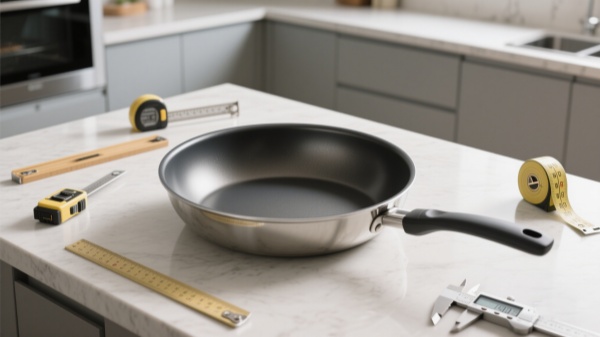
To measure your fry pan accurately, you will need some basic tools. The most common tools include:
- Measuring Tape or Ruler: Ideal for measuring the diameter and depth.
- Caliper: For more precise measurements, especially when accuracy is critical.
- Notepad and Pen: To record your measurements and compare with product specifications.
Using these tools, you can take precise measurements to ensure that you select a fry pan that suits your cooking needs. Precision in measurement ensures that you understand how the pan will perform, helping you avoid common pitfalls such as selecting a pan that is too large or too small for your recipes.
Now that we understand how crucial fry pan dimensions—such as diameter, depth, and handle placement—are for cooking performance, let's explore the essential tools and techniques needed to measure these dimensions accurately.
Step-by-Step Guide to Measuring Fry Pan Size
Follow these steps to accurately measure your fry pan:
- Prepare Your Tools: Gather your measuring tape or ruler and ensure the fry pan is clean and dry.
- Measure the Diameter: Place the measuring tape across the top of the pan from one edge to the opposite edge. Ensure you measure at the widest part of the pan.
- Measure the Depth: Hold the ruler vertically against the inside edge of the pan to measure the depth from the bottom to the top edge of the side.
- Record the Measurements: Write down the diameter and depth. These numbers will help you compare different pans and make an informed decision.
It is crucial to perform these measurements accurately, as even small discrepancies can impact cooking performance. Visual aids or diagrams (if available) can further assist in ensuring correct measurement techniques.
Impact of Fry Pan Size on Cooking
The size of your fry pan directly influences several aspects of cooking. Here are some key impacts:
- Heat Distribution: A properly sized pan ensures that heat is distributed evenly, minimizing hot spots that can cause uneven cooking.
- Cooking Efficiency: The right size means that food cooks faster and more uniformly, reducing the risk of overcooking or undercooking.
- Recipe Scaling: Understanding your pan's capacity helps you adjust recipes accurately, ensuring that portion sizes are consistent and that you achieve the desired flavor and texture.
- Energy Efficiency: Smaller pans tend to consume less energy, which can be an important consideration if you frequently cook small meals.
To illustrate, consider the following comparison table that outlines the benefits of different fry pan sizes:
| Fry Pan Size | Best For | Key Benefits |
|---|---|---|
| Small (8-10 inches) | Individuals/Couples | Efficient heating, easy to handle, less energy use |
| Medium (10-12 inches) | Small Families | Balanced capacity, versatile for multiple recipes |
| Large (12 inches and above) | Entertaining/Batch Cooking | Ample cooking space, ideal for large servings |
This table not only provides a clear visual comparison but also highlights how the right size can optimize your cooking processes. When you choose a fry pan with dimensions that match your needs, you enhance both the quality of your meals and the efficiency of your cooking routine.
Choosing the Right Fry Pan Size for Your Needs
Selecting the appropriate fry pan size depends on several factors. Consider the following:
- Cooking Frequency and Meal Size: Evaluate how often you cook and the typical portion sizes. For frequent, smaller meals, a smaller pan might suffice, while larger family dinners may require a bigger pan.
- Kitchen Space and Storage: Ensure that your chosen fry pan can be comfortably stored in your kitchen without compromising space. Compact kitchens might benefit from versatile, medium-sized pans.
- Recipe Requirements: Certain recipes, especially those involving slow cooking or simmering, need a specific pan size to ensure even heat distribution and proper cooking.
- Energy Considerations: Smaller pans generally heat up quicker and use less energy, while larger pans provide more cooking surface but may require more power to heat evenly.
By assessing these factors, you can align your cooking habits with the right fry pan size, ensuring that you invest in cookware that enhances your culinary skills and meets your everyday needs.
Common Mistakes and How to Avoid Them
Even experienced cooks can make mistakes when measuring or selecting a fry pan. Here are some pitfalls to watch out for:
- Confusing Diameter with Circumference: Always measure the straight-line distance across the top, not the outer edge's total length.
- Overlooking Pan Depth: Focusing solely on diameter might lead you to ignore the importance of depth, which affects cooking volume and heat retention.
- Ignoring Handle Dimensions: The handle's size and placement can affect how comfortable and safe the pan is to use, especially when dealing with hot surfaces.
Double-check your measurements and consider all aspects of the pan’s design before making a purchase. This thorough approach minimizes errors and ensures your chosen fry pan meets your cooking expectations.
Additional Factors to Consider When Selecting a Fry Pan
Beyond just the measurements, there are other important factors to keep in mind:
- Material and Construction: Different materials (die cast aluminum nonstick, stainless steel, cast iron) have unique heating properties and durability. For example, cast iron retains heat well but is heavier, while nonstick pans are easier to clean.
- Design and Aesthetics: A well-designed pan not only performs efficiently but also complements your kitchen decor. Ergonomic handles and a balanced design improve usability and safety.
- Maintenance Requirements: Consider the care instructions and durability of the material. Some pans require more maintenance to keep their nonstick properties intact, while others are more forgiving with regular use.
Taking these factors into account will ensure that you select a fry pan that not only meets your size requirements but also delivers overall performance and longevity in your kitchen.
Conclusion
In conclusion, measuring your fry pan size accurately is an essential skill for any cook. It impacts everything from heat distribution and energy efficiency to recipe scaling and overall cooking performance. By understanding the key dimensions—diameter, depth, and handle configuration—you can make a well-informed decision that aligns with your cooking habits and kitchen environment.
This guide has provided detailed instructions, practical tips, and a comparison table to help you grasp the importance of fry pan size. Remember, the right fry pan will enhance your cooking experience, making meal preparation smoother and more enjoyable.
Moreover, if you are in search of premium cookware options, consider our enterprise's offerings in wholesale aluminum cookware. We specialize in wholesale kitchen cookware designed for both commercial and home use, ensuring durability and efficiency in every product. Our extensive selection also includes Pizza Pans wholesale, catering to diverse culinary needs and delivering exceptional quality at competitive prices.
How Much Does a Frying Pan Weigh in kg? Choosing the Right Weight for Your Kitchen
The Ultimate Guide to Soup Pot Capacity: Making Informed Cooking Choices