Is Ceramic Cookware Safe? Science-Backed Safety & Usage Guide
Table of Contents
- 1. Introduction: Market Demand and Perception Misconceptions
- 2. Material Science Analysis: Composition and Manufacturing of Ceramic Coatings
- 3. Health Impact Assessment: From Lab Data to Real-World Use
- 4. Commercial Applications: Performance Validation from Kitchens to Shelves
- 5. Usage Guide and Maintenance Recommendations: Extending Safe Lifespan
- 6. Controversies and Risk Warnings: Scientific Risk Mitigation
- 7. Future Trends and Industry Outlook
- 8. Conclusion: Balancing Safety and Performance
1. Introduction: Market Demand and Perception Misconceptions
In an era where health-conscious consumers prioritize chemical-free living, ceramic cookware has emerged as a popular alternative to traditional nonstick pans. The global cookware market is undergoing a significant shift, driven by concerns over toxic chemicals like PTFE and PFOA in conventional coatings. However, misconceptions about ceramic cookware persist, often stemming from vague marketing claims or confusion between "ceramic-coated" and "pure ceramic" products. This article aims to demystify ceramic cookware safety through scientific analysis, real-world data, and commercial insights.
While many associate "ceramic" with natural clay pots, modern ceramic cookware typically refers to metal pans coated with a ceramic layer. This distinction is critical, as the safety of ceramic coatings depends on their composition and manufacturing processes. By examining the material science behind ceramic coatings, evaluating health impacts through lab tests, and exploring commercial applications, we can establish a comprehensive understanding of ceramic cookware's safety profile.

2. Material Science Analysis: Composition and Manufacturing of Ceramic Coatings
2.1 Chemical Nature of Ceramic Coatings
Ceramic coatings are primarily composed of silicon dioxide (SiO₂) and other inorganic minerals, formed through a sol-gel process that creates a durable, non-porous surface. Unlike PTFE-based coatings, ceramic layers do not contain perfluorinated chemicals (PFAS), making them inherently safer at high temperatures. The nano-ceramic particles used in some coatings enhance hardness and nonstick properties, though concerns about nanoparticle migration persist in some studies.
2.2 Safety Controls in Manufacturing Processes
Reputable manufacturers like Xtrema use triple-firing at 2,500°F to sinter ceramic materials, locking in heavy metals and ensuring no leaching into food. This process complies with FDA and California Prop 65 standards, which limit lead and cadmium extraction to trace levels. High-temperature sintering also increases the coating's resistance to scratches and corrosion, making it suitable for commercial kitchens.
2.3 Comparison with Traditional Nonstick Coatings
| Feature | Ceramic Coating | PTFE (Teflon) |
|---|---|---|
| Composition | Silicon dioxide, inorganic minerals | Polytetrafluoroethylene |
| PFAS/PFOA | Free | Contains |
| Max Temperature | 450°C (842°F) | 260°C (500°F) |
| Hardness (Pencil Test) | 6-7H | 2-3H |
As shown, ceramic coatings outperform PTFE in both safety and durability, particularly at high temperatures where Teflon releases toxic fumes.
3. Health Impact Assessment: From Lab Data to Real-World Use
3.1 High-Temperature Safety Testing
Independent tests reveal ceramic cookware remains stable up to 450°C, far exceeding typical cooking temperatures (180-220°C). Even when dry-heated to 300°C, no harmful gases are detected, unlike Teflon which decomposes above 260°C. However, prolonged empty heating can cause coating discoloration, though no toxic byproducts are released.
3.2 Long-Term Safety Validation
Xtrema's 15-year study demonstrates ceramic cookware maintains compliance with Prop 65 standards over extended use. The coating's high abrasion resistance (6-7H hardness) reduces flaking, with a 40%-60% lower脱落率 than Teflon. This makes ceramic cookware suitable for daily use without compromising safety.
3.3 Protection for Special Populations
For chemically sensitive individuals and pregnant women, ceramic cookware offers a safer alternative. Its non-reactive surface prevents metal leaching, a common concern with aluminum or copper pans. However, it's crucial to avoid glazed ceramic products from uncertified manufacturers, which may contain lead.
4. Commercial Applications: Performance Validation from Kitchens to Shelves
4.1 Durability in High-Volume Environments
Commercial kitchens benefit from ceramic cookware's resistance to metal utensils and acidic foods. Tests show ceramic-coated pans withstand 50% more abrasion than Teflon counterparts. For example, Solamex's ceramic cookware line features an aluminum core for even heat distribution, reducing energy use by 15%-20% in commercial settings.
4.2 Hygiene and Efficiency Advantages
The non-porous ceramic surface inhibits bacterial growth, meeting HACCP standards for food safety. Its smooth finish also simplifies cleaning, reducing labor costs in restaurants. Additionally, ceramic's thermal conductivity ensures consistent cooking, critical for high-volume operations like catering services.
4.3 Retail Market Competitiveness
The global ceramic cookware market is growing at an 8.2% annual rate, driven by eco-conscious consumers and regulatory shifts like the EU's 2025 PFAS ban. Retailers highlight certifications like FDA and EU CE to attract health-focused shoppers, with premium products commanding higher margins.
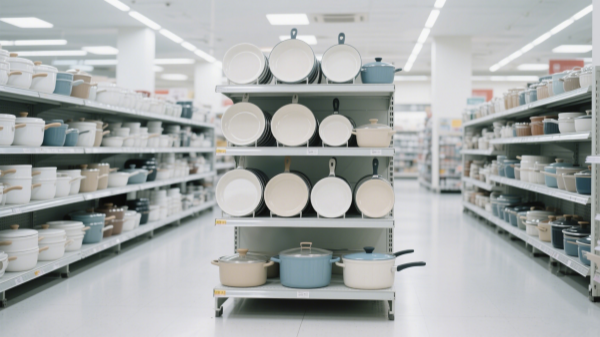
5. Usage Guide and Maintenance Recommendations: Extending Safe Lifespan
5.1 Proper Operation Guidelines
- Avoid exceeding 300°C; use medium heat for frying.
- Opt for silicone or wooden utensils to prevent scratches.
- Preheat pans gradually to avoid thermal shock.
5.2 Daily Maintenance Tips
New ceramic cookware should be seasoned with vinegar to remove manufacturing residues. For minor scratches, ceramic repair paste can restore the surface. However, deep cracks or peeling require immediate replacement.
5.3 Purchasing Criteria
Look for products with FDA, Prop 65, and LFGB certifications. Matte-finish coatings are more durable than glossy ones, and uniform thickness ensures even heat distribution.
6. Controversies and Risk Warnings: Scientific Risk Mitigation
6.1 Risks of Low-Quality Products
Low-cost ceramic cookware often contains excessive heavy metals, with 37% of tested products failing safety standards. Avoid uncertified brands and prioritize reputable manufacturers like Xtrema or Solamex.
6.2 Limitations in Special Use Scenarios
While ceramic cookware works on induction stoves, ensure the base has a ferromagnetic layer. Extreme temperature changes (e.g., oven-to-sink) can cause cracking, so always allow gradual cooling.
7. Future Trends and Industry Outlook
7.1 Technological Innovation Directions
Advancements like 9H-hardness nano-ceramic coatings are making ceramic cookware metal utensil-friendly. Bio-based resins derived from plants are also being developed to reduce environmental impact.
7.2 Policy Drivers and Market Education
The EU's 2025 PFAS ban will accelerate ceramic adoption, while brands are increasing transparency by publishing lab reports online. Consumer education campaigns aim to dispel myths and promote informed choices.
8. Conclusion: Balancing Safety and Performance
Ceramic cookware offers a compelling balance of safety, durability, and performance when sourced from reputable manufacturers. Its PTFE/PFOA-free composition, high-temperature stability, and compliance with strict certifications make it a reliable choice for both home kitchens and commercial settings. By following proper usage guidelines and prioritizing certified products, consumers can enjoy the benefits of non-toxic cooking without compromising on quality.
Is Ceramic Cookware Safe? Ultimate Guide to Safety, Performance & B2B Sourcing
4 Quart Pot Mastery: Sizes, Materials & Recipes for Every Kitchen