Mastering Grill Pans & Griddles: A Home Chef’s Essential Handbook
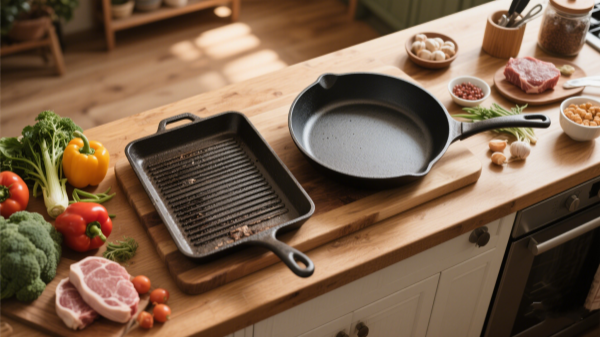
Grill pans and griddles have revolutionized modern cooking by bringing the outdoor grilling experience indoors. Whether you love charred flavors in any weather or want to maximize the versatility of your kitchen, these essential tools offer a dynamic way to cook a wide range of dishes. In this guide, we explore everything from design features and materials to maintenance, helping you choose the perfect grill pan or griddle for your unique cooking needs.
Understanding Grill Pans & Griddles: Basics and Beyond
Grill pans and griddles might appear similar at first glance, but each is designed with specific cooking techniques in mind:
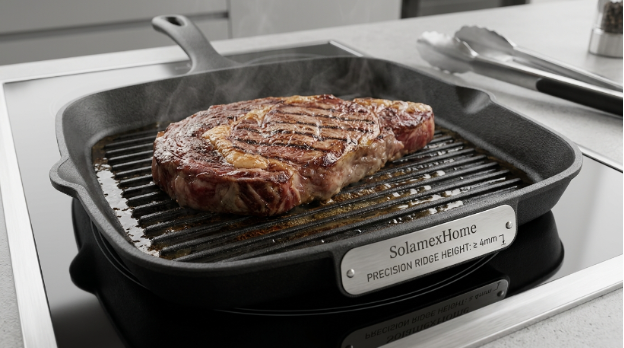
- Grill Pans: Featuring raised ridges, grill pans are engineered to create attractive char marks. These ridges help drain away excess fat, mirroring the traditional outdoor grill experience.
- Griddles: With a flat, expansive cooking surface, griddles provide even heat distribution. Their design is ideal for cooking items that require a uniform temperature, such as pancakes, eggs, or stir-fries.
Materials also play a crucial role in performance. Common choices include cast iron, stainless steel, and cast aluminum. Each material brings a unique set of benefits and characteristics, influencing cooking efficiency and maintenance requirements.
Material Matters: Choosing the Right Grill Pan & Griddle
The performance and durability of your grill pan or griddle largely depend on the material it’s made from:
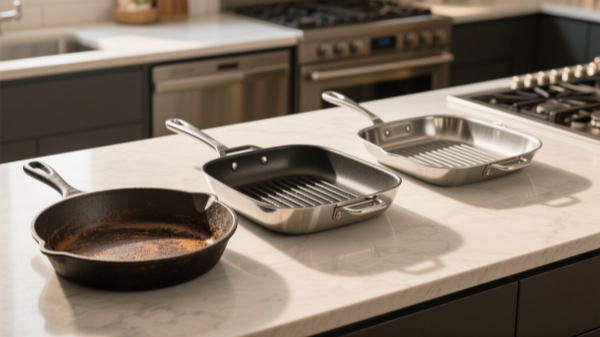
- Cast Iron: Known for its excellent heat retention, cast iron is the go-to choice for searing and long-term cooking. It’s perfect for those who value traditional grilling results. However, cast iron requires regular seasoning to maintain its natural non-stick surface.
- Stainless Steel: Celebrated for its durability and ease of cleaning, stainless steel offers a sleek, modern look and minimal maintenance. Its performance may be enhanced when combined with an aluminum or copper core for even heat distribution.
- Cast Aluminum: Lightweight yet effective, cast aluminum provides even heat conduction, making it ideal for everyday cooking. Many models come with non-stick coatings for added convenience.
Choosing the Right Grill Pan for Your Needs
Selecting the right grill pan or griddle depends on a variety of factors. Below are key considerations to guide your decision:
1. Usage Scenario & Cooking Goals
Determine whether you’ll primarily use your pan indoors or outdoors and what you plan to cook:
- Indoor vs. Outdoor: For indoor cooking, prioritize models with non-stick coatings or cast iron for precise heat control. Outdoor-compatible options—typically cast iron or stainless steel—are versatile for camping or backyard grilling.
- Cooking Focus:
- Searing & Grilling: Look for cast iron or stainless steel pans with deep ridges to create attractive char marks and efficiently drain excess fat.
- Delicate Foods: For fish or eggs, non-stick coated pans or enameled cast iron are ideal for effortless food release.
- Multi-Dish Cooking: Larger griddles (30+ cm) with flat surfaces excel at cooking pancakes, stir-fries, or batch dishes.
2. Kitchen Space & Storage
Consider how much space you have available:
- Compact Kitchens: Look for models with foldable handles (such as STAUB’s silicone handles) or stackable designs to conserve cabinet space.
- Portability: If you need a pan for camping or small apartments, lightweight cast aluminum or non-stick griddles (like Solamexhome’s 7-inch model) are excellent choices.
3. Budget & Long-Term Value
- Budget-Friendly: Brands such as Lodge (cast iron) or Fontignac (enameled cast iron) offer durability at a price range of $50–$150.
- Mid-Range: Premium options like Staub and Le Creuset blend craftsmanship with vibrant designs, usually priced between $200–$400, ideal for cooking enthusiasts.
- Eco-Conscious: Look for PFOA/PFAS-free coatings or uncoated cast iron to make a sustainable choice that reduces your environmental footprint.
4. Maintenance Preferences
Think about how much upkeep you’re willing to invest:
- Low-Effort Cleaning: Non-stick coatings or enameled cast iron require minimal scrubbing and resist stains effectively.
- Seasoning Enthusiasts: Traditional cast iron benefits from regular seasoning, which enhances its natural non-stick properties over time.
5. Stovetop Compatibility
- Induction Cooktops: Ensure that your chosen pan is magnetic—typically cast iron or stainless steel—or is explicitly labeled “induction-compatible.”
- Gas/Electric Stoves: While most materials work on these stoves, cast iron is especially prized for its ability to retain heat, making it ideal for slow-cooking recipes.
The Allure of Non-Stick Coatings
Non-stick coatings have transformed kitchen cooking by offering both convenience and health benefits:
- Health-Conscious Cooking: With PFOA-free and PFAS-free coatings, you can reduce oil usage for healthier meals.
- Effortless Food Release: Non-stick surfaces prevent food from sticking, making it easier to cook delicate items like fish or pancakes without the hassle of scraping.
Cleaning and Maintenance Made Simple
Post-Cooking Care
After using your grill pan or griddle, proper cleaning is essential to maintain its performance:
- For cast iron, clean gently and re-season regularly to preserve its natural non-stick layer.
- For stainless steel and aluminum pans, a mild detergent and non-abrasive sponge are ideal to prevent surface damage.
Long-Term Maintenance
To ensure longevity:
- Avoid abrasive cleaners that can scratch the surface.
- Store your pans with protective liners or separately to prevent damage.
- Regularly check for any wear or deterioration in coatings and handle features.
Beyond Grilling: Versatility at Its Best
Grill pans and griddles are not just for grilling—they are incredibly versatile tools:
- Grill Pan Uses: They are perfect for searing steaks, grilling vegetables, and even creating irresistible char marks on sandwiches.
- Griddle Applications: The flat surface is ideal for cooking pancakes, eggs, grilled cheese, and even stir-fries.
- Indoor and Outdoor Flexibility: Many models are designed to work seamlessly on both stovetops and outdoor grills, providing you with unmatched cooking versatility.
Conclusion
In summary, grill pans and griddles offer unmatched versatility, health-friendly cooking, and ease of use. Their unique designs and varied materials—from the traditional charm of cast iron to the modern appeal of cast aluminum and stainless steel—ensure that there is a perfect option for every cooking style and kitchen space.
By understanding the basics, evaluating material differences, and considering your specific usage needs, you can confidently choose the ideal grill pan or griddle for both indoor and outdoor cooking. Our guide, with strategic insights like "induction-compatible grill pans" and "compact kitchen grill pans," empowers you to make informed decisions that enhance your kitchen experience.
We encourage you to experiment with these versatile tools and explore diverse recipes that showcase the best in grilling and griddling. Share your experiences and tips with fellow home chefs, and enjoy the journey toward healthier, more sustainable cooking!
The Ultimate Guide to Choosing the Best Outdoor Frying Pan for Your Adventures
Unveiling the Versatility of the Sauté Pan: A Comprehensive Exploration