Oven-Safe Cookware Guide: Decoding Labels & Avoiding 4 Major Brand Mistakes

Table of Contents
Why "Oven Safe" Matters More Than You Think
That beautiful ceramic baking dish or nonstick skillet might look perfect for transitioning from stovetop to oven, but using cookware beyond its thermal limits can have dangerous consequences. Unlike microwave-safe labels which relate to how materials interact with electromagnetic waves, "oven safe" specifically indicates a product's ability to withstand dry, ambient heat typically starting at 150°C (300°F) without degrading, warping, or releasing hazardous chemicals.
Real Risk: When non-oven-safe materials like cheap plastics, certain composites, or low-grade coatings are exposed to high heat, they can:
- Release toxic fumes (especially Teflon coatings above 260°C/500°F)
- Warp or melt completely (common with plastic handles or lids)
- Shatter unexpectedly (especially glass lids or ceramic with hidden flaws)
Modern standards like EN 12983-1:2023 now require rigorous testing including handle strength assessments, coating durability checks, and thermal distribution analysis specifically for oven-safe claims. Yet many consumers remain unaware that "oven safe" isn't a universal guarantee - it always comes with critical temperature limits and usage conditions.
4 Critical Factors Determining Oven Safety
1. Material Matters: From Cast Iron to Composites
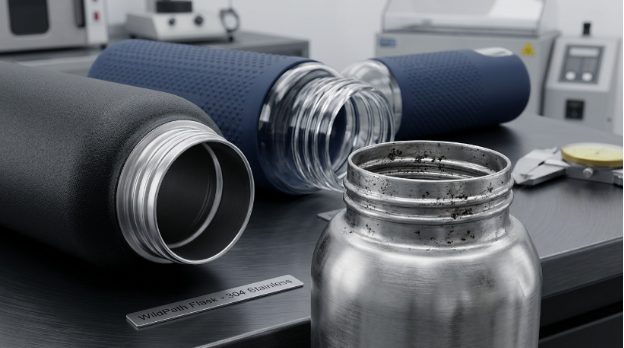
Metal cookware like stainless steel and cast iron are generally safest for oven use, often tolerating temperatures up to 260-290°C (500-550°F) or higher. However, handle composition is crucial - hollow metal handles conduct heat dangerously, while Bakelite, silicone-coated, or solid wood handles provide insulation.
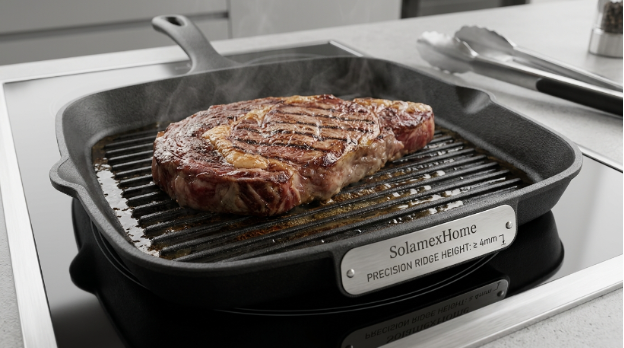
Nonstick coatings require extra caution. While newer ceramic coatings (like GreenPan's Thermolon) are generally PFAS-free and oven-safe to about 315-370°C (600-700°F), traditional Teflon begins breaking down above 260°C (500°F), releasing hazardous fumes.
Pro Tip: Always check for metal rivets connecting handles. Plastic rivets (found in cheaper pans) are common failure points in ovens.
2. Temperature Limits & Duration
An "oven safe to 400°F" label doesn't mean indefinite safety at that temperature. UL safety standards (UL 1026) test for material fatigue through repeated heating cycles. Continuously baking at maximum rated temperatures accelerates coating degradation and structural weakness.
3. Design Integrity: Handles, Lids & Joints
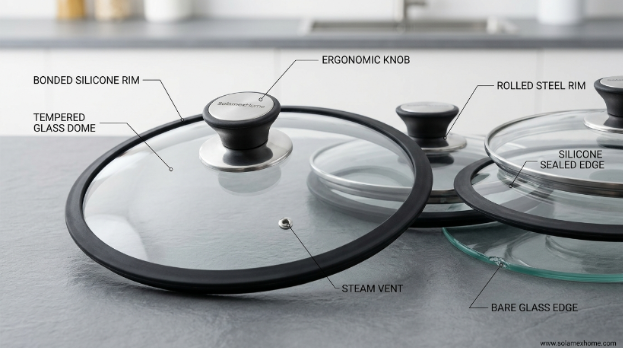
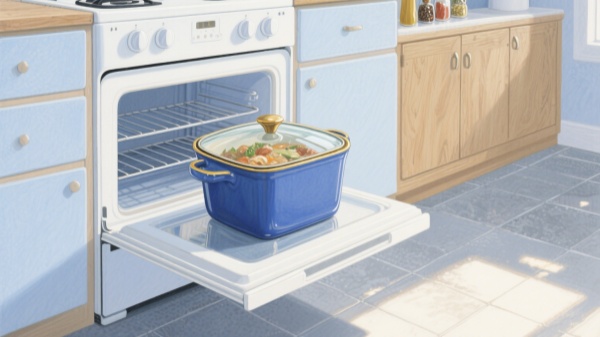
Glass lids often have significantly lower heat tolerance than their pots (e.g., GreenPan glass lids max at 190°C/375°F vs. their ceramic pots at 315°C/600°F). Silicone components like handle sleeves or knob covers typically withstand 220-260°C (425-500°F) but require verification per product.
4. Safety Certifications to Trust
Look for these validations on packaging or product pages:
- CE + EN 12983 (EU safety compliance)
- UL certification (U.S./Canada safety testing)
- FDA 21 CFR (U.S. food contact safety)
Missing certifications? Assume the cookware isn't oven-safe.
Brand Safety Showdown: Caraway vs Calphalon vs GreenPan vs All-Clad
| Brand | Oven-Safe? | Max Temp | Critical Limitations |
|---|---|---|---|
| GreenPan | ✅ Yes (with conditions) | 600°F (315°C) | Wooden handle collections (e.g., Hudson line) limited to 320°F (160°C); glass lids max 375°F (190°C); thermal shock risk if cooled rapidly |
| Calphalon | ✅ Yes (select lines) | 500-550°F (260-290°C) | Nonstick collections with plastic rivets NOT oven-safe; hard-anodized collections generally safe; always detach silicone handle covers |
| All-Clad | ✅ Yes | 600°F (315°C) | Silicone handle grips must be removed; stainless steel/copper core lines offer highest safety margin; no nonstick degradation concerns |
| Caraway | ⚠️ Limited | 550°F (290°C) | Epoxy-resin handles degrade with prolonged high-heat exposure; ceramic coating safe but thermal cycling may cause premature crazing |
Key Insight: The "oven safe" label applies only to specific materials within a product. A pan with a metal body but plastic-handled lid might have conflicting safety ratings per component.
5-Step Safety Protocol: Using Oven-Safe Cookware Correctly
1. Pre-Use Verification
Locate the embossed temperature rating on the cookware bottom (not just packaging). Check for cracks, coating chips, or warping which immediately void oven safety claims. Remove all non-metal accessories.
2. Oven Positioning Protocol
Keep cookware at least 2 inches from oven walls and heating elements. Avoid placing cold cookware directly into a hot oven - thermal shock can crack ceramics and enameled cast iron.
3. Handling & Extraction
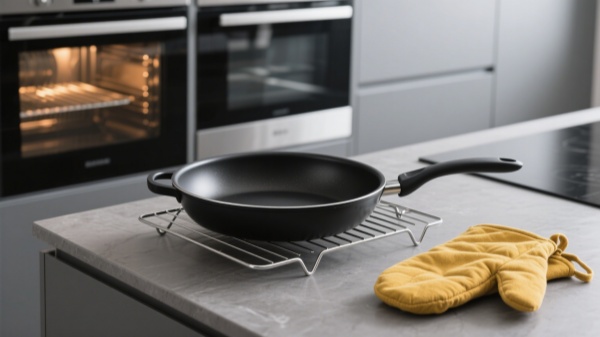
Always assume handles are hot. Use dry oven mitts (wet mitts transfer heat dangerously). Place hot cookware on trivets or cooling racks - never directly on countertops which can crack from thermal stress.
4. Post-Use Processing
Allow cookware to cool gradually to room temperature before washing. Sudden temperature changes cause ceramic coatings to crack and metals to warp. Never use abrasive cleaners that scratch protective surfaces.
5. When in Doubt: Safer Alternatives
For high-heat applications above 260°C (500°F), use these inherently safe options:
- Cast iron (Lodge, Le Creuset - note enamel limits)
- Borosilicate glass (Pyrex, Borcam)
- Stainless steel without coatings or joints
Your Top Oven Safety Questions Answered
Q: Why do oven-safe pan handles still get dangerously hot?
A: "Oven safe" means the handle won't melt or ignite at rated temperatures - not that it remains cool. Heat conduction varies by material: hollow stainless steel handles become extremely hot, while Bakelite or silicone-sleeved designs stay cooler longer.
Q: Can oven-safe cookware be used in air fryers?
A: Generally no. Air fryers generate concentrated, high-velocity heat up to 230°C (450°F) that exceeds the edge temperatures many handles and coatings experience in conventional ovens. Verify specific "air fryer safe" labeling.
Q: How to assess safety for vintage or secondhand cookware?
A: Follow this 3-step verification:
- Inspect coatings under bright light - any scratches or peeling disqualifies oven use
- Test handle stability - wobbling indicates loose joints
- Verify specs online - search manufacturer archives using model numbers
Final Safety Reminder: When upgrading oven-safe pieces, invest in brands like All-Clad or Demeyere that publish third-party test reports (UL/CE/FDA). The slightly higher cost delivers decades of safe service versus replacing compromised cookware every 2-3 years.
Oven-Safe Cookware: The Ultimate Guide to Materials, Safety & Top Brands
Ultimate Guide to Oven‑Safe Cookware: Materials, Ratings & Top Brand FAQs