Oven-Safe Pots & Pans: Your 2025 Guide to Effortless Stovetop-to-Oven Cooking
I. Introduction: The Daily Struggles That Demand Oven-Safe Cookware
The modern home cook juggles multiple tasks: searing, baking, broiling, and more. Yet too often, recipes demand abrupt transitions between the stovetop and the oven, leading to messy transfers, uneven cooking, and extra cleanup. According to the U.S. Energy Information Administration, U.S. households use stovetops an average of eight times per week but ovens only three times, highlighting a disconnect in cookware versatility1. Meanwhile, many cooks continue to rely on non-oven-safe pans for convenience, risking coating breakdown and exposure to harmful chemicals2.
The Morning Rush Dilemma
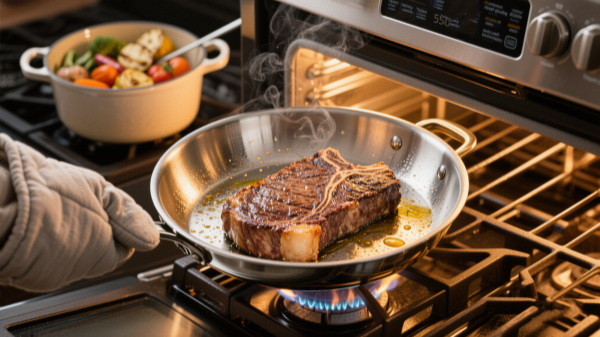
Picture this: you’ve just browned an omelet on the stovetop and need to finish it under the broiler. Without an oven-safe pan, you face either a messy transfer or an under-cooked center. This not only disrupts your workflow but leaves you with more dishes to wash.
Family Meal Frustrations
Preparing a one-pot casserole often means using two or three pans—one for browning, another for baking—doubling cleanup time. With 60% of women and 33% of men cooking daily, inefficient cookware choices can add dozens of extra minutes to meal prep and cleanup each week3.
Health and Safety Concerns
Standard nonstick coatings begin to break down above 500°F (260°C), releasing toxic fumes and microplastics4. Glass bakeware can shatter if exposed to rapid temperature shifts. Oven-safe cookware bridges these gaps, offering efficiency, safety, and peace of mind.
II. Material Science: Decoding the Chemistry of Oven-Safe Cookware
Choosing the right material is paramount for heat resistance, durability, and food safety. Below is a comparison of common oven-safe materials:
| Material | Max Oven Temp | Pros | Cons |
|---|---|---|---|
| Cast Iron | ≤500°F (260°C) | Excellent heat retention; naturally nonstick when seasoned | Heavy; prone to rust without seasoning |
| Stainless Steel (tri-ply) | ≤600°F (315°C) | Even heat distribution; durable; PFOA/PTFE-free5 | Can stick if not preheated properly |
| Cast Aluminum Ceramic-Coated | ≤570°F (300°C) | PFAS-free; easy cleanup; scratch-resistant coatings available6 | Coating can wear over time; avoid metal utensils |
| Carbon Steel | ≤1200°F (650°C) | Lightweight; superb searing; high heat tolerance7 | Requires seasoning; rust risk |
| Enameled Cast Iron | ≤500°F (260°C) | Low-maintenance; vibrant designs; no seasoning | Enamel can crack with thermal shock |
Materials to Avoid: Pure aluminum (reacts with acids), standard PTFE nonstick (degrades above 500°F)8, and regular glass (prone to shattering).
Solamex, As a wholesale cookware company specializing primarily in aluminum-based products, we also offer a diverse range of cookware made from other high-performance materials. Regardless of the base material, every piece of cookware we manufacture adheres to strict health and quality standards. By leveraging advanced ceramic coatings and other innovative technologies, we ensure our products meet the demands of both home and commercial kitchens — including oven use — without compromising on safety or durability. Moreover, our competitive wholesale pricing delivers exceptional value when compared to similar products in the market, making Solamex a smart choice for retailers and professional buyers alike.
III. The Ultimate Buying Guide: From Novice to Connoisseur
When selecting oven-safe cookware, consider these seven critical factors:
- Temperature Threshold: Match cookware max temps to your intended uses (broil at 500°F vs. slow roast at 325°F).
- Handle Design: Metal handles (e.g., All-Clad) tolerate high heat; silicone handles limit you to ~350°F9.
- Induction Compatibility: Look for magnetic bases (e.g., Made In stainless sets).
- Coating Technology: PFAS-free ceramic (GreenPan) vs. mineral coatings (Granitestone).
- Brand Certifications: FDA food-safe and EU ECOCERT for eco-friendly production.
- Price Tiers:
- Budget ($50–$150): Tramontina tri-ply stainless steel.
- Premium ($300+): All-Clad copper-core collections.
- Scenario-Based Recommendations:
- Baking Enthusiasts: Borosilicate Pyrex dishes for even heat.
- Health-Conscious Cooks: Stainless steel (Made In) to avoid leaching10.
- Campers: Lodge carbon steel for lightweight durability.
IV. Mastering Usage: Pro Tips for Seamless Cooking
Oven Compatibility Rules
- Preheating: Place cold cookware in a preheating oven to prevent thermal shock11.
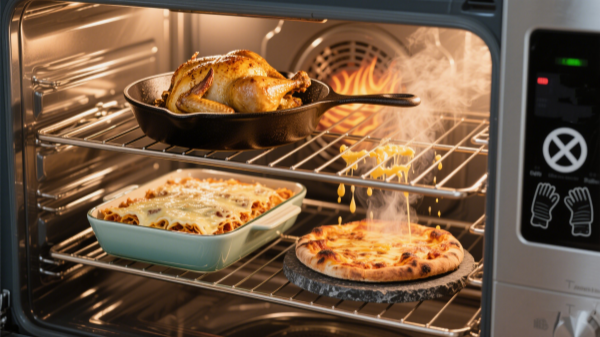
- Rack Placement:
- Upper rack: Crisp finishes (roasted chicken).
- Middle rack: Even baking (lasagna).
- Lower rack: Avoid bottom burning (pizza).
- Temperature Adjustments: Reduce by 25°F when using enameled pans to preserve color.
Cleaning & Maintenance
Cast Iron: Season with lard at 200°C for 1 hour; scrub with vinegar and salt12.
Stainless Steel: Soak with tomato sauce for 15 min; polish with baking soda and olive oil.
Ceramic: Soak in warm water and use a soft brush; store upright to protect the coating.
Advanced Techniques
Reverse Sear Steak: Roast at 120°C, then sear at 230°C for perfect crust.
Oven Saucing: Reduce sauces at 200°C for 5 min to intensify flavor.
Enameled Pot “No-Water” Cooking: Harness vegetable steam at 180°C for tender results.
V. Pitfalls to Avoid: Common Mistakes and Solutions
Myth Busters
- “All metal pans are oven-safe.” Pure Aluminum warps and leaches with acid.
- “Glass = oven-safe.” Only borosilicate withstands high heat.
- “Nonstick pans can go in the oven.” Some degrade above 260°C / 500°F4. Solamex’s nonstick pans (featuring PFAS-free, high-temperature ceramic coatings) are oven-safe up to 570°F, letting commercial kitchens use them confidently for stovetop-to-oven recipes without risk of coating breakdown.
Troubleshooting
- Coating Chips: Caused by metal utensils; patch small areas with food-grade silicone.
- Warped Bottom: Avoid rapid temp changes; don’t let sides touch heating elements.
- Loose Handles: Tighten or reinforce rivets; replace if rusted.
VI. Future of Oven-Safe Cookware: 2025 and Beyond
Graphene Coatings: Debuting in 2025, offering 30% faster heat conduction.
Bio-Based Materials: Cornstarch-derived coatings for sustainable durability.
IoT-Enabled Pans: Built-in sensors (e.g., Anova) to monitor cooking via app.
Self-Cleaning Technology: Catalytic coatings break down residue during cooking.
Modular Design: Replaceable parts reduce waste (Circulon Eco Series).
Low-Carbon Manufacturing: Increased use of recycled aluminum.
VII.Conclusion: Your Path to a Hassle-Free Kitchen
By integrating oven-safe cookware into your kitchen arsenal, you streamline prep, reduce cleanup, and safeguard your health. Premium sets can last over a decade, translating to less than $0.10 per day in investment. Start this week by roasting fries in a seasoned cast iron pan at 200°C for 25 minutes; next month, bake rice in stainless steel at 180°C for 30 minutes. Oven-safe cookware isn’t just functional—it’s a lifestyle upgrade blending efficiency, safety, and sustainability.
References
- U.S. Energy Information Administration: “In 2020, the cooktop was used an average of eight times a week, and oven use averaged three times a week.”
- Healthline: “Today’s nonstick and Teflon cookware is considered safe for everyday home cooking, as long as temperatures do not exceed 500°F (260°C).”
- Instacart: “60% of women and 33% of men engage in food preparation on an average day.”
- GoodRx: “Using certain types of cookware, such as Teflon or aluminum, can lead to health issues.”
- Healthier Homes: “Stainless steel is highly durable, resistant to rust and corrosion, and often considered one of the safest materials for cookware.”
- Green America: “100% ceramic is safe to use in the microwave and oven.”
- Made In: “Carbon steel frying pans are oven-safe up to 1200°F, lightweight, boast incredible heat retention.”
- Ecology Center: “79% of the cooking pans were PTFE-coated, 20% of the baking pans were PTFE-coated.”
- Caraway Home: “Most cookware materials are oven-safe by themselves, but some features—like plastic handles—render the pan unsuitable for use in the oven.”
- Cup Indy: “Stainless steel pans are durable and versatile for searing and sauces.”
- Made In: “Ceramic pans often not oven-safe due to handle materials; look for all-metal construction.”
- Wellness Mama: “The safest nonstick cookware is seasoned cast iron because it doesn’t use any chemicals.”
- Buy Me Once: “Any cookware made entirely from metal will be oven-safe.”
- Cooking.StackExchange: “Most nonstick pans can go up to around 500°F (260°C) without damage.”
- Homes & Gardens: “This guide explores the best non-toxic cookware options of 2025, testing safety, durability, and performance.”
How Do I Know If My Pan Is Oven Safe? A Definitive Guide to Material Checks, Label Clues, and Safe Testing
Is Cast Aluminum Cookware Safe? Performance, Sustainability, and Modern Kitchen Use Explaine