Quart Pot Sizes Explained: 2qt to 12qt for Every Kitchen—Choose the Right Size for Soups, Stews & More
Introduction: The Common Confusion About Quart Sizes
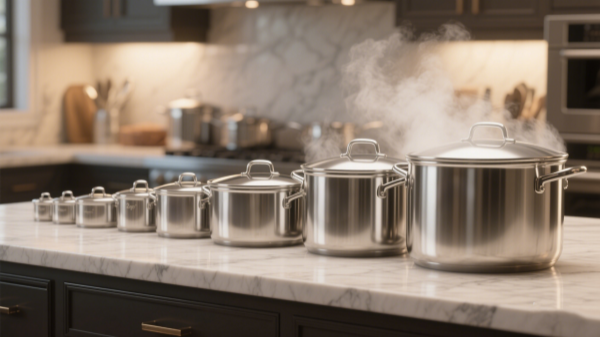
Is a 6‑quart pot big enough for family dinners? Can a 12‑quart pot even fit on your stovetop? These questions plague home cooks, often because the label “quart” feels abstract. This guide will clarify what a “quart” truly means for soup pots, explain why home cooks seek specific sizes (3 qt, 4 qt, 6 qt, 8 qt, 10 qt, 12 qt), and bridge the gap between numerical labels and real-world functionality—so you can shop and cook with confidence.
What Does “Quart” Mean in Pot Sizing?
1. Basic Unit Conversion
In U.S. measurements, 1 quart equals approximately 0.946 liters (≈32 fl oz, or 4 cups). Manufacturers label pots by the total internal volume up to the rim, but usable capacity—what you can safely fill without spilling—is often only 80–90% of that label, due to headspace needed for boiling and stirring.
2. Key Dimensions: Beyond Liters—What Affects Utility
A pot’s diameter × height affects stovetop fit, stirring ease, and recipe compatibility. For example, a deep 5 qt soup pot helps prevent splatters in soups, while a wide 5 qt pot is better for frying.
Breakdown by Quart Size: Which Pot Fits Your Needs?
A. Small Pots (2 qt–4 qt): For Singles, Couples, or Quick Meals
2 qt Pot
- Size: ~1.9 L
- Dimensions: Diameter 6–8″, height 4–6″
- Use Cases: Heating soup for one, boiling noodles for two, making sauces
3 qt Pot
- Size: ~2.8 L
- Approximate Dimensions: Diameter ~7–8″, height ~4.5–5.5″ (est. between 2 qt and 4 qt ranges)
- Use Cases: Small-batch soups (serves 3–4), steaming veggies, reheating leftovers
- Pro Tip: Look for ~9″ diameter for easy stirring—narrower (<7″) limits utensil movement.
4 qt Pot
- Size: ~3.8 L
- Dimensions: Rim diameter 10.18″, inside diameter 8.50″, height 4.37″
- Use Cases: Classic chicken noodle soup (serves 6), cooking a whole chicken (if tall enough), simmering chili
- Common Mistake: Filling to the brim risks overflow; safe max ~3.5 qt.
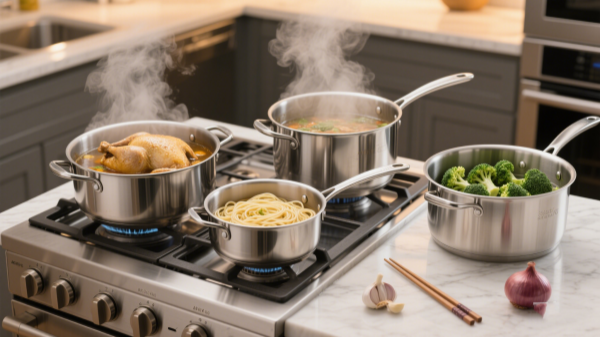
B. Medium Pots (6 qt–8 qt): Family‑Friendly Workhorses
7 qt Soup Pot
- Size: ~5.7 L
- Dimensions : Diameter 11.25″, walls 4.25″ tall
- Use Cases: Holiday turkey stock, large batches of lentil soup, boiling pasta for 6
- Visual Guide: Fits a 5 lb roast + 4 cups veggies + 3 cups broth with room to spare.
8 qt Pot
- Size: ~7.5 L
- Dimensions : Diameter 10.5″, height 5.5″
- Use Cases: Brewing small‑batch beer, cooking pulled pork for a party, steaming clams
- Stovetop Fit: Ensure burner ≥10″ to avoid uneven heating.
C. Large Pots (10 qt–12 qt): For Gatherings and Professional Use
10 qt Pot
- Size: ~9.5 L
- Design Priority: Look for ~12″ diameter, strainer lid for easy draining.
- Use Cases: Thanksgiving turkey brine, canning vegetables, soup for potlucks.
12 qt Pot
- Size: ~11.4 L
- Dimensions : Diameter 11.25″, height 9″ :contentReference
- Use Cases: Boiling a 20 lb turkey, making stock for a month’s meals, deep‑frying a whole fish.
- Warning: Empty weight ~8–10 lb; full weight can exceed 70 lb—ensure sturdy stovetop.
Comparison Table: Quart Size vs. Dimensions vs. Servings
| Size (qt) | Diameter | Height | Serves |
|---|---|---|---|
| 2 qt | 6–8″ | 4–6″ | 1–2 |
| 4 qt | 8.5″ | 4.4″ | 2–4 |
| 6 qt | 11.25″ | 4.25″ | 4–8 |
| 8 qt | 10.5″ | 5.5″ | 6–10 |
| 12 qt | 11.25″ | 9″ | 10–12 |
How to Choose the Right Quart Size for Your Kitchen
1. Key Factors to Consider
- Household Size:
- 1–2 people: 2 qt–4 qt (daily) + 6 qt (occasional)
- 3–6 people: 4 qt–8 qt (daily) + 12 qt (special occasions)
- Cooking Habits: Batch cooking? Favor 8 qt–10 qt with flat bottoms; soups/stews? Choose height ≥7″.
- Kitchen Constraints: Burner diameter +2″ rule; cabinet should fit 12 qt pot shelf ≥15″ W × 12″ H.
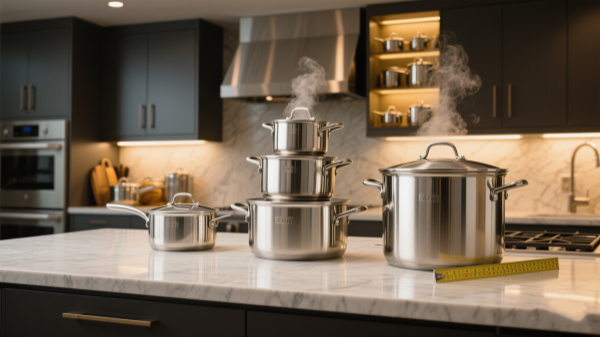
2. The 10‑Minute Test: Find Your “Most Used” Size
List your top 5 go‑to recipes (e.g., “beef stew for 4,” “pasta for 6”), measure their water volume, then add 20% for expansion—this yields your ideal primary pot size.
Common Myths and Mistakes to Avoid
Myth 1: “A 4 qt Pot Holds 4 Quarts of Solid Food.”
Capacity is liquid‑based; chopped veggies occupy ~30–40% more space—adjust capacity accordingly.
Myth 2: “Bigger Is Better for Versatility.”
A 12 qt pot is cumbersome for daily use—opt for a 6 qt as your everyday workhorse.
Mistake: Ignoring Pot Shape
Wide, shallow 6 qt pots excel at frying/evaporating; narrow, deep 6 qt pots are best for boiling/steaming.
Conclusion: Size Matters—But So Does Purpose
Match quart size to your family, cooking style, and kitchen space. Start with a 4 qt or 6 qt pot—most versatile—and add smaller or larger sizes as needs arise. Measure your stovetop and favorite recipes today to find your perfect fit!
The Hidden Power of Aluminum Pans: How Seasoning Aluminum Cookware into a Non-Stick
How Big Is a 4 Quart Pot? Discovering Its True Size, Uses, and Essential Role in the Kitchen