The Aluminum Wok Advantage – Lightweight, Lightning-Fast & Budget-Friendly Stir-Fry Secrets
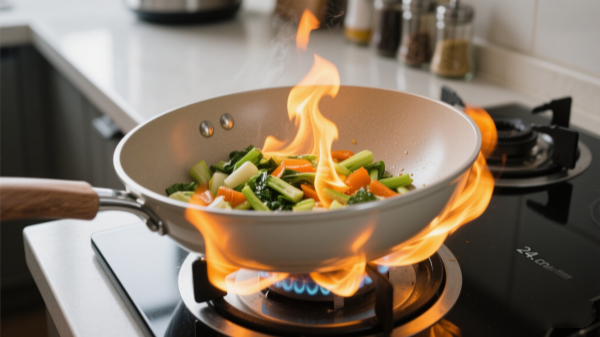
Summary: An aluminum wok stands out for lightning-fast heating and extraordinary heat distribution, making it ideal for authentic stir-frying and “wok hei” flavor. Its feather-light design and budget-friendly pricing suit both home cooks and commercial kitchens. While bare aluminum can react with acidic ingredients and develop metallic off-notes, simple seasoning and gentle maintenance preserve performance and safety. Compared to a flat frying pan, the wok’s deep, sloping walls enable minimal oil use and continuous tossing. When choosing cookware, you’ll weigh aluminum’s conductivity against other materials—carbon steel, cast iron, or stainless steel—and decide which bottom style, gauge, and finish best match your stove and cooking style. This guide covers all that—plus care tips, material trade-offs, and selection advice for a perfect aluminum wok.
1. Introduction
A aluminum wok is a wok constructed primarily from aluminum—valued for its rapid heat-up and cool-down times, low weight, and affordability. Unlike heavier carbon steel or cast iron woks, aluminum models respond instantly to temperature changes, enabling the signature “flash-fry” techniques of stir-frying.
In this article, you’ll learn:
- Key advantages and trade-offs of aluminum woks
- How they compare to frying pans and other materials
- Best practices for seasoning and long-term care
- How to select the ideal aluminum wok for your kitchen
2. Why Choose an Aluminum Wok? Advantages & Trade-offs
Superior Thermal Conductivity: Aluminum transfers heat about five times faster than stainless steel, creating a hot “ring” at the wok’s base while keeping the walls slightly cooler—perfect for tossing ingredients without burning them.
Lightweight & Affordable: Most aluminum woks weigh under 3 lbs, making tossing and flipping effortless, and cost significantly less than clad stainless steel or cast iron alternatives.
Simple Seasoning & Maintenance: Bare aluminum develops a natural patina over time. A basic oil seasoning will create a semi-nonstick surface with minimal effort.
Trade-off – Reactivity: Uncoated aluminum may leach trace metals into acidic or salty dishes, potentially imparting a metallic taste. Proper seasoning and choosing coated or anodized finishes mitigate this risk.
3. Wok Pans vs Fry Pans: Which to Use?
| Feature | Wok Pan | Fry Pan |
|---|---|---|
| Shape | Deep, sloping sides concentrate heat at bottom | Flat bottom with low walls for even surface contact |
| Best For | High-heat stir-frying, tossing at speed | Searing, sautéing, pan sauces, eggs |
| Oil Usage | Pools at center; uses less oil overall | Spreads evenly; may require more oil to coat surface |
| Capacity | High walls hold large batches without spills | Shallower capacity; better for single small portions |
| Storage | Requires extra depth or a dedicated rack | Stacks easily with other pans |
The wok’s geometry excels at rapid stir-frying over intense heat, while the fry pan’s flat surface provides steady contact perfect for searing and delicate tasks.
4. Aluminum vs Other Cookware Materials
4.1 Aluminum vs Carbon Steel
Carbon steel, the chef’s preferred wok material, offers superb durability and seasoning depth but requires diligent upkeep. Aluminum outpaces it in heat-up time and weight, though carbon steel develops a more robust nonstick patina over months of use.
4.2 Aluminum vs Cast Iron
Cast iron retains heat exceptionally well for braises and stews but is heavy and slow to respond to temperature shifts. Aluminum woks react instantly, ideal for quick toss-fry techniques, yet cast iron’s heft aids in maintaining steady heat under load.
4.3 Aluminum vs Stainless Steel
Stainless steel is non-reactive and induction-compatible but lacks aluminum’s conductivity unless clad around an aluminum core. Hard-anodized or ceramic-coated aluminum bridges this gap, offering a compromise between heat distribution and surface inertness.
5. Seasoning & Maintenance Best Practices
5.1 Initial Seasoning
- Wash your new wok with warm soapy water; rinse and dry thoroughly.
- Apply a thin coat of high-smoke-point oil (e.g., grapeseed, canola).
- Heat over medium-high until light smoke appears; repeat 2–3 times to build a protective patina.
5.2 Everyday Cleaning
Hand-wash immediately after use with mild detergent and a soft sponge. For stubborn residue, simmer a little water with baking soda in the wok, then rinse and dry.
5.3 Utensils & Heat Control
Use wooden or silicone tools to preserve the seasoning layer. Avoid overheating an empty wok, which can warp thin aluminum and damage coatings.
5.4 Storage Tips
Ensure the wok is completely dry before storing. Placing a paper towel between stacked pans prevents scratching and moisture buildup.
6. How to Choose the Right Aluminum Wok
When shopping, consider:
- Bottom Style: Flat bottoms suit electric or induction stoves; round bottoms perform best over high-BTU gas burners.
- Gauge & Thickness: Heavier gauges (≥ 3 mm) resist warping but heat up slightly slower than thinner woks.
- Handle Design: Long riveted handles enable tossing; loop handles aid two-handed lifting.
- Finish: Choose bare for traditional seasoning, anodized for scratch resistance, or ceramic-coated for PTFE/PFOA-free nonstick performance.
For hassle-free wholesale options, Solamex stands out as a reliable choice, offering a 30cm non-stick wok pan designed with a flat bottom for compatibility with electric and induction stoves. This model features a durable ceramic-coated finish that is PTFE/PFOA-free, ensuring safe and easy cooking while resisting scratches. Beyond this, Solamex provides a diverse range of wok products, including 24cm and 28cm aluminum non-stick woks with ergonomic handles for tossing or two-handed lifting. Additionally, Solamex’s cookware collection extends to frying pans, saucepans, and pot sets, all crafted with the same emphasis on quality materials and functional design, making them a versatile choice for both commercial and residential kitchens.
7. Conclusion & Key Takeaways
The aluminum wok offers unmatched heat responsiveness, light handling, and cost savings for enthusiastic stir-fry cooks. By understanding its reactivity, applying proper seasoning, and selecting the right bottom style and finish, you can harness its full potential. Whether you’re chasing authentic “wok hei” or simply need a versatile, speedy pan, a well-cared-for aluminum wok can become your kitchen workhorse.
Ceramic Stock Pots: Unveiling the Advantages of Cast Aluminum Ceramic Coating
Mastering Aluminium Wok Cooking: Safety, Techniques & Maintenance Guide