The Ultimate Guide to Storing Pots and Pans: Material-Specific Care & Space Solutions
Transform your kitchen organization with science-backed storage methods for every cookware type.
1. Introduction: The Science of Cookware Storage
Properly storing pots and pans is about more than tidiness—it’s a critical practice to protect your investment and enhance kitchen efficiency. A 2023 Good Housekeeping survey revealed that 68% of homeowners damage cookware due to improper storage, with non-stick coatings and cast iron being most vulnerable . This guide combines material science, ergonomic design, and expert insights to help you create a storage system that prolongs lifespan and elevates functionality.
2. Pre-Storage Preparation: Clean, Inspect, and Protect
2.1 Thorough Cleaning for Every Material
Start with a deep clean tailored to your cookware’s needs:
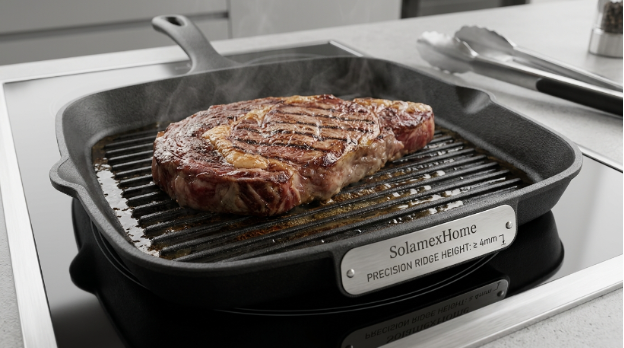
- Cast Iron & Enamel: Use a stiff brush to remove residue, skipping soap to preserve seasoning. Dry completely and rub with a thin layer of flaxseed oil (smoke point: 227°C) to prevent rust .
- Non-Stick & Ceramic (Aluminum Core): Gently scrub with a soft sponge and mild detergent. Avoid steel wool! Dry inverted to prevent water pooling on coatings.
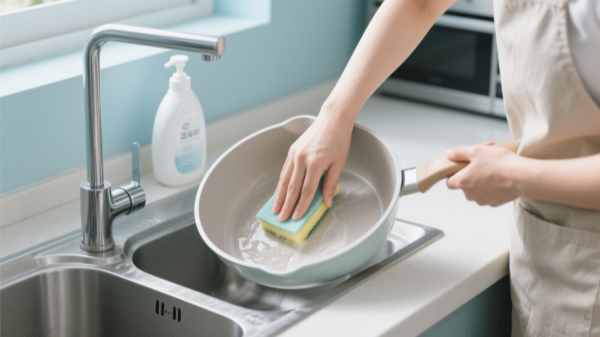
- Copper & Stainless Steel: Polish copper with a lemon-salt paste (1:1 ratio) to remove tarnish. For stainless steel, use a vinegar-water solution (1:3) to dissolve mineral deposits.
2.2 Inspect and Reinforce
Check for loose handles or damaged coatings:
- Use a torque wrench to tighten cast iron handles (8–10N·m torque).
- Replace non-stick pans with chipped coatings—worn Teflon can release harmful particles at high temperatures (WHO 2023 safety guidelines) .
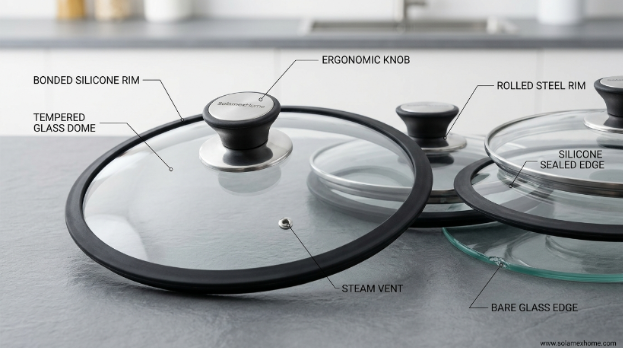
- Label lids with a dymo label maker to ensure they match their pots.
3. Material-Specific Storage Solutions
3.1 Heavy-Duty Cookware: Cast Iron & Stainless Steel
These durable materials need robust storage to prevent warping:
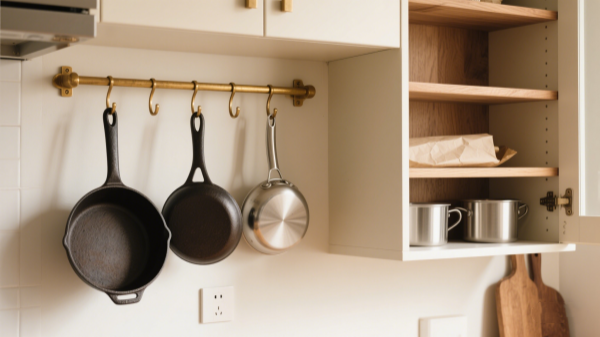
- Vertical Hanging: Use solid brass hooks (5kg+ capacity) on walls or ceiling racks. Space hooks 15cm apart to avoid collisions .
- Cabinet Storage: Line shelves with 3cm rubberwood boards for stability. Store cast iron upright with baking paper inside to absorb moisture.
Pro Tip:
Nest smaller stainless steel pots inside larger ones, separating them with cotton dish towels to avoid scratches.
3.2 Fragile Cookware: Non-Stick, Ceramic, and Copper
Protect delicate surfaces with zero-contact storage:
- Use 2mm silicone mats or wool felt between stacked non-stick pans. Avoid hanging over stoves—heat degrades plastic handles .
- Store copper pans wrapped in acid-free paper (pH 4.5–5.5) to slow oxidation. Stand them upright to protect bottom.
- Ceramic pots should be stored upside down with a silicone buffer under the rim to prevent chipping.
3.3 Flat Cookware & Accessories
Optimize drawers for frying pans and lids:
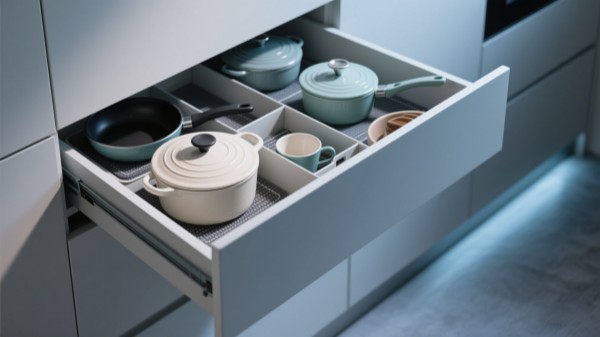
- Install adjustable wooden dividers (10–15cm spacing) in shallow drawers. Place handles outward for easy access.
- Use a foldable lid rack (e.g., OXO) to store lids vertically, preventing warping from stacking.
| Material | Key Risk | Best Storage Method | Tool Recommendation |
|---|---|---|---|
| Cast Iron | Rust | Vertical hanging + oil coating | Kesseböhmer Heavy-Duty Hooks |
| Non-Stick | Coating Scratches | Silicone-divided drawers | YouCopia StoreMore Rack |
| Copper | Oxidation | Acid-free wrapping + upright | Archive-quality Tissue Paper |
4. Space Optimization Strategies
4.1 High-Frequency Zone: The Golden Triangle
Store daily-use items within 1m of your stove:
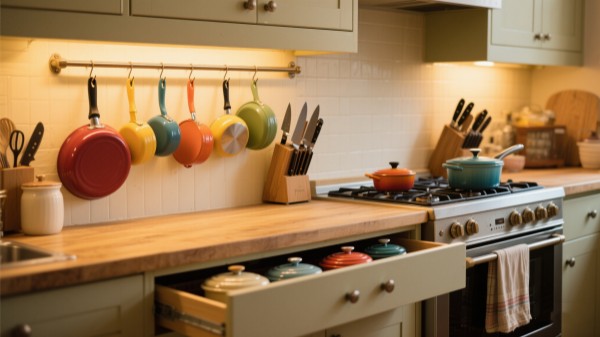
- Install a wall-mounted rail system (e.g., IKEA VARIERA) for easy access to frying pans and saucepots.
- Use deep drawers below the stove for lids and utensils, organized with magnetic knife strips.
4.2 Low-Frequency Zone: Deep Cabinets & Corners
Maximize hard-to-reach spaces:
- Upper cabinets: Use motorized lift baskets (e.g., Blum Aventos) for heavy pots. Control height via smartphone app for safety .
- Corner cabinets: Install a Lazy Susan with 360° rotation to access rarely used pans without bending.
4.3 Small Spaces & Rentals
Compact solutions for limited space:
- Stack uncoated pans (e.g., stainless steel) with cloth dividers, limiting to 3 layers.
- Use over-the-door hooks (3M Command Strips) for lightweight pots, avoiding wall damage.
5. Long-Term Maintenance: Keep Cookware in Peak Condition
5.1 Environmental Control
Maintain optimal storage conditions:
- Humidity: Use a hygrometer to keep levels below 60%. Add a dehumidifier (e.g., Eva-Dry) in damp kitchens.
- Light: Shield copper and aluminum from direct sunlight with UV-blocking blinds (99% UV rejection).
5.2 Monthly Maintenance Checklist
| Cookware Type | Frequency | Maintenance Tasks | Tools Needed |
|---|---|---|---|
| Cast Iron | Monthly | Re-season with flaxseed oil, check for rust | Oven, oil, wire brush |
| Non-Stick | Quarterly | Inspect for coating damage, clean with non-abrasive sponge | Magnifying glass, soft sponge |
| Copper | Bi-Monthly | Polish with Brasso, re-wrap in acid-free paper | Polishing cloth, paper |
Pro Tip:
For cast iron, bake at 180°C for 1 hour after seasoning to cure the oil into a durable layer.
6. Conclusion & Expert Tips for Lasting Organization
Effective cookware storage is a blend of material science, ergonomic design, and regular maintenance. By treating each pot and pan as a unique tool with specific needs, you’ll reduce waste, save time, and enjoy a kitchen that feels both luxurious and functional.
Final Tips from Kitchen Experts:
- Marie Kondo Method: Donate pans you haven’t used in a year—clutter hinders organization.
- Smart Upgrades: Install RFID tags (e.g., OXO SmartShelf) to track inventory via app.
- Eco-Friendly Hack: Use repurposed linen as pan dividers instead of plastic.
The Science of Dishwasher Safe Cookware: 2025 Buyer’s Guide
How to Store Pots and Pans Like a Pro: 8 Space-Saving Hacks for Every Kitchen Type