Unveiling the Core Advantages and Selection Guide for Forged Aluminum Cookware
Unveiling the Core Advantages and Selection Guide for Forged Aluminum Cookware
In today's modern kitchens, choosing the right cookware is essential for consistent, professional results whether you're a home cook or a professional chef. Forged aluminum cookware stands out from its counterparts for its superior heat conduction, durability, and health benefits. This comprehensive guide explores its core advantages, compares it to other aluminum cookware types, addresses common user concerns, provides advanced selection tips, and takes a look at future trends in the industry.
I. Core Advantages of Forged Aluminum Cookware
Forged aluminum cookware is celebrated for its cutting‐edge manufacturing process. Unlike other methods, forging involves applying high-pressure compressive forces—often using hydraulic stamping—to form the metal into shape. This process results in a dense, uniform microstructure with several notable benefits:
Technological Innovation & Performance Breakthrough
Through solid-state plastic deformation, the aluminum's grain structure is refined. This not only boosts the material’s hardness by over 30% compared to conventional aluminum cookware, but it also eliminates porosity. By reducing microscopic air pockets, frying pans, stock pots and other kitchen cookware exhibits superior stability even when subjected to high-temperature cooking methods like stir-frying and deep-frying.
Revolutionary Heat Conductivity
A standout quality of forged aluminum is its exceptional heat conductivity. For instance, a 6061 aluminum alloy can have a thermal conductivity around 155 W/m·K—transferring heat approximately 60% faster than typical cast aluminum (which averages around 96.2 W/m·K). This rapid and even distribution of heat minimizes scorching risks and ensures that meals cook uniformly, whether you're searing steaks or stir-frying vegetables.
Dual Health & Safety Assurance
Health-conscious consumers appreciate that premium forged aluminum cookware frequently uses food-grade non-stick coatings, such as PFOA-free ceramic options, to effectively prevent aluminum ion leaching. Additionally, a specially oxidized surface layer—typically 20–30 microns thick (three times thicker than standard aluminum surfaces)—adds an extra measure of protection. This dual strategy reassures users that their cookware not only performs exceptionally but also maintains safety during everyday cooking.
II. In-Depth Comparison with Other Aluminum Cookware
To make an informed decision, it's important to understand how forged aluminum compares to other prevalent types, such as cast, anodized, and die-cast aluminum cookware. Each type is produced using a unique process that affects its overall performance, durability, and intended usage.
| Characteristic | Forged Aluminum | Cast Aluminum | Anodized Aluminum | Die-Cast Aluminum |
|---|---|---|---|---|
| Process | Solid-state plastic deformation (forging) | Molten metal poured into molds | Electrolytically oxidized surface on aluminum | Injection of molten aluminum into die |
| Strength & Durability | 40% higher compressive strength; minimal porosity | Prone to porosity and material segregation | Enhanced surface durability; resistant to scratching | Moderate strength but may have internal stress |
| Heat Conductivity | Superior, rapid, and even heat distribution | Lower and sometimes uneven | Similar base metal conductivity with added surface protection | Generally 50–60% slower than forged aluminum |
| Usage Scenarios | High-heat cooking (e.g., stir-frying, searing) | Low-heat, slow-cooking applications | Everyday use with non-reactive surface advantages | Cost-effective for mass production but may warp over time |
As the table illustrates, forged aluminum is best suited for high-performance and precision cooking, whereas alternatives like cast aluminum excel in more specialized or lower heat applications.
III. Key User Concerns & Solutions
Despite its advantages, users often have concerns when selecting cookware. Here, we address common issues and offer practical solutions:
Safety & Health
Coating standards are crucial. Always opt for cookware certified by agencies such as the FDA or EU EC 1935/2004, ensuring they are PFOA-free. Additionally, avoid prolonged storage of acidic foods like tomatoes or lemon juice in your cookware to minimize the potential for aluminum ion leaching. Maintaining controlled oil temperatures (ideally below 260°C) also helps preserve both food quality and cookware integrity.
Durability & Maintenance
Quality forged cookware is engineered with thickened bases (typically between 3–5 mm) and reinforced edges, which help it withstand frequent thermal shocks and high-heat cooking. To extend its life, it is recommended to clean using soft cloths or nylon brushes and to hand wash whenever possible instead of using a dishwasher.
Compatibility & Versatility
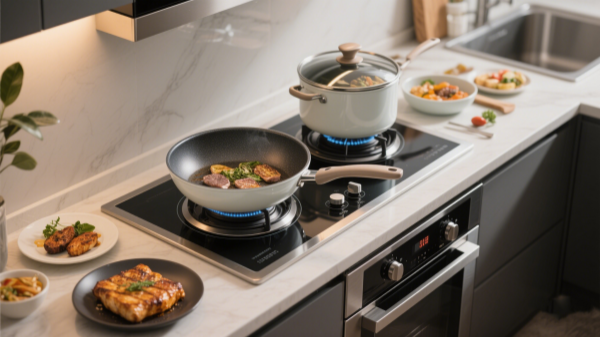
Most forged aluminum cookware integrates stainless steel composite bases, which means they are generally compatible with induction, gas, and ceramic stovetops. Their versatile design makes them ideal for a wide array of cooking scenarios—from frying and sautéing to braising and roasting.
Eco-Friendliness & Sustainability
Aluminum is highly recyclable, with a recycling rate of about 95%. When brands use at least 65% recycled aluminum and secure certifications like those from the Aluminum Stewardship Initiative (ASI), you are not just purchasing quality cookware—you are also supporting environmentally responsible production practices.
IV. Advanced Selection & Usage Guide
To achieve the best performance from your cookware, it’s essential to consider some critical specifications and best practices:
Critical Specifications
- Base thickness: A base thickness of at least 3 mm is recommended to ensure even heat distribution and improved durability.
- Body thickness: Aim for a cookware body of at least 2 mm to resist deformation under high thermal stress.
- Coating performance: Look for non-stick coatings with a hardness rating of 3 H or above and heat resistance of at least 450°C.
Brands & Certifications
Internationally renowned brands like GreenPan and Calphalon offer certified PFOA-free and NSF-certified coatings. For those in the wholesale cookware sector, SolamexHome Cookware emerges as the superior choice, offering unbeatable value without compromising on quality. Specializing in bulk orders, their forged aluminum products combine industrial-grade durability with budget-friendly pricing, making them ideal for retailers and foodservice providers seeking reliable, certified cookware at scale.
Common Misconceptions
Two prevalent myths are that forged aluminum cookware is too heavy and that its non-stick coatings last indefinitely. In reality, forged aluminum is approximately 50% lighter than cast iron, and while the coating typically lasts 3–5 years, regular inspection and proper care can extend its lifespan.
V. Future Trends & Industry Developments
Looking ahead, the cookware industry continues to evolve with both technological innovations and a heightened focus on environmental sustainability.
Technological Innovations
High-end forged aluminum cookware is increasingly incorporating composite structures that combine aluminum cores with stainless steel layers. This hybrid design optimizes both heat conductivity and corrosion resistance. Additionally, emerging trends include smart integration—cookware equipped with built-in temperature sensors and wireless connectivity, offering real-time monitoring via mobile apps for precision cooking.
Market Dynamics
With a growing consumer preference for non-toxic and eco-friendly products, the forged aluminum market is expanding at an estimated 6.1% CAGR. Manufacturers are focusing on design evolution by incorporating ergonomic features, detachable components, and modern aesthetics that enhance both user experience and kitchen appeal.
VI. Conclusion & Actionable Insights
Forged aluminum cookware represents a perfect blend of innovative technology, superior heat performance, and safety. Its robust design, coupled with environmentally responsible production practices, makes it an ideal choice for modern kitchens. By prioritizing craftsmanship, selecting certified non-toxic coatings, and adhering to proper maintenance practices, consumers can enjoy a culinary tool that not only enhances cooking performance but also contributes to healthier eating and sustainable living.
When selecting your next cookware set, keep in mind the critical specifications and best usage practices highlighted in this guide. Whether you are cooking over high heat for a quick sear or preparing a delicate sauté, forged aluminum cookware offers the reliability and performance needed to excel. Embrace the future of cookware with confidence, knowing that each piece is designed to be a long-lasting culinary companion.
Is Ceramic Coated Cookware Safe? Unveiling the Truth Behind the Popular Kitchen Essential
Unlocking the Magic of Cast Aluminum Cookware: Safety, Care & Versatility