What Is Water-Based Oil Non-Stick Coating For Cookware
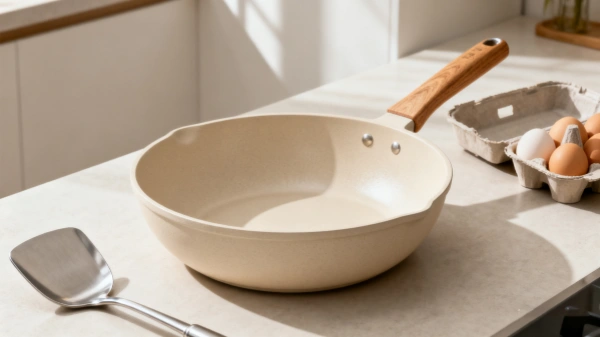
This article explains what these coatings are, how they are built and processed, what they typically do well and where they trade off performance, plus practical guidance for selection, use and inspection. It is written from a materials and procurement perspective; recommended checks and test items are included for purchasers and technical buyers.
How Water-Based Non-Stick Coatings Work
“Water-based” describes the formulation vehicle: the fluoropolymer or engineered polymer is present as a dispersion (microscopic polymer particles suspended in water) instead of being carried in an organic solvent. After application (spray, roll or dip), layers are dried to remove free water and then thermally fused or sintered to form a continuous film that provides release and low friction.
Typical architecture for industrial and consumer non-stick systems is multi-layer: a pre-treatment or primer, one or more intermediate build layers (often with fillers for abrasion resistance or texture) and one or more topcoat layers that deliver the non-stick surface. The exact chemistry and number of layers vary by supplier and by intended use.
Key Processing Steps (High Level)
- Surface preparation: mechanical or chemical texturing (e.g., blast) to improve adhesion.
- Application: spray, roll or dip of aqueous dispersion layers with controlled wet film thickness.
- Drying stages: staged drying to remove water and surfactants; low-temperature drying is followed by higher temperature bake steps to remove wetting agents.
- Sintering / fusion: final high-temperature step that consolidates the fluoropolymer into a continuous film.
Common Materials Used
Waterborne systems can use PTFE dispersions or dispersions of melt-processable fluoropolymers such as PFA and FEP. Formulated systems commonly combine fluoropolymer topcoats with binders, primers and inorganic or polymeric fillers to tune abrasion resistance, texture and release.
Performance Characteristics And Typical Claims
Water-based formulations are widely used because they reduce volatile organic compound (VOC) emissions in manufacturing and allow familiar PTFE/PFA/FEP performance to be supplied without organic solvents. Typical performance characteristics include low surface energy (good release), chemical resistance typical of the fluoropolymer used, and the ability to achieve a very smooth finish when properly applied.
Limitations And Common Tradeoffs
Cookware Manufacturers and technical datasheets commonly clarify that water-based systems have practical limits to thickness per pass (particle size and formulation limit depositable thickness) and may require multi-pass builds for heavy-duty service. In some industrial use cases, solvent-based or powder systems provide thicker deposits or different adhesion properties; waterborne systems are, however, continually improving through tailored formulations.
How It Compares to Traditional Solvent-Based PTFE And To Ceramic Coatings
- Lower manufacturing VOCs and solvent exposure.
- Good release and very smooth finishes possible.
- Build per coat is usually thin; multi-layer systems are common.
- Can allow thicker single-pass deposits and, in some cases, different adhesion or wear characteristics.
- Historically used where very thick, heavy-duty films were needed.
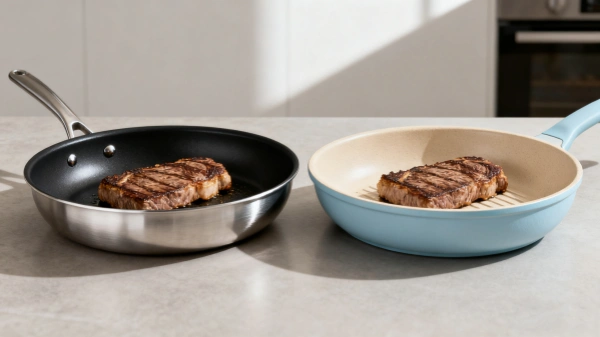
Compared with ceramic-style non-stick coatings, fluoropolymer dispersions generally provide lower surface energy (better release), whereas ceramic coatings often trade release for greater abrasion resistance or higher temperature performance depending on the formulation.
Processing Temperatures And Practical Limits
Typical production processes use staged drying steps at relatively low temperatures (for example, initial drying around 90–120°C to remove bulk water) followed by bake steps that remove surfactants and wetting agents, and a final fusion or sinter step at substantially higher temperature. For PTFE dispersions the final sinter range commonly referenced in technical guidance lies in the general band of roughly 350–400°C (briefly reaching this range under controlled conditions), though exact profiles depend on the dispersion grade and the substrate. Manufacturers’ technical data sheets (TDS) specify the exact curve that must be followed for a given product.
Selection Checklist For Buyers and Technical Buyers
When assessing pans, bakeware or industrial release coatings that state they use a water-based non-stick system, request or verify the following items from the supplier:
- Technical Data Sheet (TDS) for the coating system (dry film thickness, recommended cure profile, filler content).
- Safety Data Sheet (SDS) and any VOC reporting for the manufacturing process.
- Recommended maximum continuous and short-term temperatures for the finished coating.
- Abrasion or Taber test results if available, and adhesion test method used.
- Information on layer count and whether intermediate primers or bonding layers are present.
Use And Care Recommendations (To Maximize Lifetime)
Routine handling matters more to lifetime than the vehicle used. Follow these general practices:
- Avoid overheating an empty pan; follow the manufacturer’s recommended maximum temperature.
- Prefer medium heat for routine cooking; use higher direct searing only with pans rated for it.
- Use utensils recommended by the manufacturer (silicone, wood or heat-resistant nylon where advised).
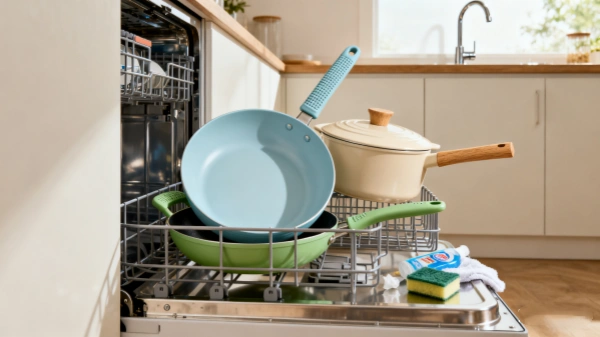
- Hand washing extends life for many finishes, though some systems are formulated to tolerate dishwasher cycles — check TDS.
Common Failure Modes And What To Inspect
The most common reasons a non-stick surface degrades are abrasion from metal tools, thermal degradation from repeated overheating, peeling due to poor surface preparation or insufficient adhesion, and chemical attack from aggressive cleaners or incorrect use. Inspections should include a visual check for delamination, localized flaking, and surface roughening; small adhesion test patches and abrasion testing may be required for a production acceptance protocol.
Manufacturing And Environmental Considerations
A water-based system can reduce VOC emissions during coating operations compared with solvent-based systems; it does not necessarily mean the coating is free of fluoropolymers or of PFAS chemistry. For environmental or regulatory decisions, confirm the presence or absence of specific substances through vendor disclosures and TDS/SDS.
Practical Questions (Short Answers)
What Does “Water-Based” Mean For A Non-Stick Coating?
Short answer: The polymer is supplied as particles in water rather than in an organic solvent. After drying and thermal fusion those particles form the finished low-friction film.
Are Water-Based Coatings Safer For Manufacturing?
Short answer: They generally reduce solvent exposure and VOCs at the point of coating; however, finished-pan safety depends on coating chemistry, intended temperature, and user behavior. Always check SDS and TDS for manufacturing and consumer safety details.
Is “Water-Based” The Same As “PFAS-Free”?
No. “Water-based” indicates the dispersion vehicle, not the chemical family. A water-based coating may still contain fluoropolymers; conversely, there are non-fluoropolymer waterborne release coatings that are PFAS-free.
Procurement Template: Minimum Technical Questions To Ask A Vendor
For B2B procurement put the following as minimum information requests into your RFQ or supplier questionnaire:
- Provide TDS, SDS and manufacturing VOC emission measurements for the coating line used on my products.
- State the number of coating layers, the dry film thickness (per layer and total), and the topcoat material.
- Provide recommended cure/dry profile used in production and any post-cure tests performed.
- Provide abrasion/Taber test data and adhesion test method and results for the finished product.
- Confirm the maximum recommended continuous and short-term use temperatures.
FAQ (Concise Answers For Quick Reference)
How Long Will A Water-Based Non-Stick Coating Last?
Longevity depends on coating build, use patterns and care. Under normal home use and correct care, many modern waterborne systems will provide multi-year service; heavy commercial use will reduce service life and should rely on vendor test data.
Can I Use Metal Utensils?
Follow the manufacturer’s guidance. Many coatings tolerate occasional metal contact but repeated abrasion will shorten life; soft utensils are safest.
Can I Reapply Or Repair The Coating?
Field repair of fluoropolymer non-stick coatings is uncommon and typically not recommended for consumer cookware. Recoating requires controlled application and high-temperature fusion — it is usually a factory operation.

Solamex — Wholesale Pots and Pans Expertise
Solamex offers wholesale pots and pans, combining durable materials, precise craftsmanship, and flexible product customization. From premium stainless steel to advanced nonstick lines, our catalog is built for both retail distribution and demanding commercial kitchens — ensuring consistency in performance and presentation.
Is Caraway Non-Toxic? A Clear Look At Materials, Safety Tests, And What To Know
What is Water-Based Oil Non-Stick Coating?