Marble Cookware: What “Marble” Coating Really Means, Safety, Care & Buying Guide
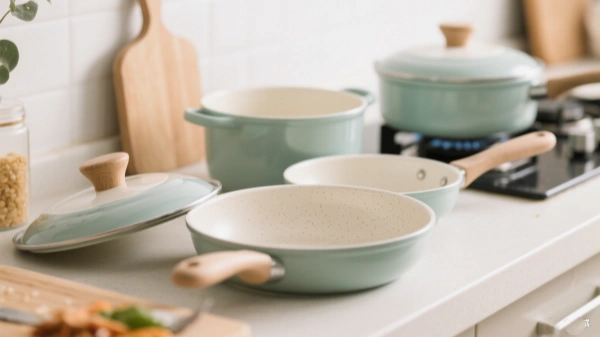
“Marble” pans are popular in marketing and on e-commerce pages — but what does that word actually mean? This guide explains the materials, real-world performance, safety notes, quick tests you can run at home, and clear care steps to get the longest life from these pans.
What is “Marble” Cookware?
Cookware Manufacturers use names like “marble”, “granite”, “stone” or “rock” to describe a textured nonstick finish. That finish is typically a layered coating — applied over aluminum or an aluminum-based body — that blends a polymer binder with mineral particles to improve abrasion resistance and achieve the speckled look shoppers expect. [8]
Why this matters: the base metal (aluminum, cast aluminum, or clad stainless steel) controls heat distribution and weight; the coating controls release and visible durability. Treat those two as separate specs when you compare pans.
How Marble Coatings Are Built (materials & variants)
Most marble/stone finishes use a multi-layer approach: primer layer → polymer nonstick layer (often PTFE-based in many products) → mineral/particle layer → topcoat seal. Some brands use ceramic (non-PTFE) binders with mineral inclusions instead. The difference in binder material (PTFE vs ceramic) has big consequences for heat tolerance and longevity. [5] [4]
| Coating Type | Typical Heat Tolerance | Scratch Resistance | Best for |
|---|---|---|---|
| PTFE-based “stone/marble” | Safe under medium heat; avoid empty-pan high heat | Medium (improved with particles) | Eggs, pancakes, low–medium frying |
| Ceramic (mineral) coatings | Higher surface heat tolerance but brittle under impacts | Lower to medium | Light frying, healthier alternatives |
| Uncoated metal (3-ply stainless steel /cast iron) | Very high | High (no coating to scratch) | Searing, browning, high-heat cooking |
Safety & Health: PFAS, Overheating and Fume Risks
Key safety point: modern nonstick coatings often state "PFOA-free" or "PFAS-free," but the broad class of PFAS and questions about high-temperature decomposition make it important to check manufacturer testing and to avoid overheating. Regulatory bodies are actively studying PFAS in food contact materials. [1] [2]
What to watch for:
- Labels such as “PFOA-free” are helpful but read the fine print and, for suppliers, request lab certificates. [6]
- PTFE (Teflon) can generate decomposition products at very high temperatures; the condition called polymer fume fever is a known result of inhaling thermal degradation byproducts from overheated fluoropolymers. Avoid running empty pans on high heat or leaving them unattended. [3]
- Regulators like the FDA and EFSA continue reviews of PFAS and food contact uses; that means safety advice is cautious and evolving. If you are safety-conscious, favor brands that publish independent lab tests. [1] [2]
Everyday Performance: What Marble Pans Do Well — and Where They Fail
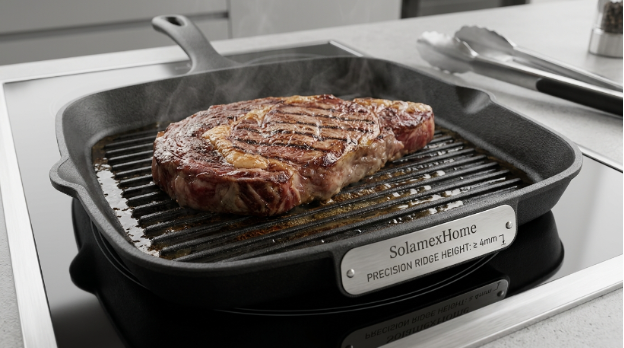
In everyday kitchens marble/stone pans usually shine at delicate, low-to-medium heat jobs: frying eggs, crepes, pancakes and reheating leftovers. Their release performance makes cleanup easy. However, they are not ideal for very high-heat searing (steaks) or for regular metal-utensil use unless the brand explicitly rates the coating for metal tools. [4] [8]
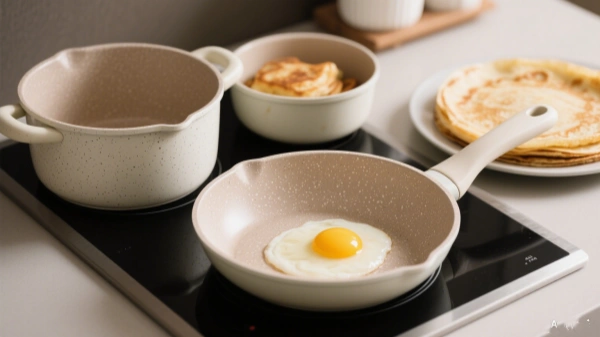
Quick in-home tests (3 small checks)
- Egg test: Heat on medium, add a little oil, fry one egg — it should release cleanly without sticking.
- Smoke test (careful): Warm the empty pan on medium-high for 2–3 minutes — it should not begin to smoke or become discolored; heavy smoke is a sign you’re exceeding safe surface temps. [3]
- Tool test (gentle): Try a wooden or silicone spatula only; if you try a single, gentle metal poke and see immediate white flakes, stop using that pan. If metal utensils are important to you, buy a pan with an explicit "metal utensil safe" certification. [8]
Typical lifespan varies: with careful use many nonstick pans perform well for 1–5 years; heavy use, misuse (high heat, metal tools), and poor cleaning shorten that significantly. Consumer testing shows higher-quality multi-layer coatings and well-built bases last longer. [4]
Marble vs Ceramic vs PTFE: Which Should You Choose?
Here’s a short decision flow:
Choose marble/stone if:
- You primarily cook delicate foods at low-to-medium heat.
- You want easy release and fast cleanup.
- You prefer a lightweight pan with good initial nonstick performance.
Choose ceramic or uncoated metal if:
- You need higher heat tolerance (ceramic) or extreme searing (cast iron/stainless).
- You avoid fluoropolymer chemistries completely and favor inorganic surfaces.
Put plainly: there is no single “best” surface for every task. Build a cookware set with purpose: a decent marble or ceramic pan for eggs and crepes, plus a heavy stainless or cast iron pan for searing. [5]
How to Buy: Specs and Labels to Insist On
When shopping, look for clear manufacturer specs and be skeptical of vague marketing terms.
- Material & base: Is the pan aluminum, clad stainless, or cast aluminum? The base determines heat spread and weight.
- Coating disclosure: Is the binder PTFE or ceramic? Does the brand publish independent lab test results or third-party certifications? [1]
- Temperature rating: What is the maximum safe surface or oven temperature listed?
- Warranty & replacement policy: A longer warranty often signals manufacturer confidence in coating durability.
Care & Maintenance — Do’s and Don’ts
Do
- Use low to medium heat for most nonstick cooking.
- Use wooden, silicone, or nylon utensils.
- Hand wash with a soft sponge; let cool before washing.
- Store with pan protectors or cloth between stacked pans.
Don't
- Don't heat an empty nonstick pan on high for long periods.
- Don't use metal knives or aggressive scouring pads on the coated surface.
- Don't ignore flaking, deep scratches, or a sticky surface — replace the pan.
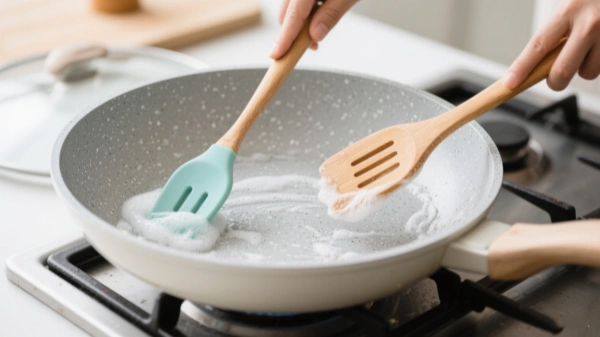
Small routines make a big difference. For example, wipe the pan dry after washing and avoid high-temperature aerosol sprays (they can leave residues and speed breakdown). Many brands also recommend avoiding the dishwasher even if the label says “dishwasher safe” — hand washing prolongs life. [8] [4]
Common Questions (FAQ)
Is marble cookware made of real marble?
Short answer: No. "Marble" in cookware refers to a stone-like coating or finish, not actual marble stone. [5]
Is marble coating safer than Teflon?
Short answer: It depends on the binder: many marble/stone coatings are PTFE-based, while others use ceramic binders. Check brand testing and avoid overheating. [1] [3]
Can I use metal utensils on marble pans?
Short answer: Usually no, unless the manufacturer explicitly certifies metal-tool safety. Most guidance recommends silicone or wooden utensils. [8]
How long will a marble pan last?
Short answer: With good care, expect 1–5 years depending on quality and usage; heavy high-heat use shortens lifespan. Consumer testing shows wide variance by brand. [4]
What are safe cooking practices to avoid fume risks?
Short answer: Avoid dry-heating empty pans on high, ventilate while cooking, and replace pans showing flaking or deep scratches to minimize chemical decomposition risks. [3] [6]
Quick Takeaways
- “Marble” is a marketing term for stone-like nonstick coatings — rarely actual stone. [5]
- Check whether the coating binder is PTFE or ceramic; that determines heat limits and safety behavior. [1] [5]
- Avoid overheating and metal utensils; follow simple home tests (egg, smoke, gentle tool test). [3] [8]
- Buy from brands that publish test data and offer reasonable warranties — this reduces risk for you or your customers. [4]
What Is Marble Cookware, and Should It Be Your Next Kitchen Upgrade?
18/8 vs 18/10 Stainless Steel: What Every Home Cook Really Needs to Know