Why 3‑Ply Stainless Steel Cookware Is a Smart Choice for Every Kitchen
Introduction
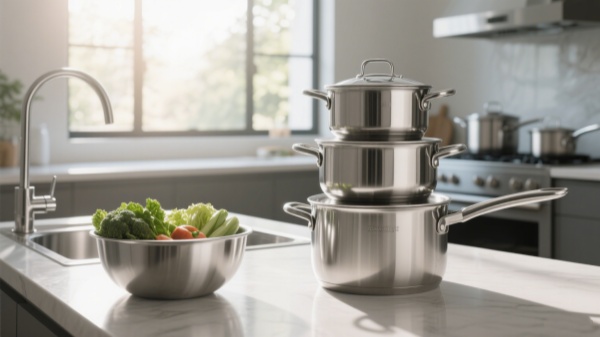
In recent years, 3‑ply stainless steel cookware has become a favorite among home chefs and professionals alike. Combining durability, responsive heat control, and versatile stovetop-to-oven performance, clad pans let you cook restaurant-quality meals in your own kitchen. In this article, we explore the technology behind 3‑ply construction, compare it to higher‑ply alternatives, and answer your top questions—so you can choose the right set for your cooking style.
Understanding 3‑Ply Construction
3‑ply refers to three bonded layers: two outer sheets of 18/10 (or 18/8) stainless steel enveloping a conductive aluminum core. The stainless steel surfaces offer corrosion resistance, a smooth cooking finish, and dishwasher-safe convenience, while the aluminum layer ensures quick, uniform heat distribution.

Manufacturers employ high-pressure rolling or cladding processes to fuse the layers into a single, seamless cooking surface—eliminating hot spots and enhancing cooking precision.
Key Benefits of 3‑Ply Cookware
Efficient heat distribution: The aluminum core heats up in seconds, spreading heat evenly across the base and walls of the pan to prevent scorching.
Durability & maintenance: Uncoated stainless steel resists scratches and can withstand metal utensils, while routine cleaning restores its shine.
Stovetop versatility: Safe for gas, electric, ceramic, induction, and even 500 °F oven use.
Cost-effectiveness: Compared to 5‑ply or 7‑ply cookware, 3‑ply sets strike a sweet spot between performance and price, making them a smart mid‑range investment.
Real‑World Performance & User Feedback
Across Reddit and Quora discussions, users praise 3‑ply sets like All‑Clad D3 and Viking Contemporary for rapid heating and easy cleanup. Some note a learning curve—mastering preheating and oil temperature to prevent sticking—but most gardeners of the kitchen say the results justify the effort.
3‑Ply vs. 5‑Ply (and Beyond)
More layers generally mean greater heat retention and heavier weight—but with diminishing returns for most home cooks. Below is a quick comparison:
| Feature | 3‑Ply | 5‑Ply |
|---|---|---|
| Material Layers | SS‑Al‑SS | SS‑Al‑SS‑Al‑SS |
| Heat‑up Time | Fast | Moderate |
| Weight | Light to Medium | Medium to Heavy |
| Price Range | $$ | $$$ |
| Best For | Everyday cooking | High‑volume & precision tasks |
Is 3‑Ply Stainless Steel Safe?
Concerned about metal leaching? Rest assured, the aluminum core is fully encapsulated—never in direct contact with food. Stainless steel alloys (18/10 or 18/8) may leach trace nickel or molybdenum above 400 °F, a scenario rare in normal cooking. All reputable cookware manufacturers comply with FDA and EU food‑contact regulations.
Care & Maintenance Tips
To keep your pans performing:
- Use gentle detergents; avoid bleach or abrasive powders.

- Preheat on medium heat, add oil, then ingredients to prevent sticking.
- For rainbow discoloration, wipe with vinegar or a stainless‑steel cleaner.
- Store with pan protectors or hang to avoid scratches.
Common Myths & Misconceptions
“More plies always mean better cooking.” In practice, layer number beyond three yields only slight gains for most home cooks.
“Stainless steel is nonstick.” Proper preheating and oil technique—not the material—create a slick surface.
“Aluminum cores are toxic.” With full encapsulation, there’s no aluminum exposure to your food.
People Also Ask
Is 3‑ply stainless steel cookware good?
Yes—3‑ply sets offer an ideal balance of rapid heating, durability, and affordability for everyday and semi-professional use.
3‑ply vs 5‑ply cookware: what’s the difference?
5‑ply retains heat longer and can be heavier, but 3‑ply heats faster, is lighter, and usually costs less—perfect for most home kitchens.
Is 3‑ply stainless steel safe?
Absolutely. All food-contact alloys meet strict safety standards, and the aluminum core is fully sealed.
How to choose the best 3‑ply cookware brand?
Look for reputable construction (roll-bond or pressure-bond), positive user reviews, and solid warranty coverage.
Buying Guide & Recommendations
Entry-level: Misen, Cuisinart (affordable, reliable performance).
Mid-range: All‑Clad D3, Viking Contemporary (professional-grade feel).
Premium: Made In, Demeyere (heavier construction, lifetime warranties).
Consider starter sets if you need versatility, or purchase individual pieces tailored to your cooking habits. Always check warranty terms and customer-service reputation.
Conclusion
For most home cooks seeking professional-level heat responsiveness, durability, and versatility without breaking the bank, 3‑ply stainless steel cookware remains the top recommendation. Match your choice to your cooking frequency, preferred cookware weight, and budget—and enjoy years of reliable performance.
Oven-Safe Cookware Guide: Safety, Brands & Mistakes to Avoid
3-Ply Stainless Steel Cookware: Ultimate Guide to Smarter Kitchen Investment