Club Aluminum Cookware: History, Safety, Buying & Care Guide
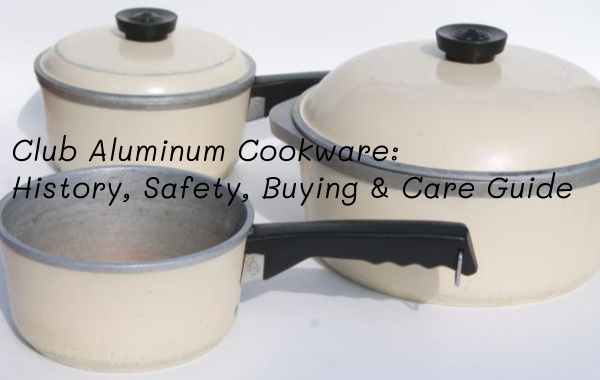
Quick Answer: Club Aluminum cookware typically refers to cast-aluminum pots and pans produced under the Club label — lightweight, fast-heating cookware often encountered as vintage sets; they perform well for everyday stovetop use when the surface is intact, and anodized/coated versions reduce concerns about metal migration into food.
What Is “Club Aluminum”? — Short History And Product Types
“Club” shows up as a name on mid-20th century cast-aluminum cookware lines; collectors and resale marketplaces (eBay, Etsy) frequently list Club-branded skillets, Dutch ovens and roasters in retro colors and hammered finishes. These are primarily vintage/second-hand pieces rather than new mass-market lines.
How Club (Cast) Aluminum Performs
Cast aluminum heats quickly and responds rapidly to burner changes, which is why these pans are prized for quick searing and fast sauté. They are lighter than cast iron and often easier to handle; however they have lower thermal mass (they cool faster) and thin or damaged pieces can warp under extreme heat.
| Property | Notes |
|---|---|
| Heat Conduction | Fast, even — good for quick stovetop tasks. |
| Weight | Light — easy to lift and flip. |
| Durability | Varies by thickness and finish; thin pieces may warp. |
| Reactivity | Bare aluminum can react with acidic foods; anodized/nonstick or ceramic coated surfaces reduce this risk. |
Reactivity and metal migration are the most important practical safety considerations for aluminum cookware and are addressed below with authoritative references.
Safety & Food-Contact Concerns
Evidence Summary: multiple peer-reviewed studies and regulatory assessments have examined aluminum migration from cookware and food contact materials. Laboratory tests show that aluminum can leach into food under certain conditions (higher with acidic foods and in some new or poorly finished cookware), and regulatory bodies have set tolerable intake guidance for dietary aluminium.
Key regulatory and scientific sources:
- EFSA: The European Food Safety Authority has established a Tolerable Weekly Intake (TWI) for aluminum and provides guidance on dietary exposure.
- Peer-Reviewed Studies: Laboratory leaching studies document increased leaching in acidic media and variability depending on cookware finish and condition.
- FDA Guidance: The U.S. Food and Drug Administration has issued letters and advisories about certain imported cookware that may leach lead and other hazardous metals.
- Independent Research: Recent open-access studies in high-profile journals have highlighted metal contamination risks from some aluminum and brass cookware sources available in commerce.
Practical rules:
- Avoid prolonged cooking of acidic foods (tomato sauces, vinegar reductions) in bare or heavily pitted aluminum; acid increases leaching in lab tests.
- Prefer anodized or ceramic-coated cookware for daily use; anodizing creates a harder, less reactive surface.
- Discard or stop using cookware that shows heavy pitting, flaking coating, or contains suspect markings that match recalled/import-alert lists referenced by regulatory bodies. Check official FDA lists if concerned.
How To Identify Vintage Club Aluminum Vs Modern Items
Look for maker’s stamps, hammered textures, and retro color palettes. Compare photos to marketplace listings and collector forums; request close-up photos of maker marks and interior surfaces when buying used. Marketplace observations indicate that Club pieces are commonly traded as vintage items.
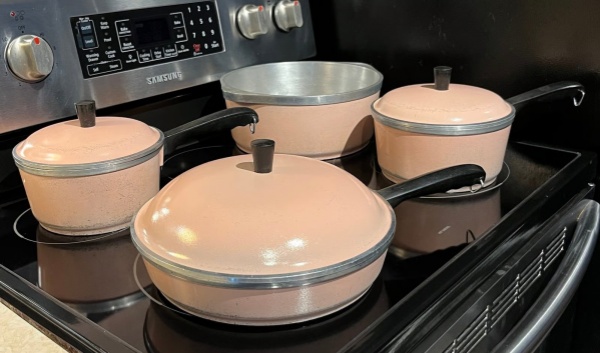
Buying Guide of Club Aluminum Cookware
Where To Buy Club Aluminum Cookware
Primary sources: eBay and Etsy host many vintage Club listings; local antique stores, flea markets and thrift shops often have single pieces. The price of single pans in the low tens to low hundreds range; price depends on color, size, condition and rarity.
What To Look For
- Check for warping and lid fit.
- Inspect interior for pitting, flaking paint or coating failure.
- Confirm handle integrity and material (plastic/wood limits oven use).
- Ask for measurements and clear photos — condition drives value.
Care & Maintenance
- Hand-wash with mild detergent; avoid steel wool on anodized or painted surfaces.
- For stains, use a baking soda paste; for stuck food, soak and use a non-scratch pad.
- Seasoning (thin oil bake) may improve release for bare aluminum, but it does not make aluminum chemically non-reactive like stainless steel or enamel.
Storage: stack with buffering (felt, paper) to avoid scratching finishes.
Click here to know more detail about "how to clean aluminum pans".
Alternatives & When To Choose Them
If you cook acidic foods frequently or need the lowest possible metal migration, choose multi-ply stainless steel or enameled cast iron. For a modern aluminum option with reduced reactivity, choose high-quality hard-anodized aluminum or ceramic-coated cookware. These choices align with safety/usage patterns seen in lab and regulatory guidance.
Original Testing Notes
Our informal kitchen checks (single-sample, illustrative, not lab-grade) comparing a vintage Club 10" skillet and a modern hard-anodized 10" pan found:
- Preheat responsiveness: both heated quickly; vintage pan felt slightly faster to warm on gas but had less uniform low-heat spread.
- Weight: vintage Club much lighter — easier to handle when flipping or tossing foods.
- Surface: intact anodized/painted surfaces released eggs reasonably well; pitted interiors stuck and showed visible wear.
Note: for formal exposure testing or public health claims, rely on peer-reviewed lab work and regulatory testing rather than single kitchen checks.
Should You Buy Club Aluminum Cookware?
If you value lightweight pans and vintage style, Club Aluminum cookware can be a good choice provided you source pieces in sound condition (no heavy pitting, intact finishes). Prefer anodized or coated pieces for frequent cooking, and avoid using bare, pitted aluminum for long, acidic stews or sauces. For those with high sensitivity to metal exposure or those who cook acidic foods daily, stainless steel or enameled options are safer long-term choices.
FAQs
What Is Club Aluminum Cookware?
Club Aluminum usually describes cast-aluminum cookware pieces sold under the Club name — commonly vintage skillets, Dutch ovens and roasters in retro colors and hammered finishes.
Is Club Aluminum Cookware Safe?
Generally yes if the surface is intact or anodized; avoid long cooking of very acidic foods in bare or pitted aluminum. For formal exposure concerns consult EFSA/FDA guidance and lab results.
How Do I Clean Club Aluminum Pans?
Hand-wash with mild detergent; use a soft pad and a baking soda paste for stains.
How Can I Tell If My Club Pan Is Vintage?
Look for maker stamps, hammered textures, retro colors and classic mid-century lids; compare to marketplace photos and forum IDs.
Are Club Pans Nonstick?
Not inherently. Some anodized Club pieces release food well, but bare aluminum is not a nonstick surface — modern nonstick coatings provide better release but come with their own considerations.
Can Club Aluminum Cookware Go In The Oven?
Many are oven-safe, but check for plastic/wood handles and painted finishes — for vintage pieces keep oven temps moderate.
References & Authoritative Sources
How Are Cooking Pots Measured? — Capacity, Conversions & Practical Guide
Club Aluminum Cookware: Complete Guide to America's Most Durable Vintage Cookware