Die Cast Aluminum Cookware: A Guide to Safety, Performance, and Modern Innovations

Table of Contents
1. Introduction: The Market Dominance and Safety Debates of Die Cast Aluminum Cookware
Die cast aluminum cookware has become a staple in kitchens worldwide, accounting for over 35% of the global cookware market. Its popularity stems from its lightweight design, exceptional heat conductivity (15 times faster than stainless steel), and affordability. However, this dominance is accompanied by persistent safety concerns, particularly regarding aluminum leaching and the integrity of ceramic coatings.
Key Market Advantages
- Efficiency: Ideal for quick-heating dishes like stir-fries and searing meats.
- Cost-Effectiveness: Affordable production processes make it accessible to budget-conscious consumers.
- Versatility: Used in both home kitchens and commercial settings for standardized cooking.
Core Safety Controversies
- Aluminum Leaching: Acidic foods (e.g., tomatoes, vinegar) and high temperatures (>232°C) can increase aluminum migration. Recent studies in China link excessive aluminum intake to cardiovascular risks, with over 400 million people exceeding safe limits .
- Coating Integrity: While ceramic coatings (sol-gel technology) are PFAS-free, composite coatings may contain heavy metals like lead or cadmium if produced unethically.
This article synthesizes scientific research (e.g., 2024 cardiovascular studies) and international standards (FDA, EU 1935/2004) to provide actionable insights for safe usage.
2. Material Science and Safety Mechanisms of Die Cast Aluminum
Aluminum’s Chemical Properties and Human Metabolism
- Natural Presence: Aluminum is the third most abundant element in the Earth’s crust. The World Health Organization (WHO) deems daily intake ≤50mg safe.
- Leaching Triggers:
- Acidic Environments: Tomato sauce (pH 4.2) can increase aluminum leaching by 3–5 times.
- High Temperatures: Prolonged dry heating (>260°C) damages the protective aluminum oxide layer (Al₂O₃), accelerating leaching.
Die Casting Technology and Material Purity
- Manufacturing Benefits: High-pressure casting densifies aluminum to 2.7g/cm³, enhancing corrosion resistance by 40%.
- Quality Risks:
- Recycled Aluminum: Inferior products may contain lead (>100ppm) or cadmium (>5ppm), as seen in FDA-banned brands like Rashko Baba.
- Certification Standards: Look for FDA food-grade certification (CFR Title 21) or EU EN 10088 stainless steel base certification.
3. Ceramic Coatings: Technology, Safety, and Maintenance
Coating Types and Compositions
- Sol-Gel Coatings:
- Composition: Silicon dioxide (SiO₂) base, free of PFAS/PFOA.
- Performance: Heat-resistant up to 232°C (450°F), ideal for stovetop use.
- Composite Coatings:
- Example: TiO₂-ZrO₂-Y₂O₃ blends withstand 260°C (500°F) but require adhesion testing (ISO 2409).
Safety and Durability
- Normal Usage: Intact coatings limit aluminum migration to <0.2mg/kg (EU standards).
- Damage Risks:
- Scratches >0.1mm: Expose aluminum, increasing leaching in acidic conditions.
- Wear Resistance: Ceramic coatings are 30% less durable than enamel but 50% more heat-resistant.
Maintenance Guidelines
- Cleaning: Use nylon brushes and lukewarm water (≤40°C); avoid steel wool.
- Inspection: Monthly visual checks for peeling or roughness.
4. Temperature Limits and Oven Usage Guidelines
Material Heat Tolerance
- Aluminum Substrate: Melts at 660°C but weakens at >200°C, risking warping.
- Coating Limits:
- Recommended Range: ≤204°C (400°F) for prolonged use.
- Oven Safety: Ensure 5cm clearance from heating elements.
High-Temperature Risks
- Dry Heating: Exceeding 260°C can decompose coatings, releasing volatile organic compounds (VOCs).
- Certification Compliance: EU EN 12983-1:2023 mandates 175°C/2-hour grease migration testing.
5. Safe Usage Scenarios and Maintenance Tips
Cooking Scenario Recommendations
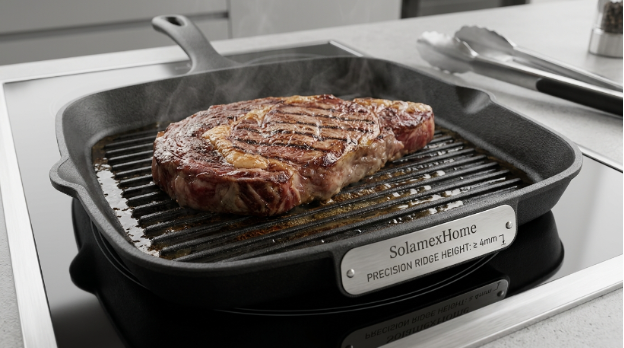
- Suitable: Searing steaks (180–200°C), simmering soups (90–100°C).
- Avoid: Storing acidic foods (e.g., pickles) for >24 hours.

Special Populations
- Kidney Patients: Reduced aluminum excretion requires medical consultation.
- Pregnant Individuals: Opt for stainless steel (e.g., Tramontina) or enamel cookware.
6. Safety Certifications and Smart Purchasing Strategies
International Standards
- EU EN 12983-1:2023: Strengthened adhesion tests (>5N/cm) and corrosion resistance.
- FDA 2024 Update: Lead leaching tests now require boiling for 2 hours + 22-hour room temperature soak.
- China GB 4806.9-2023: Mandates bio-compatibility and heavy metal testing for imported cookware.
Purchasing Criteria
- Coating Integrity: Passed ISO 2409 cross-cut test.
- Material Traceability: Request EN 10088 stainless steel or food-grade aluminum certificates.
- Trusted Brands: Solamex and Greenpan, certified by FDA/ROHS.
7. Controversies and Future Technological Trends
Long-Term Health Concerns
- Recent Studies: A 2024 Chinese study links aluminum exposure to a 27% increased cardiovascular risk (OR=1.27) .
- Scientific Consensus: Cookware is not the primary source of aluminum exposure; food additives in processed foods are the main contributors .
Innovations
- Eco-Friendly Coatings: Water-based ceramics (AvalonKing) and nickel-free stainless steel (Alva).
- Sustainability: Removable handles (CAROTE) and 95% recyclable materials.
8. Conclusion: Balancing Performance and Safety
Die cast aluminum cookware offers unmatched performance when used responsibly. Key takeaways:
- Prioritize Certification: Choose FDA/EN-approved brands.
- Monitor Coating Health: Replace damaged cookware immediately.
- Diverse Kitchen Arsenal: Alternate with stainless steel or cast iron for high-acid recipes.
For commercial kitchens and bulk buyers, brands like Solamex specialize in wholesale cookware solutions, with a focus on die cast aluminum products designed for safety and durability. Solamex leverages premium ceramic coatings—tested to meet strict FDA and EU migration standards—to ensure minimal aluminum leaching, even during frequent high-heat use. Their product lineup includes versatile frying pans, sauté pans, sauce pans, and soup pots, all available in multiple sizes to accommodate everything from small home kitchens to large-scale foodservice operations. (Unsure about sizing? Questions like "how big is an 8-quart pot" or "4-quart pot dimensions"? Leave us a message on our website for personalized guidance!) By combining functional design with rigorous safety protocols, Solamex exemplifies how modern manufacturers balance performance with consumer health priorities.
9. Further Reading and Resources
- Authoritative Reports: FDA Elemental Analysis Manual, EU 1935/2004.
- Testing Tools: 3M Lead Test Swabs, XRF Metal Analyzers.
- Consumer Guides: WHO Aluminum Intake Recommendations, China GB 2760 Standards.
Die‑Cast Aluminum Cookware: Performance & Safety Guide
Mastering Oven-Safe Cookware: Material Secrets, Temperature Limits & Pro Techniques