How Big Is a 8 Quart Pot? A Complete Guide to Dimensions, Uses & Selection
The 8 Quart Pot: Defining Its Dimensions
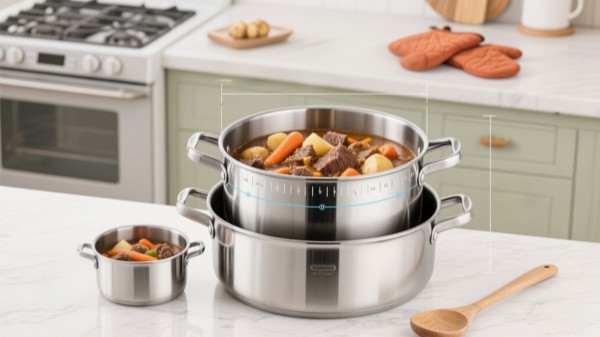
When someone refers to an “8-quart pot,” they’re talking about a vessel that holds approximately 8 US quarts of liquid—about 7.6 liters or 32 cups. Physically, most 8-quart stock pots measure roughly 10–10.5 inches in diameter and stand 5.5–6.5 inches tall, not including handles or lids. For comparison, a typical how big is a 2 quart saucepan measures around 7″ across, and a how big is a 4 quart pot is usually about 8″ in diameter—small enough for sauces yet too small for large batches. For example, a popular tri-ply stainless model is 10.24″ across with a 5.71″ height, while an All-Clad D3 version measures 10.5″ by 5.5″ deep and 7″ tall with its lid in place.
Visually, picture four or five standard mixing bowls stacked inside one another—that’s the internal volume of an 8-quart pot. Designs vary: some feature gently tapered sides to reduce drips, while others have straight walls for maximum capacity. Handle styles range from dual loop grips to a long, offset stay-cool handle, and lids can be clear tempered glass or heavy stainless steel, depending on your cooking needs.
Real-World Applications: What Fits in an 8 Quart Pot?
Cooking Scenarios
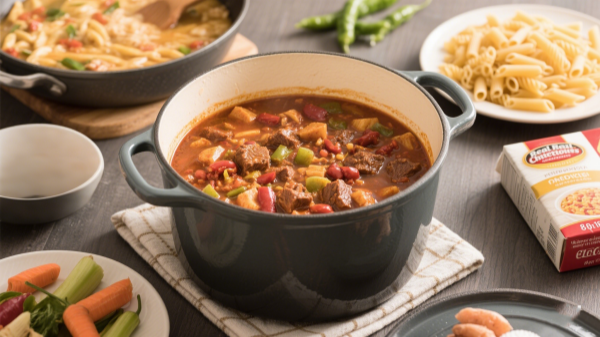
Family-size stews and chilis: An 8-quart pot easily yields 8–10 servings of hearty chili or beef stew, with room for stirring and skimmed fats on top. One-pot pasta dishes: Boil two to three 1-lb boxes of pasta plus water and sauce without overflow. Soup stock: Simmer 16 cups of broth with bones and vegetables and still have headspace for rolling boils.
Specific Recipes
- Pressure-cooked chili for eight: Brown meat and aromatics right in an 8-quart insert, seal, and cook under high pressure.
- Garlic-smashed potatoes with pot roast: Brown roast on the stovetop, then deglaze and transfer the entire pot to the oven for finishing.
- Large-batch tomato sauce: Sauté garlic and herbs then slow-simmer two gallons of crushed tomatoes—perfect for canning small batches.
Unique Uses
Homebrewing: Small-batch ales (up to 5 gallons) can be boiled and hopped in an 8-quart stock pot, though most brewers prefer larger kettles. Brining: A 12-lb turkey just fits in a well-stirred, cold brine solution for crisp, flavorful roasting. Steaming seafood: With a high steamer insert, you can steam lobsters or clams for a small party without crowding.
Advantages of the 8 Quart Size
Family-Friendly Capacity
For households of four to six, an 8-quart pot hits the sweet spot: ample volume for dinner plus leftovers, without the bulk of a 12-quart canner. It’s ideal for weekly meal prep, double-batch soups, and multi-family gatherings.
Versatility
Most stainless steel and tri-ply 8-quart pots are stovetop, oven, and induction safe (often up to 600°F). They double as canning pots, stock pots, and even Dutch ovens when fitted with a tight lid—no need for multiple specialty vessels.
Space Efficiency
Compared to 12 or 16-quart models, an 8-quart pot takes up less cabinet and rack space while still delivering professional-kitchen performance. It fits standard burners and oven racks, making it a practical choice for most home kitchens.
Common Misconceptions & Pitfalls
Overfilling Risks
Filling your pot above 70% capacity (≈5.6 quarts) invites boil-overs. Always leave headspace—especially when cooking starchy foods—to ensure safe, splash-free boiling.
Material Trade-Offs
- Stainless steel: Durable and nonreactive but heavier when full.
- Enameled steel: Easy cleanup and vivid colors; enamel may chip on rough handling.
- Aluminum core: Fast, even heating; some models require hand-washing to preserve finish.
Storage Challenges
Large pots can dominate cabinets. Use vertical racks, lid organizers, or handle hang-ups to maximize space and keep your cookware accessible without stacking hazards.
8 Quart vs. Other Common Sizes
| Size | Volume (L) | Best For | Trade-Offs |
|---|---|---|---|
| 6 QT | 5.7 | Couples, small batches | Too small for large families; fits smaller kitchens |
| 8 QT | 7.6 | Families of 4–6, batch cooking | Heavier when loaded; larger footprint |
| 12 QT | 11.4 | Canning, big gatherings | Bulky, uses more heat and space |
| Instant Pot 6 vs 8 QT | 6→5.7 / 8→7.6 | 6 QT for daily use; 8 QT for batches | 8 QT unit is ~1.5″ wider/taller and 2–3 lb heavier |
Expert Recommendations for Selection
Key Features to Prioritize
- Thick, multi-ply bottom for even heat distribution and scorching prevention.
- Stay-cool, riveted handles that remain comfortable when transferring from stovetop to oven.
- Tight-fitting lid with moisture lock to preserve flavor and speed up cooking.
Top-Rated Models
- Goldilocks Tri-Ply Stainless 8-QT: 10.24″ × 5.71″, lifetime warranty, induction-ready.
- All-Clad D3 8-QT Stock Pot: 10.5″ × 5.5″, oven/broiler safe to 600°F, limited lifetime warranty.
- Circulon ScratchDefense 8-QT: Nonstick, dishwasher-safe, aerospace-grade durability.
Maintenance & Longevity Tips
Cleaning Best Practices
- Soak in warm, soapy water to loosen stuck-on residues.
- Avoid metal scourers on nonstick or enamel coatings to prevent scratches.
Seasoning Cast Iron Models
- Coat interior with a thin layer of cooking fat.
- Bake upside-down at 350°F for 1 hour; repeat 2–3 times for a durable nonstick surface.
Warranty & Support
Check brand policies: All-Clad and some premium makers offer lifetime warranties, while others provide multi-year guarantees. Register your purchase when possible to activate coverage.
Final Verdict: Is 8 Quart Right for You?
An 8-quart pot strikes an ideal balance between capacity and kitchen practicality. It serves family meals, supports batch cooking and canning, and even tackles light homebrewing projects. While singles or small couples may find it oversized, homes cooking for four to six will appreciate its versatility and efficiency.
Pro Tip: Pair your 8-quart stock pot with a mid-size (4–6 QT) saucepan to cover everything from sauces and grains to soups and stews—no cooking challenge too big or too small.
How to Season Aluminum Pans: The Ultimate Guide to Non-Stick, Corrosion-Resistant Cookware
How Do I Know If My Pan Is Oven Safe? A Definitive Guide to Material Checks, Label Clues, and Safe Testing