Frying Pan For Deep Frying: How To Choose, Use And Maintain The Right Pan
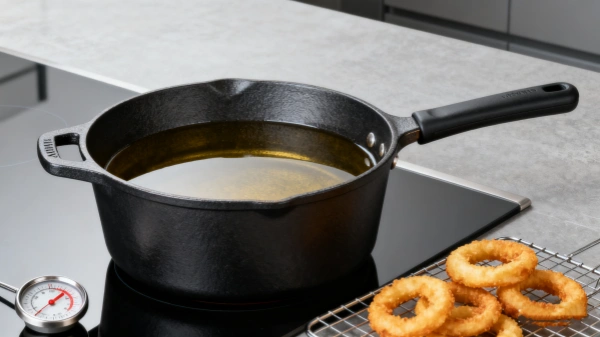
Yes — you can deep-fry in a frying pan if the pan has relatively high, straight sides and enough capacity. For most home cooks the best options are a deep enameled cast-iron Dutch oven (for larger batches), a deep cast-iron skillet (for medium batches), or a high-sided stainless sauté pan or carbon-steel wok (for small, quick batches). Use a clip thermometer, keep oil between about 350–375°F (175–190°C), and never overfill the pan.
Short Answer And Quick Facts
A frying pan can work for deep frying — but you must pick a pan with straight, high sides and the right capacity for the batch you plan to cook. Below are compact facts to keep handy.
What Makes A Frying Pan Good For Deep Frying
Not every frying pan is suited for deep frying. Look for pans that combine containment, heat retention and stability. Here are the attributes that matter most.
- Side Height & Shape: Straight, tall walls contain splatter and allow a safer oil depth than low, sloped sides.
- Heat Retention / Mass: Heavy materials such as cast iron or enameled cast iron keep oil temperature steady when you add cold food.
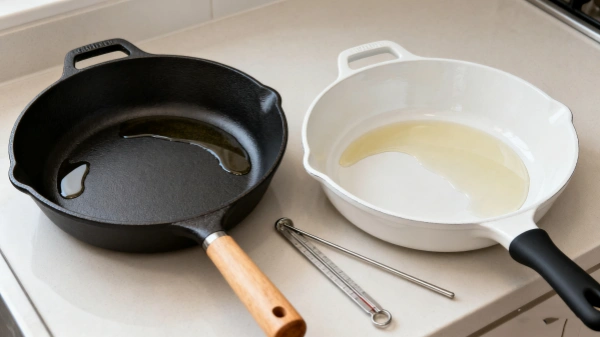
- Stable Base & Even Heating: A flat base that matches your burner prevents hot spots and helps oil-temperature recovery between batches.
- Handles & Lid: Secure, riveted handles and a lid for emergencies improve control and safety.
Best Pan Types For Deep Frying
Here is a concise comparison of common pan types and how they perform for deep frying.
| Pan Type | Typical Size / Capacity | Pros | Cons | Best For |
|---|---|---|---|---|
| Enameled Cast-Iron Dutch Oven | 4 qt–6 qt | Exceptional heat retention; even cooking; easy to clean if enameled. | Heavy; slow to heat. | Large batches, whole-piece chicken, donuts. |
| Raw Cast-Iron Deep Skillet | 10–12 in (deep) | Excellent heat retention; versatile; | Needs seasoning; heavier to handle. | Medium batches, fries, breaded items. |
| High-Sided Stainless Sauté Pan | 10–12 in, 3–4 qt | Heats faster; lighter; nonreactive. | Poorer heat retention vs cast iron. | Small to medium batches, quick frying. |
| Carbon-Steel Wok (Deep / Square Bottom) | 10–14 in | Fast heat recovery; uses less oil for certain items. | Harder to maintain; less oil volume than a Dutch oven. | Tempura, dumplings, small battered pieces. |
| Nonstick Skillet | Varies | Easy cleanup. | Not recommended for high-temp deep frying; coating risk. | Light shallow frying only. |
Choosing Size Shape And Capacity
Choosing the right pan is about matching batch size and safety. Rather than chasing a single liter number, focus on what you fry most often and pick a pan that gives you room to work without wasting oil.
Batch Size Rules Of Thumb
- Small snacks (1–2 servings) — a deep 8–10" skillet or a small 2–3 qt pot is usually enough and conserves oil.
- Family meals (2–4 servings) — a 10–12" deep skillet or a 3–5 qt Dutch oven balances oil use and temperature stability.
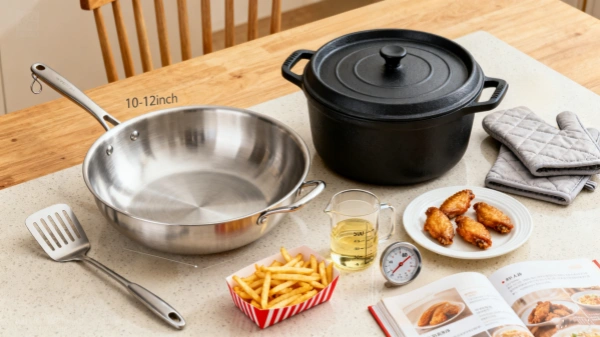
- Large batches / whole pieces — a 5 qt+ Dutch oven or large stockpot gives space for items to float freely and maintains stable oil temperature.
Safety note: Always leave at least a few inches (a few centimeters) between the oil surface and the rim. Many cookery guides suggest filling a pot one-third to one-half full and never exceeding half — this creates margin for oil displacement when food is added.
Shape matters: Straight, high walls reduce splatter more than sloped sides. Wider diameters recover temperature differently than deeper, narrower pots — pick a shape suited to your most common foods (long items prefer wide pans; bulky pieces prefer depth).
Safety And Technique
Follow these steps to fry safely and get crisp, consistent results.
- Use a thermometer. A clip or candy thermometer is essential — target 350–375°F (175–190°C) for most recipes.
- Don’t overfill. Fill the pan one-third to one-half full with oil and keep headspace from the rim.
- Dry food thoroughly. Moisture causes violent splatter — blot items dry before frying.
- Add food carefully and in batches. Overcrowding lowers oil temperature and yields greasy, soggy results.
- Allow oil to recover. Let the oil return to target temp between batches; heavier pans recover faster.
- Emergency readiness. Keep a lid and an appropriate extinguisher nearby; never throw water on a grease fire.
Cleaning Maintenance And Longevity
Care varies by material. Enameled cast iron cleans easily but avoid metal scouring that could chip enamel. Raw cast iron needs prompt drying and a light oil coating to maintain seasoning. Stainless and carbon steel respond well to hot water and scrubbing; carbon steel benefits from occasional seasoning. Filter and store used oil in a sealed container; discard oil that smells rancid or is excessively dark.
Troubleshooting And Quick Fixes
- Oil smokes: You’re at or above the oil’s smoke point — lower heat or choose a higher smoke-point oil next time.
- Soggy food: Oil temperature too low — wait for the oil to recover before adding the next batch.
- Excessive splatter: Food has too much surface moisture — dry well and reduce oil depth slightly.
- Foaming oil: Oil may be degraded or contaminated with water — filter and replace if persistent.
Appendix: Quick Reference Table
| Use Case | Recommended Pan | Oil Depth Guidance* | Batch Notes |
|---|---|---|---|
| Small snacks (1–2 servings) | Deep 8–10" skillet or small pot | ~2–3 cm | Use less oil; fry quickly. |
| Family portions (2–4 servings) | 10–12" deep skillet or 3–5 qt Dutch oven | ~3–5 cm | Good balance of oil use & temp stability. |
| Large batches / whole pieces | 5 qt+ Dutch oven | ~4–6 cm | Best temp stability; higher oil consumption. |
*Depth varies with pan diameter and recipe; always leave rim clearance and avoid filling past half the pot.
Conclusion
Deep frying in a frying pan is practical and safe when you pick a pan with high, straight sides and the right capacity for the batch, prioritize heat retention (cast iron or enameled Dutch oven for larger jobs), use a thermometer to control oil temperature, and follow basic safety rules. For occasional small batches, a deep skillet or carbon-steel wok is economical; for regular large fry sessions, choose a 5 qt+ Dutch oven or a dedicated fryer.
Common Questions
- Can you deep fry in a frying pan?
- Yes — if the pan has high, straight sides and sufficient capacity; deep skillets, Dutch ovens and high-sided stainless pans are common home options.
- How much oil do I need to deep fry in a pan?
- Fill the pan about one-third to one-half full, leaving several inches of headspace to prevent overflow when food is added.
- What temperature should oil be for deep frying?
- Most deep-frying is done at 350–375°F (175–190°C); use a clip thermometer for consistency.
- Is cast iron best for deep frying?
- Cast iron and enameled cast iron perform well because they retain heat and recover temperature quickly after adding food.
- Can I deep fry in a nonstick pan?
- Not recommended — deep frying temperatures can damage nonstick coatings and may release fumes; reserve nonstick for low/medium-temperature frying.
Footnotes & Sources
Click any source to open the reference used to inform this article.
Can You Actually Deep Fry in a Frying Pan? The Complete Guide
Is Made In Cookware Non Toxic? The Truth Nobody Talks About