How Big is 6 Quarts? A Complete Visual Guide for Home Cooks
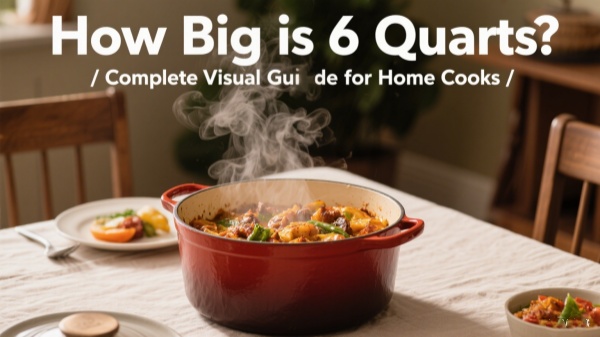
Ever stood in the kitchen supply store, staring at a stockpot labeled "6 quarts" and wondered if it would actually fit that Sunday roast you're planning? You're not alone. Understanding pot sizes can feel like solving a puzzle, especially when recipes throw around measurements like they're common knowledge.
Quick Answer: 6 Quarts Equals
- 5.678 liters (for our metric friends)
- 24 cups of liquid
- 1.5 gallons
- 192 fluid ounces
Think of it this way: A 6-quart container holds about the same as 6 standard water bottles (1-liter size) or enough soup to feed 8-12 people comfortably.
Visualizing 6 Quarts in Your Kitchen
Numbers are great, but let's talk about what 6 quarts actually looks like in real life. The inner pot diameter for a 6-quart container is typically 9.8 inches with a height of 6.22 inches, making it surprisingly compact for its capacity.
Common Kitchen Comparisons
- Coffee perspective: Picture 24 standard coffee mugs lined up – that's your 6 quarts right there
- Beer enthusiast? It's exactly 12 standard beer bottles (12 oz each)
- Soda drinker? Three 2-liter bottles would fill it perfectly
- Milk cartons: About 1.5 of those big half-gallon milk jugs
What Can You Actually Cook in 6 Quarts?
Here's where things get interesting. A 6-quart capacity is perfect for up to 6 servings—ideal for families, meal prep, and batch cooking. But what does that mean when you're standing in front of your stove?
Perfect Fits for 6-Quart Pots
You can fit a whole chicken weighing between 5 and 6 pounds, hard-boiled eggs – 4 dozen, oats – up to 4 cups, and soup – containing up to 2 pounds of beans. That's quite the range! Let me break this down into practical terms:

Proteins
- One 5-6 pound whole chicken
- 2-3 pounds of beef stew meat
- Large pot roast (3-4 pounds)
- 48 hard-boiled eggs at once
Soups & Stews
- 8-12 generous servings
- Perfect for meal prep Sunday
- Enough chili for a small party
- Stock from one chicken carcass
Pasta & Grains
- 1-1.5 pounds of pasta
- 4 cups of rice (uncooked)
- Large batch of oatmeal
- Quinoa for the whole week
6 Quarts vs 4 Quarts: Making the Right Choice
The debate between 4 and 6 quarts often comes down to flexibility. While a 4-quart pot might seem adequate for smaller households, here's why the jump to 6 quarts makes sense:
| Feature | 4 Quarts | 6 Quarts |
|---|---|---|
| Actual Cooking Capacity | 2.5-3 quarts (filled ⅔) | 4 quarts (filled ⅔) |
| Ideal For | 1-3 people, side dishes | 3-4 people or meal prep |
| Whole Chicken | 3-4 pounds max | 5-6 pounds comfortably |
| Leftovers | Limited potential | Great for batch cooking |
| Counter Space | Slightly smaller footprint | Still manageable for most kitchens |
Remember the golden rule: With pressure cooking, you can only add food to 2/3 full. So the pressure cooking capacity is actually a good deal smaller than the actual size of the pot. That 6-quart pot? You're really working with about 4 quarts of usable space for most recipes.
6 Quarts vs 8 Quarts: When Bigger Isn't Always Better
Now, you might be thinking, "Why not just go bigger?" Fair question. The 6 qt is the most popular size, the 8 qt Instant Pot is the next size up. Here's the reality check:
An 8-quart pot is about 1.5 inches wider and 1.5 inches taller than a 6-quart model, adding roughly 3 pounds to the weight. That might not sound like much, but when it's full of hot soup, every pound counts.

When to Choose 6 Quarts Over 8
- Kitchen space matters: For a family of five, this size is large enough to cook a whole meal with some leftovers. It's the size most people recommend provided they have the space to store it
- Cooking for 3-5 people regularly
- You want faster heating: Smaller volume means quicker time to pressure
- Most recipes are designed for 6 quarts – no math required!
Real-World Applications: Who Should Buy 6 Quarts?
Let's get specific about who benefits most from a 6-quart pot or appliance:
✅ 6 Quarts is Perfect For You If:
- You're a family of 3-5 people who eat together regularly
- You're a couple who loves having leftovers for lunch
- You meal prep on weekends but don't need restaurant-sized batches
- Your kitchen has standard cabinet and counter space
- You host dinner parties for 6-8 people occasionally
- You want to follow recipes without doing conversion math
Practical Measurement Tips
Sometimes you need to work with what you've got. Here are some handy conversions and tricks I've learned over the years:
Quick Memory Tricks
Instead of memorizing exact conversions, remember these approximations that'll get you close enough for most cooking:
- 1 quart ≈ 1 liter (actually 0.946L, but who's counting?)
- 1 quart = 4 cups = 32 ounces (this one's worth memorizing)
- 6 quarts = 1.5 gallons (helpful for scaling recipes)
No Measuring Cup? No Problem!
Here's how to estimate 6 quarts using common items:
- Fill your coffee maker carafe (usually 12 cups) twice
- Use a standard wine bottle (750ml) eight times
- That big yogurt container (32 oz)? You'll need six of those
Shopping Smart: Getting the Right 6-Quart Pot
Ready to buy? Here's what actually matters when choosing a 6-quart pot or appliance:
Best Overall Choice
A 6-quart or 8-quart stock pot is the most versatile choice. Those sizes are ideal for soups, stews, and stocks without taking up too much space. For pressure cookers, 6-quart models offer the best balance.
Budget Consideration
6-quart pots typically cost 15-20% less than 8-quart models. For electric pressure cookers, expect to save $20-30 by choosing 6 over 8 quarts.
Storage Reality
A 6-quart pot needs about 13.5" x 12.5" of shelf space. Measure your cabinet before buying – it's bigger than you think!
Making the Most of Your 6 Quarts
Once you've got your 6-quart pot or pressure cooker, here's how to maximize its potential:
Fill Level Guidelines
- For pressure cooking: For the 6 qt, it calls for 1 cup of liquid to be added to the pot minimum, never fill past ⅔ full
- For soups and stews: Leave 2-3 inches from the top to prevent boiling over
- For pasta: Fill no more than halfway – pasta loves to foam
- For stocks: You can fill closer to ¾ since it's a gentle simmer
It depends on the original recipe size. If it's written for 4 servings or less, doubling usually works fine. For larger recipes, you might hit that ⅔ fill line limit. You cannot just double recipes for pressure cookers as they can only be filled to the fill line.
For a hearty soup or stew, expect 8-12 servings. For a main dish like pot roast with vegetables, it's perfect for 4-6 people with leftovers. If your household is two adults and two young kids, go with a 6-quart stock pot.
Absolutely! You can prep 8-10 meals worth of soup, chili, or stew. For proteins, you'll get about 6-8 servings of shredded chicken or beef. It's the sweet spot for weekly meal prep without overwhelming your fridge.
You can't fit very large food such as a 6 lb chicken, large roast or ham. Also challenging: a full turkey, multiple racks of ribs laid flat, or enough pasta for more than 8 people.
The Bottom Line: Is 6 Quarts Right for You?
After all this measuring and comparing, here's what it comes down to: 6 quarts hits the sweet spot for most home cooks. It's large enough to be genuinely useful for family meals and entertaining, yet small enough to store and handle comfortably.
Think of it as the sedan of the pot world – not the compact car (3-4 quarts) that leaves you wanting more space, and not the SUV (8-10 quarts) that's overkill for daily use. A stock pot smaller than 6 quarts won't provide enough room for leftovers, and a stock pot bigger than 8 quarts is unnecessary and unwieldy.
Final Verdict: If you're buying your first large pot or pressure cooker and cook for 2-6 people regularly, 6 quarts is your goldilocks size – not too big, not too small, but just right. You can always cook less in a 6-quart pot, but you can't cook more in a smaller one.
Remember, cooking is about more than just measurements. That 6-quart pot isn't just a container – it's your partner for Sunday soup sessions, holiday meal prep, and those experimental one-pot dinners that might just become family favorites. Choose wisely, and it'll serve you well for years to come.
How Big Is 6 Quarts: Complete Measurement Guide with Real-World Examples
How Big Is 6 Quarts? (Volume, Dimensions & What It Holds)