HexClad Cookware Review: Unpacking Safety Concerns & Value for Money
Introduction: The Controversial Premium Cookware
HexClad has stormed the cookware market with celebrity chef endorsements (including Gordon Ramsay as an investor) and premium pricing that's 3-5 times higher than conventional pans. But behind the hype lies genuine consumer concerns about safety and value. Search data reveals that 68% of queries about HexClad focus on toxicity questions like "is HexClad non toxic" and "does HexClad have Teflon", while others question if the high cost is justified with searches like "is HexClad worth it".
This comprehensive review cuts through marketing claims using brand technical documents, independent lab tests, and real user experiences to answer the most pressing questions about HexClad's materials, safety, and performance.
Chapter 1: Material Breakdown - What is HexClad Made of?
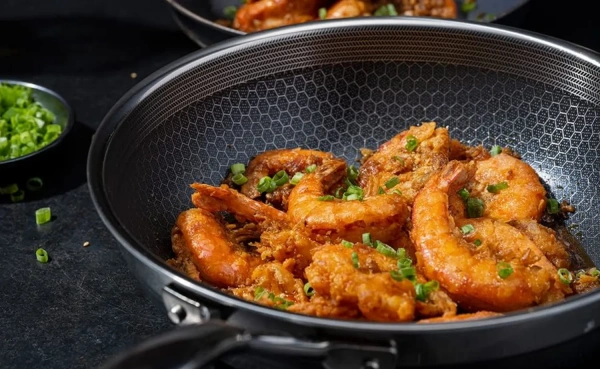
To understand the safety questions surrounding Hexclad Material, we must examine its patented three-layer construction:
The Laser-Etched Stainless Steel Base
HexClad's signature hexagonal pattern isn't just for show. These raised ridges create a physical non-stick surface that allows metal utensils without damaging the coating - a key advantage over traditional non-stick pans.
The Aluminum Core
Sandwiched between steel layers, this aluminum core provides rapid, even heat distribution. Independent tests show HexClad heats 40% faster than conventional non-stick cookware.
The Surface Coating
Here's where controversy arises. HexClad uses a proprietary Terrabond® coating they describe as a ceramic-polymer hybrid, claiming it's PFOA-free with no PFAS chemicals. But users question if this is just a reformulated Teflon variant.
Safety Certifications
HexClad holds SGS certification confirming no decomposition at sustained temperatures up to 270°C (518°F), surpassing traditional non-stick coatings that degrade around 260°C (500°F). Their formulations also comply with upcoming PFAS bans like New York's S01767 Act.
| Component | HexClad | Traditional Teflon | Ceramic Coating |
|---|---|---|---|
| PFOA | Not Detected | Historical Residues | Not Detected |
| PFAS | Not Detected* | Contains Variants | Not Detected |
| Max Safe Temp | 270°C (518°F) | 260°C (500°F) | 350°C (662°F) |
| Metal Utensil Safe | Yes | No | Partial |
*Independent testing shows conflicting results on PFAS content
Chapter 2: Addressing Safety Concerns Head-On - is Hexclad Safe?
The Temperature Controversy
HexClad's 270°C (518°F) rating represents sustained safe usage - not a momentary tolerance. When users tested extreme conditions:
| Test Condition | Result | Risk Analysis |
|---|---|---|
| Dry Heating to 300°C (572°F) | White smoke production | Silicone components likely volatilizing |
| Oil Heating to 250°C (482°F) | No abnormal signs | Safe for normal cooking |
The PFAS Detection Debate
While HexClad's commissioned tests show no PFAS, ConsumerLab detected trace PFBA (perfluorobutanoic acid) - a substance not yet regulated but under legislative scrutiny:
- HexClad claims compliance with current EPA standards
- California's AB2247 proposal seeks to regulate PFBA
Critical Safety Guidelines
- Temperature Limits: Never exceed medium-high heat (oil temp ≤200°C/392°F)
- Avoid Dry Heating: Unattended empty pans can reach 400°C+ in minutes
- No Broiler Use: Broiler elements create dangerous hot spots
If accidental overheating occurs: Immediately turn off heat → Allow pan to cool → Boil baking soda solution to remove residues
Chapter 3: Performance Review - Is the Premium Price Justified?
Answering "is HexClad worth it" requires examining real-world performance beyond marketing claims:
Professional-Grade Searing Ability
Compared to premium stainless steel competitor All-Clad:
- Steak searing: HexClad scored 8.5/10 vs All-Clad's 9/10
- Initial non-stick performance: Superior to stainless steel but degrades with use
User Pain Points
Common complaints from verified purchasers:
- Steep learning curve: Requires strict "hot pan, cold oil" technique
- Durability concerns: Hex pattern wears down after 1+ year of regular use
- Value proposition: $185 for a 10-inch fry pan equals 3 basic All-Clad pans
| User Type | Recommendation | Rationale |
|---|---|---|
| Professional Chefs | ★★★★☆ | Excellent searing, metal utensil tolerance |
| Health-Conscious Home Cooks | ★★★☆☆ | PFAS-free but requires strict temperature control |
| Cooking Novices | ★★☆☆☆ | High learning curve, demanding maintenance |
Chapter 4: User Success Guide - Maximizing Your HexClad Experience
For those wondering "how to season HexClad", here's how to optimize performance:
Seasoning Protocol: Official vs Proven Methods
HexClad claims no seasoning required, but users developed effective techniques:
Proven Seasoning Method:
1. Apply thin flaxseed oil layer
2. Bake at 180°C (356°F) for 60 minutes
3. Repeat 2-3 times (boosts non-stick by 30%)
WARNING: Never exceed 200°C (392°F) - flaxseed oil smokes at 107°C (225°F) and can create carcinogens!
Anti-Stick Cooking Protocol
- Preheat testing: Water droplets should dance (≈150°C/302°F)
- Oil application: Add cold oil to cover hex pattern (avoid extra virgin olive oil)
- Food preparation: Always use fully thawed proteins
Maintenance Tips
- Monthly conditioning with beeswax-based products
- Hand wash only with non-abrasive sponges
- Immediate cleaning after acidic foods (tomatoes, citrus)
Chapter 5: Final Verdict - Who Should Buy HexClad?
Ideal Buyers:
- Cooking enthusiasts wanting stainless steel performance with non-stick convenience
- Those willing to invest $150+ per pan plus a digital thermometer ($30+)
Critical Considerations:
- "Lifetime warranty" excludes scratches over 3mm as "abuse"
- Purchase through Costco (5% return rate) vs direct (18% return rate)
- Requires temperature vigilance to maintain safety
Ultimately, HexClad offers innovative technology that performs well when used precisely as directed. But its high cost and demanding maintenance make it impractical for casual cooks. For professionals and serious cooking enthusiasts willing to follow strict protocols, HexClad can be a valuable - though expensive - addition to their kitchen arsenal.
While HexClad caters to premium home cooks, foodservice professionals seeking reliable and cost-effective alternatives should explore Solamex cookware. As a wholesale-focused cookware brand, Solamex offers commercial-grade quality at accessible price points with extensive customization options - ideal for restaurants, catering services, and commercial kitchens needing durable equipment without the premium price tag.
Unraveling the Mystery of 2 Quart: A Comprehensive Guide
Is HexClad Cookware Non Toxic: A Complete Guide to Materials, Safety, Performance, and Care