How Are Cooking Pots Measured? — Capacity, Conversions & Practical Guide
Pots are primarily measured by capacity (quarts or liters). Diameter and depth are useful secondary specs for lids, storage and stovetop fit. Note: size of pans is related but different — pans are commonly described by diameter, while pots are described by how much they hold.
Below: practical measurement methods, a copyable conversion table, common pot capacities and usage guidance.
Why Capacity (Quarts / Liters) is The Main Way Pots are Measured
Cookware Manufacturers and cooks label pots by volume because pots are designed to hold liquids and batches — that is what matters most for recipes, storage and preventing boil-overs.
When a pot is described as "6-quart" the number directly communicates how much liquid it will hold; that determines how many servings, how large a batch of stock or soup you can make, and whether there's enough headspace while boiling. For a practical industry example and context on capacity-first labeling, see this cookware measurement overview.
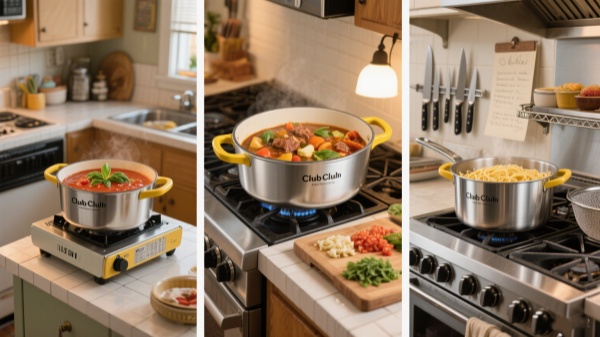
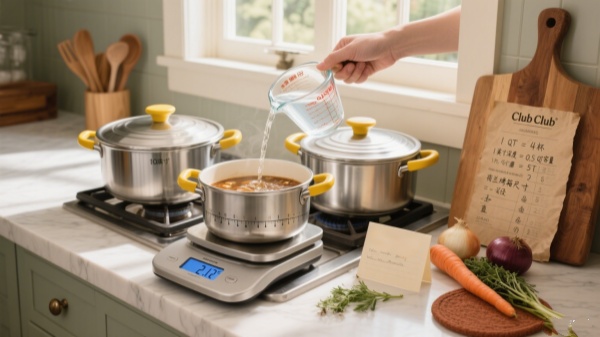
How to Measure a Pot’s Capacity at Home — Three Practical Methods
Use measured cups, a kitchen scale, or any internal markings the manufacturer provides.
Method A — Measuring cups (step-by-step)
- Place the pot on a level surface.
- Use a standard measuring cup (US cup = 240 mL) and pour water cup by cup until the pot reaches the brim.
- Count cups and convert to quarts (4 cups = 1 quart) or liters.
Record both the full brim capacity and your expected usable capacity (see note below).
Method B — Kitchen scale
- Tare the empty pot on the scale (set to zero).
- Fill with water to the brim and record grams.
- Convert grams to liters (1,000 g ≈ 1 L), then liters → quarts if needed.
This is fast and precise — useful if you need a specific liter/quart value for canning or recipe scaling.
Method C — Manufacturer markings and specs
Some pots (especially higher-end or professional models) have internal volume marks or a published spec sheet that gives nominal/full capacity. Always confirm whether the marking is to the brim (total volume) or indicates a recommended max-fill for cooking.
Practical tip: Measure both brim/full capacity and an expected usable capacity — usable is typically ~70–85% of full volume (leave headspace to prevent boil-overs).
Measurement methods and practical tips adapted from cookware how-to guidance and community measurement practices.
Quick Conversions & Capacity Cheat Sheet
One-line convert: 1 quart ≈ 0.946 liters; 1 liter ≈ 1.057 quarts; 1 quart = 4 US cups.
| Label (US) | Approx. liters | Common use / servings (approx.) |
|---|---|---|
| 1–2 qt | ~0.95–1.9 L | Small saucepan tasks; 1–2 people |
| 3–4 qt | ~2.8–3.8 L | Sauces, small soups; 2–4 people |
| 6 qt | ~5.7 L | Family stews, braises; ~4–6 people (versatile) |
| 8qt–12 qt | ~7.6–11.4 L | Stockpots, canning, larger batches |
Conversion reference: standard quart ↔ liter factors.
Other Pot Dimensions and When They Matter (Diameter, Depth, Base)
Diameter and depth help with lid fit, stacking and storage; base diameter affects how evenly a burner heats the pot.
Key dimensions:
- Top diameter (rim-to-rim): useful for lid compatibility and kitchen storage.
- Interior depth: affects layering of ingredients and whether tall items fit.
- Base diameter: crucial for heat distribution and for induction/electric stovetops (contact area matters).
- Shape & wall thickness: two pots with the same labeled capacity can behave differently if one is tall & narrow and the other short & wide.
Always check base diameter if you have small burners or induction — large, wide bases may not heat evenly on small elements.
See stove-compatibility and diameter notes in kitchen cookware measurement guidance.
Common Pot Capacities, Names and What They’re Best for
Pick a pot by capacity that matches your use case (e.g., 6 qt for family stews; 8–12 qt for stock or canning).
- 1–2 quarts: small saucepots — reheating, small sides.
- 3–4 quarts: everyday saucepans and small soup pots.
- 6 quarts: versatile family pot — stews, roasts, pasta for 4–6 people.
- 8–12 quarts: stockpots for bone broth, canning, larger groups.
- >12 quarts: commercial or catering use (large batch cooking).
How Shape and Construction Change Usable Capacity and Cooking Results
Even with the same labeled quart rating, a pot’s cooking behavior depends on geometry and materials. A tall, narrow 6-qt pot will concentrate heat and reduce less quickly (smaller surface area), while a wide, shallow 6-qt pot exposes more liquid to air and speeds evaporation. Material (multi-ply stainless, aluminum core, heavy gauge) also affects heat distribution and how you should use the pot.
Manufacturer Labels — Common Gotchas and What to Request
A listed quart value is often a nominal/full (brim) capacity — if you need exact usable volume (e.g., for canning or commercial recipes), request the measured usable capacity or a datasheet.
What to check on a product page or spec sheet:
- Is the capacity the brim/full volume or a recommended max-fill?
- Are top diameter, base diameter and interior depth provided?
- Does the pot have internal measurement marks and what do they indicate?
- Is capacity rounded (e.g., "6 qt" could be 5.5–6.5 qt nominal)?
See manufacturer sizing charts for examples of how diameter maps to quart sizes.
Q&A
A: Pots are usually measured in quarts (or liters); inches (diameter) are secondary for lid fit and storage.
A: It means the pot’s full internal volume is roughly 6 quarts (~5.7 L); usable cooking capacity is typically lower to allow space for boiling and stirring.
A: Fill with measured cups to the brim or use a kitchen scale (1 L water ≈ 1,000 g) and convert grams to liters/quarts.
A: Capacity alone doesn’t ensure burner fit — check the pot’s base diameter for compatibility and heat distribution.
A: Nominally yes, but shape and construction change usable volume and cooking behavior — compare shapes and materials before buying.
A: Often it’s a rounded nominal figure; for precision tasks (canning/commercial) ask for measured usable capacity or a product datasheet.
Conclusion & Next steps
Capacity (quarts/liters) is the clearest, most useful measure when choosing a pot — it tells you how much you can cook, store, or can. Use the simple measuring methods above to verify a pot's true capacity, and then check diameter and base dimensions for lid fit and burner compatibility. If precision matters, request the manufacturer’s usable-capacity value.
Quick action: measure a pot you use often (cups to the brim, then re-measure leaving ~25% headspace) and note both numbers — that will make future buying decisions straightforward.
References
How Are Cooking Pots Measured: The Complete Guide to Pot Sizing
Club Aluminum Cookware: History, Safety, Buying & Care Guide