How to Choose an Induction Cookware Pan — Compatibility, Materials & Buyer's Guide
How Induction Cooking Actually Heats a Pan
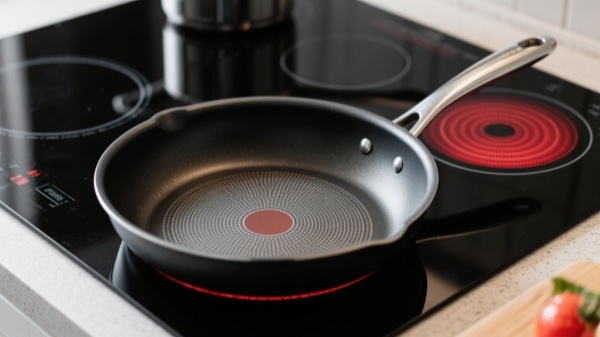
Induction cooktops use a copper coil under the smooth glass surface to create a shifting magnetic field. That field induces small currents in a suitable pan and the pan itself generates heat — so the pan, not the cooktop, becomes the heater.
In practice this means two practical rules: the pan must be magnetic, and the base should sit flat on the cooktop so the magnetic coupling is efficient and even.
Quick Tests to Confirm a Pan Works on Induction
Before buying or using a pan, run these quick checks:
- Magnet test: A strong magnet should cling to the center of the pan’s bottom — if it does, the pan will usually work on induction.
- Label & specs: Look for “induction-ready” or cookware manufacturer confirmation on the product page; many brands list base construction and oven rating.
- Watch out: Decorative stainless exteriors can be misleading — the magnet may stick to surface layers even if the core is non-ferrous.
Quick check I do: place a strong fridge magnet across the center and edge of the base—stickiness and uniform strength are good signs.
Which Materials and Constructions Perform Best on Induction
Material determines responsiveness, heat retention, weight, and how tolerant the pan is of high power. The most practical options are outlined below.
| Material | Pros | Cons | Best uses | Induction note |
|---|---|---|---|---|
| Multi-ply stainless (aluminum core) | Even heating, responsive, durable | Heavier; higher cost | Searing, pan sauces, general use | Excellent when outer layer is magnetic (clad construction). |
| Cast iron / enameled cast iron | Great heat retention; economical for long life | Very heavy; can scratch glass surfaces | Searing, long simmers, frying | Works well — naturally ferromagnetic. |
| Carbon steel | Light relative to strength; excellent searing | Needs seasoning; can rust if neglected | Stir-fry, high-heat searing, pro-style pans | Very induction-friendly. |
| Aluminum with magnetic base | Lightweight; cheaper options possible | Magnetic disk thickness varies; may hum | Budget nonstick and everyday pans | Works if manufacturer fits magnetic base or steel encapsulation. |
| Nonstick coated pans | Low-fat cooking; easy cleanup | Coating temperature limits; lifespan varies | Eggs, pancakes, delicate fish | Many are built induction-ready — confirm base construction. |
Two attributes to emphasize when choosing: base flatness (ensures contact) and base mass/thickness (reduces hot spots and hum).

Use & Care: Induction-Specific Best Practices
Small habits go a long way. Induction is fast — and that speed can stress thin pans if we’re not careful.
- Don’t preheat empty on high: Heating thin pans empty can cause warping; preheat slowly to target temperature.
- Match pan to element: A pan too small or too large for the cooking zone wastes energy and causes uneven heat.
- Reduce humming: If a pan hums, lower the power slightly or use a heavier, higher-quality base pan.
- Clean sensitively: Re-season carbon steel/cast iron; use gentle non-abrasive cleaners on nonstick and stainless.
Practical tip: when using cast iron on glass-ceramic tops lift—don’t slide—to avoid scratches. Also, allow very hot pans to cool before running under cold water to avoid thermal shock.
Buying Checklist — What to Look for (Compact)
- Flat, ferromagnetic base: Magnet should stick firmly across the center.
- Correct base diameter: Match the cooktop zone size for best efficiency and control.
- Construction: Prefer multi-ply clad, cast iron, or carbon steel for performance and longevity.
- Handle durability & oven rating: Look for riveted handles and a stated oven-safe temperature.
- Warranty & published specs: Brands that publish base thickness and construction are easier to trust.
Frying Pan Sizes — Choose The Right Diameter
Pan diameter strongly affects heat control and how many portions you can cook at once. Common sizes and practical uses:
- 8-inch (20 cm): Singles and small tasks — eggs, quick sautés.
- 10-inch (25 cm): Most versatile for 1–3 people — our recommended starting pan.
- 12-inch (30 cm): Family meals, searing steaks, browning larger batches.
- 14-inch (35+ cm): Commercial or large family needs — needs a large induction zone and stronger support.

If you cook mainly for one or two, start with a 10-inch multi-ply stainless or carbon steel and add a 12-inch for bigger meals. Keep a 10-inch nonstick for eggs and delicate food.
People Also Ask
What is an induction cookware pan?
How do I tell if a pan is induction compatible?
Which materials work best on induction cooktops?
Can I use nonstick pans on induction?
Why does my induction pan hum sometimes?
Do induction pans warp and how to avoid it?
Are cast iron pans okay for induction?
How should I clean induction pans?
Does pan size matter on induction?
What handles and lids should I look for on induction pans?
Conclusion
If you’re switching to induction, start with a quality 10-inch multi-ply stainless or carbon steel pan and a 12-inch for larger meals. Use the magnet test, match pan size to zone, avoid overheating thin pans, and prefer heavier flat bases for stability and quiet operation. Small choices up front — like base construction and diameter — make daily cooking easier for years.
For commercial kitchens or wholesale buyers, these principles scale exponentially: consistent material quality, standardized sizing, and durable construction directly impact efficiency and long-term costs. This is where partnering with a specialized manufacturer like Solamex creates strategic advantages.

Solamex — Wholesale Pots and Pans Expertise
Solamex offers a comprehensive range of wholesale pots and pans, combining durable materials, precise craftsmanship, and flexible product customization. From premium stainless steel to advanced nonstick lines, our catalog is built for both retail distribution and demanding commercial kitchens — ensuring consistency in performance and presentation.
The Ultimate Guide to the Induction Cookware Pan: How to Choose, Use, and Care for It
The Complete Guide to Choosing and Using Cookware for Deep Frying