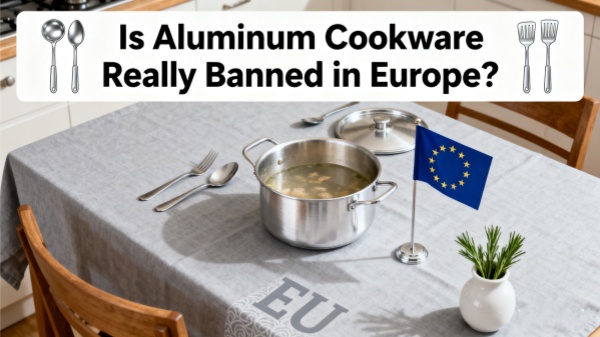
Is Aluminum Cookware Really Banned in Europe?
The Truth Behind the Rumor and Your Ultimate Guide to Kitchen Safety
Have you ever scrolled through a forum or a family chat group and seen the alarming claim: "Europe banned aluminum pots years ago because they cause Alzheimer's disease"? It's a persistent rumor that makes many of us pause and question the safety of our own kitchens.
So, let's get straight to the point. This is a long-standing myth. There is no blanket ban on aluminum cookware in Europe.
However, this rumor didn't just appear out of thin air. It's rooted in real health concerns and connected to Europe's rigorous food safety regulations. This guide will walk you through the full story—from the myth's origins to the hard science, and most importantly, how you can choose and use cookware with confidence.
Chapter 1: Tracing the Rumor's Roots: Where Did the Panic Begin?
Every persistent myth has a kernel of truth, and this one is no different. The fear surrounding aluminum cookware is largely a product of two intertwined stories.
The Early Alzheimer's Cloud
The primary source of the panic dates back to the 1960s and 70s. Early scientific studies discovered elevated levels of aluminum in the brains of Alzheimer's patients. This finding, though preliminary, ignited a firestorm of public concern. The idea of a common kitchen material "leaching" a dangerous substance into our food was terrifying, and the link to such a devastating disease made it an unforgettable headline.
A Continental Game of Telephone
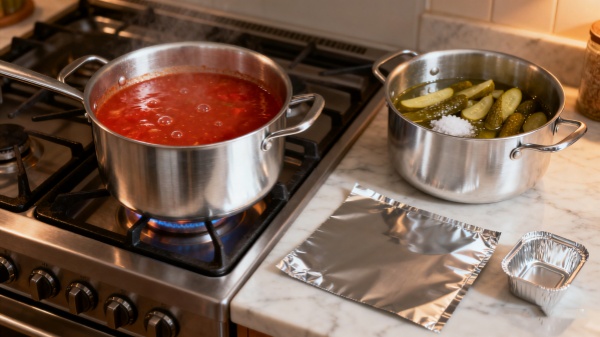
The "ban" part of the rumor is a classic case of misinterpretation. While there has never been a continent-wide prohibition, some individual European countries, like Germany and France, have historically issued specific recommendations against using untreated, bare aluminum for packaging or prolonged cooking of highly acidic or salty foods. These nuanced guidelines were twisted and amplified over time, morphing from "use with caution" in specific scenarios to a continent-wide "total ban" on all aluminum cookware. It was a story lost in translation.
Now that we've seen how the fear started, let's look at what the official bodies in Europe actually say and do about it.
Chapter 2: Fact-Check: What Are Europe's Real Regulations?
Instead of an outright ban, Europe employs a sophisticated strategy of risk management based on scientific evidence. The key policy isn't a red stop sign, but a carefully calibrated set of guidelines.
The Core Guideline: Resolution CM/Res(2013)9
The central document is the Council of Europe's Resolution CM/Res(2013)9 on metals and alloys used in food contact materials. Here’s what it actually does:
- It Is Not a Ban: The resolution's purpose is to harmonize safety standards across member states, not to prohibit the use of aluminum.
- It Sets Strict Migration Limits: It establishes a "Specific Release Limit" (SRL) for aluminum. This means that a maximum of 5 milligrams ($5 \text{ mg}$) of aluminum is permitted to migrate into each kilogram ($1 \text{ kg}$) of food.
- It Aims to Control Overall Intake: This limit ensures that the amount of aluminum you might ingest from cookware remains well below the "Tolerable Weekly Intake" (TWI) level set by the European Food Safety Authority (EFSA).
In essence, Europe's approach is to acknowledge that tiny amounts of aluminum can transfer to food and to ensure that this amount is scientifically proven to be safe.
With the regulations clarified, we can now tackle the big health question: Is the tiny amount of aluminum that might migrate actually harmful?
Chapter 3: The Scientific Perspective: Untangling Health Concerns
The Alzheimer's Connection: A Modern Re-evaluation
Decades of further research have failed to establish a convincing causal link between aluminum exposure from daily sources like cookware and the development of Alzheimer's disease. Major health organizations, including the World Health Organization (WHO) and the Alzheimer's Association, state that there is no strong scientific evidence to support this early fear. The initial findings are now largely considered a correlation, not a cause.
What Are the Real Risks?
While the Alzheimer's link has been debunked, this doesn't mean aluminum is completely inert. Extremely high levels of aluminum intake—typically from industrial exposure or certain medications, not cookware—can pose a risk, particularly to individuals with impaired kidney function. But it's all about dosage. The amount of aluminum that could potentially leach from a modern pan is minuscule compared to what we ingest from other common sources like baking powder, food additives, drinking water, and even tea.
So, if the risk is tied to how much aluminum can "migrate," does that mean all aluminum pots and pans are the same? Absolutely not. The manufacturing process makes all the difference.
Chapter 4: Not All Aluminum Is Created Equal: The Surface Makes the Difference
Understanding the different types of aluminum cookware is the key to moving from fear to informed choice. Think of it less as a single material and more as a family of products with very different characteristics.
1. Bare/Raw Aluminum
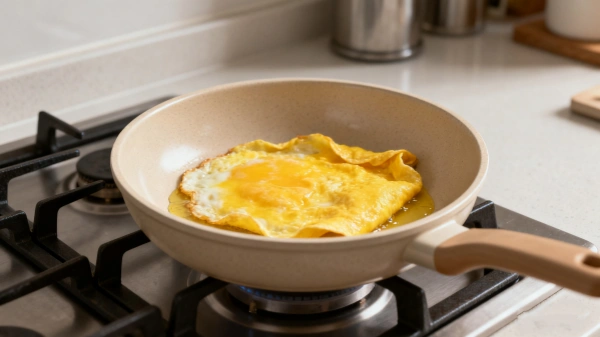
This is the simplest, most basic form. It's lightweight, an excellent heat conductor, and very affordable. However, it's also soft, scratches easily, and is chemically reactive. Cooking highly acidic foods like tomatoes or lemons in a bare aluminum pot can significantly increase the amount of aluminum that leaches into your meal. This is the type of cookware that most health concerns are based on.
2. Anodized Aluminum
This is a major step up in safety and durability. Anodization is an electrochemical process that builds a hard, non-reactive layer of aluminum oxide ($Al_2O_3$) on the surface. Think of it as giving the aluminum a suit of armor. This sealed surface is tough, scratch-resistant, and prevents the aluminum underneath from ever coming into contact with your food.
3. Coated Aluminum
This is perhaps the most common type today. The pan's body is aluminum (for its great heat distribution), but the cooking surface is covered with a non-stick layer, such as PTFE (Teflon) or a ceramic coating. The coating acts as a complete barrier, meaning the safety of the pan is dependent on the integrity of that coating, not the aluminum core.
Chapter 5: Your Kitchen Action Plan: A Guide to Safe Selection and Use
Armed with this knowledge, you can now become a savvy consumer. Here’s a practical guide to making smart, safe choices for your kitchen.
Purchasing Checklist
Safe Usage Manual
Conclusion: From Panic to Empowerment
So, is aluminum cookware banned in Europe? No. The truth is far more nuanced and reassuring. Europe doesn't ban it; it intelligently regulates it. The link to Alzheimer's has been dismissed by mainstream science, and the safety of your aluminum pan has far more to do with its surface—whether it's anodized or coated—than the simple fact that it's made of aluminum.
Panic thrives in the absence of information, but knowledge empowers us. By understanding the science and making informed choices, you can confidently enjoy the benefits of lightweight, efficient aluminum cookware without any of the outdated fear. You are the master of your kitchen.
Solamex — Wholesale Pots and Pans Expertise
Solamex offers wholesale pots and pans, combining durable materials, precise craftsmanship, and flexible product customization. From premium stainless steel to advanced nonstick lines, our catalog is built for both retail distribution and demanding commercial kitchens — ensuring consistency in performance and presentation.
What is Water-Based Oil Non-Stick Coating?
Dutch Oven Sizes Explained: The Ultimate Guide to Choosing the Perfect Pot