Is HexClad Cookware Non Toxic: A Complete Guide to Materials, Safety, Performance, and Care
1. Introduction
As nonstick cookware comes under increased scrutiny for chemical safety, many home cooks are left asking: how safe are these pans really? HexClad’s hybrid design combines stainless steel searing with a PFAS‑free ceramic nonstick surface—but what do independent labs say about its toxicity, and can you trust it in your kitchen? This guide dives deep into HexClad’s materials, testing, and certifications to answer your top safety concerns.
2. What Is HexClad Made of? Material & Construction
2.1 Official Brand Specifications
HexClad’s patented design layers three key components:
- Aluminum Core: Provides fast, even heat distribution and prevents hot spots.
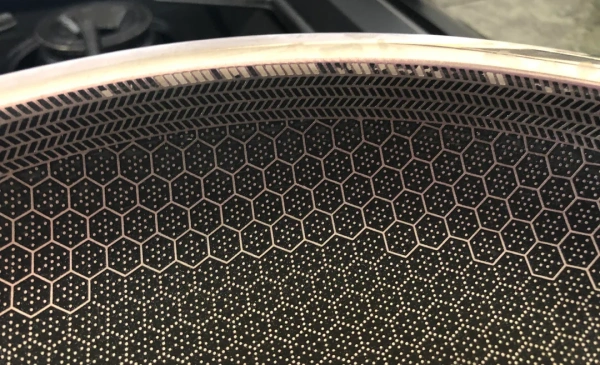
- Laser‑Etched Stainless‑Steel Hex Pattern: Creates raised searing ridges while protecting the nonstick valleys.
- TerraBond™ Ceramic Nonstick Coating: A proprietary, PTFE‑free, PFAS‑free ceramic formula that delivers stick‑resistance without toxic chemicals.
2.2 Third‑Party Verification
Independent laboratories (e.g., Light Labs) have tested HexClad surfaces and reported “non‑detect” levels for PFOS, PFOA, PTFE, and other PFAS compounds. This confirms the cookware meets stringent safety thresholds for chemical migration.
3. Safety
3.1 Toxicity & Chemical Safety
Are hexclad pans non toxic? Concerns over traditional nonstick coatings stem from perfluorinated compounds (PFAS) and PTFE, which may degrade at high heat. HexClad’s TerraBond™ ceramic formula is engineered to eliminate these risks:
- PFAS‑Free & PTFE‑Free: No legacy “forever chemicals” used in manufacturing.
- Lab‑Certified Non‑Detect: Third‑party tests confirm no measurable PFOS, PFOA, PFPeS, PFBS or related compounds under standard cooking conditions.
3.2 Mechanical & User Safety
- Metal‑Utensil Compatibility: The hardened stainless ridges take the brunt of contact, allowing safe use of metal spatulas and whisks without functional damage.
- Thermal Stability: The multi‑layer construction reduces warping and hot spots. Ergonomic, stay‑cool handles help prevent accidental burns.
4. Performance & Value
4.1 Heat Distribution & Searing
With an aluminum core heat conductivity exceeding 200 W/m·K, HexClad pans rival copper for speed while the stainless ridges produce professional‐grade sear marks. Foods brown evenly without cold spots.
4.2 Durability & Maintenance of Nonstick
TerraBond™ withstands repeated heating cycles and resists abrasion better than standard ceramic coatings. In scratch tests, only superficial marks appear that do not impair nonstick performance.
4.3 Is HexClad Worth It?
- Lifetime Warranty: Covers manufacturing defects; speaks to brand confidence.
- Price vs. Longevity: Higher upfront cost but long‑term value when compared to replacing inferior nonstick pans every few years.
- User Reviews: Most home cooks praise the hybrid versatility; a minority report slight coating wear after 2–3 years of heavy use.
5. Care & Maintenance
5.1 Seasoning HexClad
- Preheat the clean, dry pan on medium‑low heat for 1–2 minutes.
- Pour 1 teaspoon of high‑smoke‑point oil (avocado or grapeseed) and spread evenly.
- Heat for an additional 2–3 minutes, then remove from heat.
- Cool, wipe out excess oil with a paper towel. Repeat every 3–4 months for optimal performance.
5.2 Cleaning & Dishwasher Use
Dishwasher cleaning is permitted but may gradually dull the ceramic coating. Hand‑washing with warm water, mild dish soap, and a soft sponge is recommended for lasting nonstick performance.
5.3 Storage & Handling Tips
- Store pans with protective liners or hanging racks to avoid abrasion.
- Avoid sudden temperature changes—let hot pans cool before rinsing with cold water to prevent warping.
6. Additional Frequently Asked Questions
Are HexClad pans dishwasher safe?
Yes—HexClad pans can go in the dishwasher, but hand‑washing extends the life of the nonstick surface.
Do HexClad pans scratch easily?
Normal kitchen use, including metal utensils, rarely produces more than light cosmetic scuffs that do not affect cooking.
Can you use metal utensils on HexClad?
Absolutely—HexClad’s hybrid pattern is designed to withstand metal‑utensil contact while preserving nonstick valleys.
7. Conclusion & Recommendations
HexClad cookware delivers a unique combination of rapid heating, professional searing, and reliable nonstick performance without toxic chemicals. Its durability, versatility, and lifetime warranty make it a compelling choice for serious home cooks seeking long‑term value. If you prioritize safety, easy cleanup, and metal‑utensil compatibility, HexClad stands out in the premium cookware market.
While HexClad has established itself as a renowned consumer-facing cookware brand, Solamex shines as a trusted name in the cookware wholesale sector, catering to businesses and bulk buyers with equal dedication to quality and innovation. Specializing in comprehensive cookware solutions, Solamex offers fully customizable dimensions, colors, and finishes, allowing clients to tailor products to their unique specifications. Upholding eco-friendly and health-conscious principles, their designs prioritize non-toxic materials and sustainable manufacturing, mirroring the safety standards of premium brands. What sets Solamex apart is its ability to deliver comparable performance and durability at remarkably competitive prices, making high-quality cookware accessible without compromising on craftsmanship. Whether for commercial kitchens, retail partnerships, or private labeling, Solamex combines wholesale efficiency with customizable excellence, proving that affordability and quality can coexist in the cookware industry.
HexClad Cookware Review: Unpacking Safety Concerns & Value for Money
Frying Pan Sizes: How to Choose and Measure the Perfect Pan