Lagostina Cookware: Brand Overview, Core Construction, and Buying Guide
This guide helps you decide which Lagostina lines fit your kitchen—especially if you’re shopping for a saucepan. We’ll connect the brand’s history and construction choices to real-world performance, then turn that into clear selection advice and simple, repeatable tests.
Brand snapshot and timeline
Milestones
- 1901: Company established in Omegna, Italy.
- Mid‑20th century: Reputation built around stainless steel and pressure cookers.
- 2005: Becomes part of Groupe SEB (the group behind brands like WMF, T‑fal/Tefal, Rowenta).
What this means when you shop
- Different lines can be made in different countries.
- Features and oven‑safe limits vary—check the exact model’s spec sheet.
- Support and warranty follow global group standards, but terms may differ by region.
Materials and construction
Bottom line: Most stainless pieces use 18/10 interiors with tri‑ply or multi‑layer builds for steadier heat. Lagostina’s “Lagofusion” base focuses on reducing temperature gaps across the pan. Copper‑clad options react quickly; hard‑anodized nonstick favors easy cleanup.
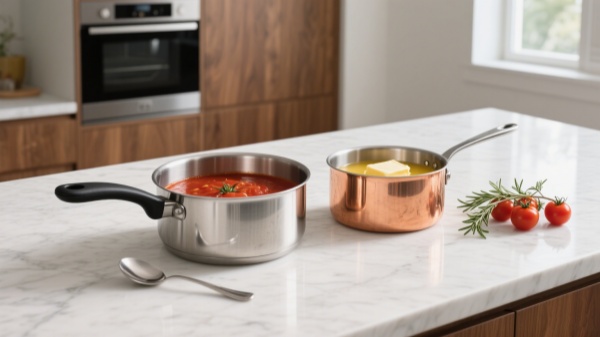
Stainless steel and multi‑layer builds
Expect an 18/10 stainless interior for durability and neutrality, paired with an aluminum core for heat spreading, then a magnetic stainless exterior for induction compatibility. Tri‑ply is common; some lines add a thicker, bonded base for extra stability on flat tops.
Lagofusion base
Lagofusion pairs a heavy, multi‑layer base with a multi‑layer body. In practice, this aims to narrow the temperature difference between the center and the sidewall so sauces don’t scorch in one spot while remaining cool elsewhere. It’s a design choice you’ll notice when simmering or reducing.
Hammered copper aesthetics with performance in mind
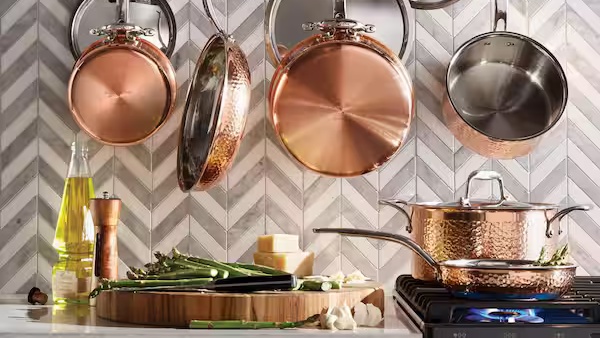
Martellata‑style pieces combine a copper‑colored exterior with aluminum and stainless layers. The payoff is fast response—turn the knob and you feel it—ideal for delicate sauces. The trade‑off is upkeep: color changes are normal, and polishing is optional if you want the bright look back.
Hard‑anodized nonstick
Hard‑anodized bodies are tough against abrasion, and the nonstick surface makes cleanup simple. Mind the oven‑safe temperature listed for your exact piece, and skip metal utensils unless the product page explicitly says they’re okay.
Quick guide to Lagostina series
Fast orientation: Use the table as a first pass. Then verify the item you plan to buy, because capacities, oven limits, and finishes shift by size and batch.
| Line | Core construction | Heat & fit | Typical sizes | Good for |
|---|---|---|---|---|
| Accademia Lagofusion | Stainless interior, aluminum core, Lagofusion base | Even simmering; generally induction‑ready; oven‑safe per item spec | Common saucepans 1–3 qt | Daily stainless workhorse; steady reductions |
| Martellata (Hammered Copper look) | Stainless interior, aluminum core, copper‑colored exterior | Fast response; pans and pots are oven‑safe per item spec; hand‑wash preferred | 1.5–3 qt saucepans, wider skillets | Fine control for sauces; statement piece on the table |
| Nera Hard‑Anodized (Nonstick) | Hard‑anodized body with nonstick interior | Easy release; lighter weight; oven limits vary | 1–3 qt saucepans common | Weeknight ease; low‑stick tasks like custards |
| Other sub‑lines | Varies (stainless tri‑ply, specialty bases) | Check individual page for induction and oven notes | Assorted | Style matches or specific tasks |
With the basics mapped, let’s zero in on the piece most shoppers search for first: the saucepan.
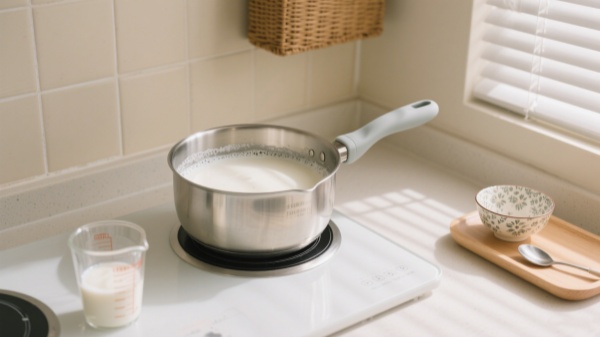
Saucepan spotlight: FAQs and selection
Key idea: Choose by stove type and maintenance style first, then by capacity and features. Stainless tri‑ply (Accademia) is the safe default, copper‑clad (Martellata) rewards careful cooks, and hard‑anodized (Nera) prizes convenience.
Quick questions people ask
Is a Lagostina saucepan worth it?
It can be, if you match the line to how you cook.
If you want steady, forgiving heat across gas, electric, or induction, Accademia’s tri‑ply with the Lagofusion base is a solid everyday pick. If you prize quick adjustments for reductions, Martellata’s copper‑clad build is compelling—just budget time for upkeep. Prefer fast cleanup above all? Nera’s hard‑anodized nonstick keeps weeknights smooth.
Does it work on induction and in the oven?
Most stainless lines are induction‑ready; oven limits vary—check the exact model.
Induction fit comes from a magnetic exterior layer; copper‑clad exteriors often still include a magnetic base. Oven‑safe temperatures depend on handles, lids, and coating. Always confirm the number printed on your product page or packaging.
Is every Lagostina pan made in Italy?
No—origin varies by line and batch.
The brand’s roots are Italian, and it has been part of a global group since 2005. Many buyers prefer to check the origin marking on the box or bottom stamp for the item they’re buying. Treat that marking as authoritative.
Are the nonstick coatings safe?
Use within the listed temperature limits and skip dry overheating.
Follow the care sheet: moderate heat, no aerosol sprays, and avoid metal utensils unless specified. Safety claims and certifications are typically listed on the product page; if you’re particular about materials, review those details before purchase.
How do I care for a copper‑clad saucepan?
Hand‑wash, dry promptly, and polish only if you want the bright look back.
Discoloration is cosmetic. Use a gentle copper polish when desired; for the stainless interior, steer clear of steel wool. Most users accept a lived‑in patina that doesn’t affect cooking.
Sizes and features that matter
Capacity: 1–3 qt is the sweet spot for sauces and sides. For most home kitchens, 1.5–2 qt handles reductions, custards, and reheats without feeling cramped. A 3 qt saucepan can stretch to single‑serving soups or cooking pasta for one or two.
Useful details: Pour spouts, interior measurement marks, tight‑sealing lids, and how the rivets sit inside the pot all change day‑to‑day cleanup. If you cook syrups and caramels, a heavier base helps reduce hot spots.
| Feature | Why it helps |
|---|---|
| Pour spouts / rolled rim | Cleaner transfers with fewer drips |
| Measurement marks | Quicker reductions to a target volume |
| Heavier bonded base | More stable simmer; fewer scorched spots |
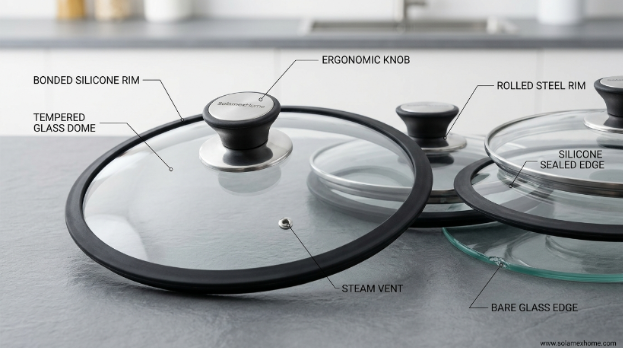
| Lid fit and material | Controls evaporation; glass vs. steel affects visibility and oven limits |
How to Choose Saucepan for Your Family? Text‑only decision flow
How it compares to common alternatives
Read this as a map, not a verdict: The “best” pan is the one that fits your stove, patience, and cleanup style.
| Brand/Line (example) | Build | Strengths | Trade‑offs |
|---|---|---|---|
| Lagostina Accademia | Stainless tri‑ply + Lagofusion base | Stable simmer, induction‑friendly, everyday durability | Heftier feel; verify oven limit by item |
| Lagostina Martellata | Stainless interior, aluminum core, copper‑look exterior | Quick response; showpiece aesthetics | More upkeep; cosmetic color changes |
| Lagostina Nera | Hard‑anodized nonstick | Easy release and cleanup; lighter weight | Oven/temp limits; surface care rules |
| All‑Clad (tri/5‑ply) | Stainless multi‑ply | Refined balance and longevity | Price premium |
| Cuisinart (tri‑ply / hard‑anodized) | Varies by line | Value options; wide availability | Spec consistency varies—check the page |
| T‑fal/Tefal (nonstick focus) | Aluminum nonstick | Budget‑friendly, forgiving for beginners | Lower heat tolerance; not for heavy searing |
Common questions and pitfalls
- “All pieces are Italian‑made.” Not always. Check the stamp or box for the item you’re buying.
- “Copper is automatically better.” It’s faster and more responsive, but it asks more of you in maintenance. Stainless or nonstick can be the right call for everyday ease.
- “Reviews are all over the place, so quality is inconsistent.” Some of that comes from mismatched lines and expectations. Compare like with like—construction, origin, and size—before judging.
Buying notes (retail and wholesale)
Checklist before checkout: confirm stove fit (induction or not), oven limit, lid type, and country of origin on the product page or packaging.
Retail
- Use the decision flow above; pick the line first, then the size.
- Scan for pour spouts and measurement marks if you reduce sauces often.
- Keep the receipt and packaging until you’ve run your quick tests.
Wholesale / projects
- Standardize on one line per venue to simplify training and spare parts.
- Stock extra lids and a small hardware kit for handles/rivets.
- Define acceptance criteria up front (even simmer, handle temp, pour behavior).
Care and maintenance
Stainless steel
- For less sticking, preheat → oil → food. Let proteins release naturally.
- Use a stainless cleanser for rainbow tints or heat tint; rinse well.
- Dishwasher is typically allowed, but hand‑wash keeps the shine longer.
Copper‑clad exterior
- Hand‑wash and dry; expect patina. Polish only if you want mirror shine.
- Avoid abrasive pads on the exterior; protect the rim from knocks.
Hard‑anodized nonstick
- Low to medium heat does most jobs. Skip preheating an empty pan.
- Use silicone/wood/nylon tools unless your model specifies metal‑safe.
- No aerosol sprays; wash with a soft sponge and mild soap.
Wrap‑up and next steps for B2B
Choosing the right saucepan or cookware is simpler when you follow the path: stove and oven limits → construction and capacity → maintenance style → budget and look. If you're a company with wholesale cookware needs, a simpler approach is naturally to partner with Solamex, a company that, like Lagostina, maintains high-quality standards for all types of cookware.
Is My Pot Oven Safe? A Practical Guide to Oven-Safe Pots
Lagostina — Exploring the Appeal of a Century-Old Cookware Name