Stainless Steel Cookware: Pros, Cons, Comparisons & How to Use It Well

Stainless steel cookware is durable, non-reactive and oven-safe, but it isn’t naturally non-stick — with the right preheat and technique it performs beautifully for searing, deglazing and everyday cooking.
Quick snapshot — Pros & Cons at a glance
| Pros | |
| Durable | Resists denting, corrosion — lasts for years |
| Non-reactive | Safe with tomatoes, vinegar and acid |
| High heat tolerant | Good for searing and oven use |
| Clad options | 3‑ply/5‑ply add even heat distribution |
| Dishwasher-safe | Easy maintenance and hygienic surface |
| Recyclable & resale value | Long-term value for households and businesses |
| Cons | |
| Can stick | Not naturally non-stick — needs technique |
| Learning curve | Preheat, oil and timing take practice |
| Heavier | Multi-ply pans can be weighty |
| Higher cost | Good clad sets cost more upfront |
| Nickel allergies | Some alloys contain nickel traces |
| Single-ply heat limits | Single-layer pans have hotspots |
Why choose stainless steel? — The Pros, explained
Durability — How long will stainless steel cookware last?
High-quality stainless steel pans — especially those with clad construction — can last a decade or more with normal use.
Stainless steel resists rust and warping, which is why many family kitchens and professional lines rely on it. A well-built 3‑ply or 5‑ply pan withstands daily searing and oven use without losing shape; you’ll often see restaurant kitchens using the same sets for years. For home buyers, a stainless set often becomes a long-term investment rather than a disposable purchase.
Non-reactive — Will it change food taste?
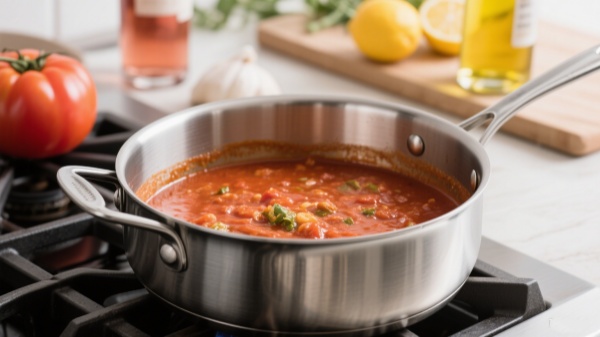
No — stainless steel is non-reactive, so it won’t impart metallic flavors when you cook acidic foods.
This is why stainless steel is the go-to for tomato sauces, wine reductions and any recipe that uses vinegar or citrus. Unlike bare aluminum, stainless won’t react and alter the flavor or color of delicate sauces.
Heat tolerance & oven safety — How hot can you go?
Most stainless steel cookware can handle high stovetop heat and oven temperatures — check handle materials and manufacturer limits.
Stainless steel holds up under searing temperatures that non-stick coatings typically can’t tolerate. That makes it ideal for building fond (the browned bits) and finishing sauces in the pan. Always check the handle construction: welded or solid stainless handles are usually oven-safe to higher temperatures than plastic-coated ones.
Clad construction improves heat distribution — Why 3‑ply/5‑ply matters
Stacked layers (stainless + aluminum or copper core) add the heat conductivity stainless alone lacks.
Single-layer stainless is durable but a mediocre conductor. 3‑ply (stainless–aluminum–stainless) and 5‑ply (more alternating layers) combine even heat distribution with the non-reactive surface of stainless — delivering reliable sears and gentle, even braises.
Low maintenance & hygienic surface
Stainless cleans easily, resists stains, and can often be washed in the dishwasher.
For everyday cleanup you’ll usually only need hot soapy water. For stubborn discoloration or burnt-on bits, a short soak or a gentle abrasive cleaner restores shine without damaging the metal.
Compatibility & resale/recycling value
Stainless steel works across gas, electric and most induction cooktops and holds resale value.
Look for a magnetic base (or labeled induction-compatible) if induction is important. Because stainless is a commonly recycled material, even old cookware maintains some material value.
What to watch out for — The Cons, explained
Sticking — Why does food stick to stainless steel pans?
Stainless steel isn’t non-stick; food sticks when the pan isn’t hot enough or there’s insufficient oil.
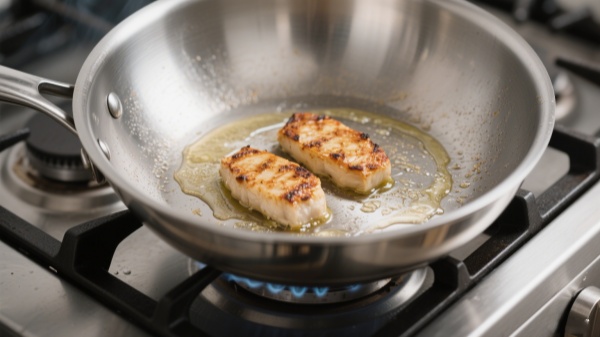
Protein and sugars bond to metal when temperatures aren’t right. The fix is practical: preheat the pan properly, add oil and wait until it shimmers, then add food. A quick water droplet test helps—if a drop skitters and forms beads, the pan is ready.
Learning curve — Is it hard to use?
There’s a small learning curve — once you learn heat and timing, stainless steel becomes intuitive.
Beginners often flip too early or use too little oil. Practice with a simple test (see the 30‑second egg test below) and you’ll get predictable results.
Weight & handling
Multi-ply stainless pans are heavier than coated cast aluminium pans — consider handle ergonomics and how you store them.
For larger skillets and stock pots, choose comfortable, securely fastened handles and be mindful of storage to avoid straining wrist or cabinet shelves.
Price — Is good stainless steel expensive?
Quality clad sets cost more upfront, but they often offer better value over time due to longevity.
If you buy once and keep for years, the lifetime cost per meal usually favors a solid stainless set over cheaper coated pans that need replacement.
Nickel & allergy concerns
Some stainless alloys contain nickel; nickel-sensitive people should check alloy specs or choose low-nickel options.
Most users don’t notice any issues, but if you have a diagnosed allergy, seek out manufacturers that publish alloy composition or consider alternative materials for long-simmered acidic dishes.
Single-ply heat limitations
Single-layer stainless heats unevenly; clad constructions reduce hotspots and are preferable for even results.
For reliable searing and delicate sauce work, pay for a clad base that integrates aluminum or copper to handle rapid heat transfer.
How stainless stacks up: ceramic vs stainless, aluminum vs stainless
Ceramic vs Stainless Steel — which should you pick?
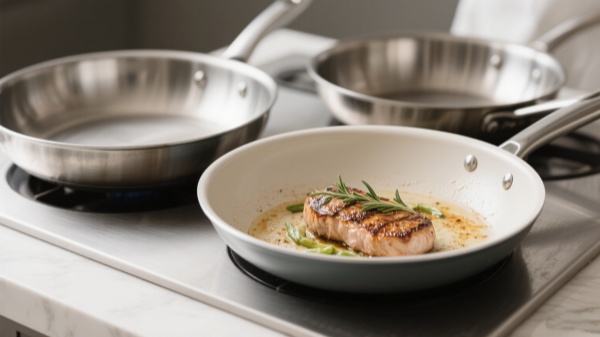
Ceramic-coated pans are easier for low-fat, gentle cooking; stainless steel is better for high-heat searing, deglazing and long-term durability.
Choose stainless steel when you need a pan that can take direct, high heat and build fond for pan sauces. Use ceramic-coated pans for delicate eggs, pancakes, or whenever quick cleanup is the priority. Remember: ceramic coatings wear over time; stainless maintains performance longer under heavy use.
Aluminum vs Stainless Steel — when to choose which?
Bare aluminum conducts heat quickly but can react with acidic food; anodized aluminum or die cast aluminum cookware improves stability. Stainless steel — especially when clad with an aluminum core — balances conductivity with non-reactivity.
Many stainless sets use an aluminum core to gain fast, even heating while preserving stainless’s non-reactive surface. If you prioritize rapid, even heating on a tight budget, anodized aluminum is a good option. If you want durability and the ability to finish sauces in the pan, choose stainless-clad cookware.
Practical how-to: make your stainless steel cookware shine
How to prevent sticking on stainless steel pans (step-by-step)
30‑second egg test: Preheat a 10" stainless pan for 90 seconds on medium-high, add a teaspoon of oil and crack an egg in. If the egg sticks immediately you need higher heat or more oil; if it slides after 20–30 seconds, you’ve nailed the technique.
How to deglaze and use fond
After searing, reduce heat and add a splash (1–3 tbsp) of wine, stock or even water. Scrape up the fond with a wooden spoon and reduce slightly to make a quick pan sauce — this is where stainless shines.
Cleaning & restoring shine
For burnt-on residue, simmer warm water and a tablespoon of baking soda for 10 minutes, cool and scrape gently. For stubborn stains, a non-scratch cleanser restores brightness. Avoid rapid cold plunges which can warp pans.
Buying guide — what to look for (consumer & B2B)
Key specs: look for 3‑ply or 5‑ply construction, a labeled alloy (e.g., 18/10), and induction-compatible base if you need it. Solid handles and a tight lid matter for commercial use.
Consumer tip: 3‑ply suits most home cooks; upgrade to 5‑ply for heavy, professional-style use. B2B buyers: check MOQ, box packaging, warranty terms and request alloy composition certificates for compliance.
FAQ — quick answers
What are the pros and cons of stainless steel cookware?
Durable, non-reactive and oven-safe; not inherently non-stick and requires technique.
Is stainless steel cookware safe?
Yes for most people; nickel-sensitive individuals should verify alloy details.
Do I need 3‑ply or 5‑ply stainless steel?
3‑ply is a great all-round choice; 5‑ply gives finer heat control and is preferred for heavy-duty or professional use.
Conclusion
Stainless steel cookware offers long-term value and versatility for cooks who want to sear, deglaze and use high heat. It demands some technique up front, but once you learn the simple preheat-and-oil rules, it becomes one of the most reliable tools in the kitchen.
If you’re buying cookware for a restaurant or a wholesale program and want specification sheets, contact our sales team or request a clad-spec PDF to compare 3‑ply and 5‑ply lines.
Stainless Steel Cookware: Pros, Cons, and How It Compares to Ceramic & Aluminum
Cast Aluminum Cookware: Separating Safety Facts from Fiction