The Hidden Power of Aluminum Pans: How Seasoning Aluminum Cookware into a Non-Stick
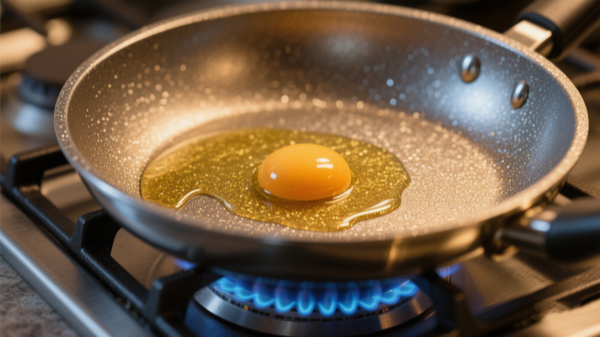
Aluminum cookware began appearing in home kitchens in the early 20th century, prized for its lightweight design and rapid heat conductivity, which outpaced heavier materials like cast iron and copper.
Yet misconceptions—such as “aluminum pans are hard to maintain”—persist, making proper seasoning and care essential to unlock their full versatility from stovetop sautéing to oven baking.
1. The Science Behind Seasoning Aluminum Pans
When aluminum is exposed to air, it instantaneously forms a thin but robust oxide layer (Al₂O₃) on its surface, providing natural corrosion resistance and a mildly non‑reactive barrier.
Seasoning builds on this by polymerizing a layer of oil into minute pores and imperfections of the oxide film, creating a durable, slick finish that prevents sticking and further guards against oxidation.
Unlike cast iron’s porous matrix, aluminum’s non‑porous nature means the seasoning relies entirely on oil polymerization rather than metal infusion, requiring precise temperature control to bond effectively.
2. Step‑by‑Step: How to Season an Aluminum Pan
Pre‑seasoning Prep
Begin by washing the pan with warm water and mild soap, using a soft sponge to remove any factory residues without scratching the surface.
Rinse thoroughly and dry immediately with a clean towel, then place the pan on low heat for 1–2 minutes to evaporate residual moisture.
Applying the Seasoning
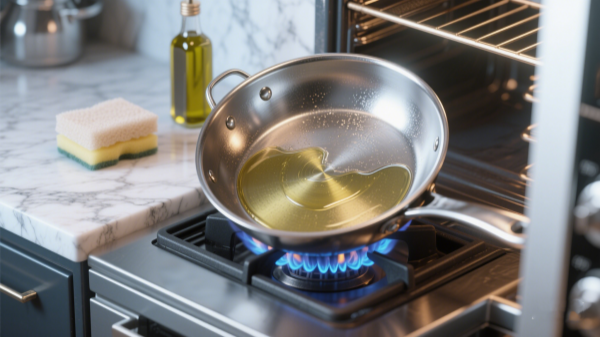
Select a high smoke‑point oil (canola, vegetable, or flaxseed); pour a small amount onto a folded paper towel and rub a thin, even coat over the entire interior and exterior.
Wipe off excess oil until the pan shows only a faint sheen, ensuring there are no drips or pools, which can create uneven seasoning layers.
Baking Process
Place the frying pan upside down on the middle oven rack preheated to 500°F, with foil below to catch any oil drips, then bake for 30 minutes to polymerize the oil layer.
Allow the pan to cool inside the oven for 10–15 minutes before handling, then repeat the oil application and baking cycle two more times for optimal non‑stick performance.
3. Beyond Seasoning: Unique Care Tips for Aluminum Pans
Cleaning Do’s and Don’ts
Use soft sponges or nylon brushes with mild detergent; avoid abrasive scouring pads and harsh chemicals that can erode the polymerized layer.
For stubborn spots, apply a paste of baking soda and water, scrub gently, then rinse and dry promptly to preserve seasoning integrity.
Handling Temperature Changes
Never plunge a hot pan into cold water; sudden thermal shock can warp aluminum and compromise both the pan’s shape and its seasoning layer.
Storage Solutions
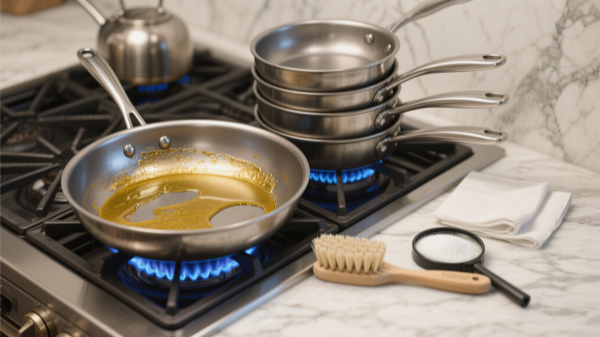
Stack pans with paper or cloth liners between them to prevent scratches and maintain the non‑stick surface during storage.
Regular Checks
Inspect for dull spots or food sticking; if performance declines, repeat the seasoning process to rebuild the protective oil layer.
4. Addressing Safety Concerns: Are Aluminum Pans Safe?
High‑quality aluminum pans with anodized or seasoned surfaces release negligible aluminum into food, remaining well below safety thresholds set by health authorities.
A 2023 study showed that properly anodized cookware exhibits minimal leaching even with acidic foods, thanks to the stable oxide barrier, reassuring consumers about aluminum’s safety.
Be wary of low‑quality imports that may leach lead; the FDA has issued guidance against certain aluminum alloys found to contain harmful contaminants.
5. Aluminum Pans vs. Other Materials
| Material | Pros | Cons |
|---|---|---|
| Aluminum | Excellent heat conduction; lightweight; affordable | Non‑stick performance coating required; avoid extreme heat |
| Stainless Steel | Durable; non‑reactive; low maintenance; fits induction | Slower heating; potential hot spots without clad core |
| Non‑Stick | Effortless release; low‑fat cooking | Coating degradation at high heat; |
| Cast Iron | Superior heat retention; natural seasoning | Heavy; frequent re‑seasoning required; reactive with acid |
| Copper | Exceptional temperature control; aesthetic appeal | High cost; requires polishing and lining; reactive |
This comparison underscores aluminum’s unique combination of fast, even heating and lightweight design, making it an ideal everyday workhorse for diverse cooking tasks.
For retailers and large‐scale kitchens, Solamexhome offers a wide selection of wholesale frying pans and other cookware in bulk in multiple materials (non‐stick aluminum, stainless steel, cast iron) and sizes to suit every culinary application
. With over a decade of experience serving restaurants, retailers, and distributors, our bulk clients rely on Solamexhome for consistently high product quality and reliable order fulfillment
. Our competitive wholesale pricing, flexible volume discounts, and comprehensive product range ensure significant cost savings without sacrificing performance, making Solamexhome the partner of choice for any large‐scale cookware purchase.
6. Reviving an Old Aluminum Pan
For minor sticking or discoloration, soak the pan in a 1:1 vinegar‑water solution for 15 minutes, scrub gently, rinse, and dry before reseasoning.
For deeper residue, repeat washing and seasoning cycles until the surface regains a uniform, non‑stick finish; replace the pan if severe pitting or coating failure occurs.
7. Conclusion: Unleashing the Potential of Your Aluminum Pan
With proper seasoning, gentle cleaning, and mindful storage, aluminum pans transform into durable, high‑performance tools capable of handling everything from searing steaks to simmering sauces.
Embrace the science and methodical care outlined here to enjoy a sleek, reliable non‑stick surface that endures for years, making your aluminum pan a lifelong kitchen companion.
Now that you’re equipped with both the chemistry and practical steps, dive into your next culinary adventure with confidence—and let your well‑seasoned aluminum pan shine.
How to Measure Frying Pan Size Like a Pro (and Why It Matters for Better Cooking)
Quart Pot Sizes Explained: 2qt to 12qt for Every Kitchen—Choose the Right Size for Soups, Stews & More