The Ultimate Guide to Cast Aluminum Cookware: Unveiling Its Craft, Performance, and Modern Innovations

The Ultimate Guide to Cast Aluminum Cookware: Unveiling Its Craft, Performance, and Modern Innovations
Table of Contents
- 1. Introduction: The Kitchen Revolution of Aluminum Cookware
- 2. The Artistry of Cast Aluminum Manufacturing
- 3. Performance Excellence: Why Cast Aluminum Stands Out
- 4. Health, Safety, and Environmental Responsibility
- 5. Die Cast Aluminum Cookware: A Technical Divergence
- 6. Market Trends and Smart Buying Strategies
- 7. Future Innovations and Industry Challenges
- 8. Conclusion: Redefining Culinary Efficiency
1. Introduction: The Kitchen Revolution of Aluminum Cookware
In modern kitchens, efficiency and precision are non-negotiable. Cast aluminum cookware has emerged as a game-changer, offering a unique blend of lightweight design, superior heat conductivity, and affordability that caters to both home cooks and professional chefs. According to industry reports, the global aluminum cookware market is projected to reach USD 41.58 billion by 2031, driven by its adaptability and eco-friendly appeal.
This article delves into the technical nuances, health considerations, and market dynamics of cast aluminum cookware, while exploring its relationship with die cast aluminum—a close relative with distinct characteristics. By the end, you’ll gain actionable insights to optimize your culinary experience and make informed purchasing decisions.
2. The Artistry of Cast Aluminum Manufacturing
Gravity Casting: The Foundation of Excellence
Cast aluminum cookware is crafted through gravity casting, where molten aluminum (heated to ~700°C) is poured into pre-shaped molds. This process ensures uniform thickness and structural integrity, resulting in pans that distribute heat evenly—critical for preventing hotspots. After cooling, the cast pieces undergo surface treatments like polishing or anodization to enhance durability and aesthetics.
Key Technical Parameters
- Thickness: Typically 3–5 mm, balancing heat retention and weight.
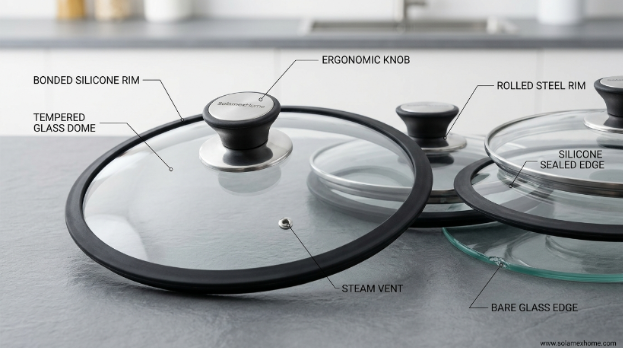
- Coatings: Non-stick finishes (e.g., PTFE, ceramic) are applied to reduce friction and simplify cleaning. For example, neoflam’s Midas Plus set and Solamex uses eco-friendly Ecolon ceramic coating, free from PFOA and PFAS.
- Certifications: Leading brands like Alluflon adhere to ISO 14001 (environmental management) and SA 8000 (social accountability) standards, ensuring ethical production.
Quality Control
Manufacturers employ X-ray inspections and leakage tests to detect defects like air pockets. For instance, Be-cu’s die-cast aluminum cookware chassis undergo rigorous ASTM E505 level 3 porosity checks.
3. Performance Excellence: Why Cast Aluminum Stands Out
Core Advantages
- Rapid Heat Transfer: Aluminum’s thermal conductivity (237 W/m·K) is second only to copper, enabling pans to heat up 30% faster than stainless steel.
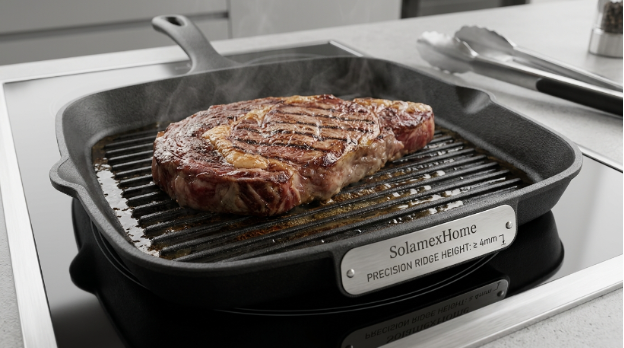
- Even Cooking: Uniform wall thickness eliminates hotspots, ideal for delicate dishes like sauces or seared meats.
- Lightweight Design: A 10-inch cast aluminum skillet weighs ~1.2 kg, significantly lighter than cast iron (~3 kg).
- Durability: Hard-anodized coatings increase scratch resistance by 30%, outperforming traditional aluminum.
Versatility in Use
- Stove Compatibility: Suitable for gas, electric, and induction cooktops.
- Oven Safety: Most models withstand temperatures up to 260°C (500°F), making them ideal for oven-baked recipes.
Comparative Analysis
| Feature | Cast Aluminum | Cast Iron | Stainless Steel |
|---|---|---|---|
| Weight | Light (1.2–2 kg) | Heavy (3–5 kg) | Moderate (1.5–3 kg) |
| Heat Distribution | Excellent | Good | Fair |
| Non-Stick Coating | Common (PTFE/ceramic) | Requires seasoning | Rare |
| Price | Affordable | Moderate | Expensive |
4. Health, Safety, and Environmental Responsibility
Aluminum Leaching Concerns
While aluminum is non-toxic, prolonged exposure to acidic foods (e.g., tomatoes, citrus) may cause trace leaching. The FDA clarifies that typical aluminum intake from cookware is well below safety thresholds (≤50 mg/day for adults). Anodized or coated pans further mitigate this risk by creating a protective barrier.
Eco-Friendly Practices
- Recyclability: Aluminum is 100% recyclable, requiring only 5% of the energy needed for virgin production.
- Sustainable Coatings: Brands like Scanpan, and Swiflon use PFOA-free ceramic coatings, aligning with EU REACH regulations.
Maintenance Tips
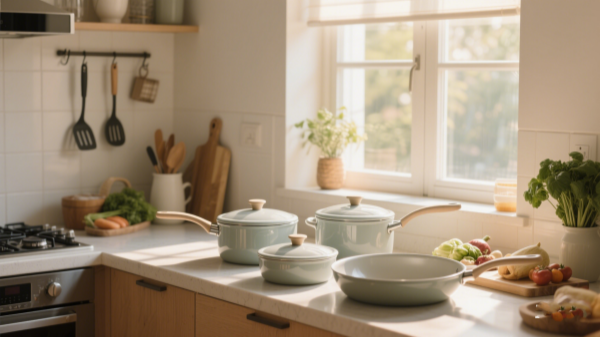
- Cleaning: Use mild detergents and non-abrasive sponges. Avoid dishwasher use, as harsh chemicals may degrade coatings.
- Storage: Dry thoroughly to prevent water spots and store in a cool, dry place.
5. Die Cast Aluminum Cookware: A Technical Divergence
The Die Casting Process
Die cast aluminum differs from traditional cast aluminum in its high-pressure manufacturing. Molten aluminum is injected into steel molds at 50–150 MPa, creating thinner walls (1–3 mm) and complex shapes. This method is favored for high-end cookware due to its precision.
Performance Differences
- Heat Conductivity: Die cast aluminum heats 10–15% faster than gravity-cast variants but may warp at extreme temperatures.
- Cost: Die casting involves higher tooling expenses, making it 20–30% pricier than standard cast aluminum.
Market Positioning
Die cast cookware dominates premium segments, with brands like Swiss Diamond offering diamond-infused coatings for enhanced durability. However, its lightweight nature (10–20% lighter than cast iron) makes it popular for professional kitchens.
6. Market Trends and Smart Buying Strategies
Industry Growth Drivers
Health-Conscious Demand: Anodized aluminum cookware sales are rising due to its non-reactive properties, particularly in Europe and North America. Regional Dynamics: The Asia-Pacific market is projected to grow at a CAGR of 6.2% from 2023–2030, driven by urbanization and disposable income growth.
Key Selection Criteria
- Coating Type: Ceramic coatings (e.g., GreenPan, Solamex) are ideal for eco-conscious users, while PTFE (e.g., Teflon) offers superior non-stick performance.
- Stove Compatibility: Ensure induction-ready models have a magnetic base.
- User Reviews: Top-rated sets like the Martha Stewart Lockton collection earn 4.7/5 stars on Amazon for their durability and even heating.
7. Future Innovations and Industry Challenges
Cutting-Edge Technologies
- Nanocomposite Coatings: These blends of nanoparticles (e.g., diamond, ceramic) enhance scratch resistance by 50% and reduce heat retention.
- Smart Integration: Brands like EMP Cookware are developing self-healing coatings that repair micro-scratches, extending product lifespan.
- Sustainable Production: Closed-loop recycling systems, as implemented by Hydro Group, minimize waste and energy consumption.
8. Conclusion: Redefining Culinary Efficiency
Cast aluminum cookware bridges the gap between performance, affordability, and sustainability. Its uniform heat distribution, lightweight design, and modern coatings make it a versatile choice for diverse cooking styles. While die cast aluminum caters to premium markets, standard cast aluminum remains the go-to for everyday use.
As the industry evolves, innovations like nanocoatings and smart technology will further enhance its appeal. By prioritizing eco-friendly practices and debunking myths, cast aluminum is poised to lead the future of kitchenware.
Ready to Upgrade Your Kitchen? Explore our curated selection of top-rated cast aluminum cookware sets and elevate your culinary journey today!
View Recommended BrandsCast Aluminum Cookware: Lightweight Powerhouse or Die-Cast Durability? Your 2025 Buyer’s Guide
Commercial Cookware: Ultimate Guide to Selection, Maintenance & Industry Trends