Ultimate Guide to Oven‑Safe Cookware: Materials, Ratings & Top Brand FAQs
I. Introduction
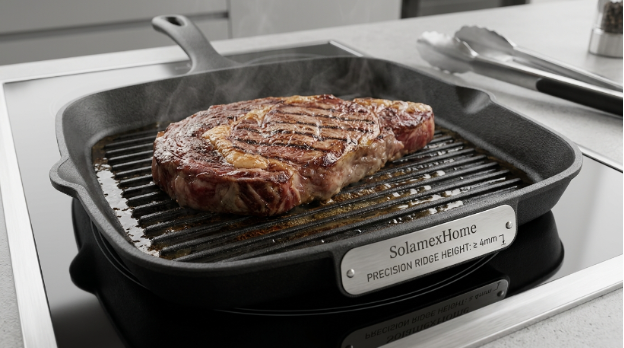
Picture this: you’ve seared a perfect steak in your skillet, then slide it under the broiler to caramelize the edges—only to hear an ominous ping as the handle warps or the coating bubbles. That’s every home cook’s worst nightmare. Ensuring your cookware is officially oven‑safe isn’t just about performance; it’s about safety. From toxic fumes to structural failure, the risks of using the wrong pan can turn your kitchen into a hazard zone.
In this guide, we’ll:
- Define what “oven‑safe” truly entails
- Break down materials and construction factors
- Show you how to confirm your cookware’s oven rating
- Offer care tips to prolong oven‑safe life
- Compare four leading U.S. brands and answer your top PAA questions
II. What “Oven‑Safe” Really Means
Oven‑safe isn’t a marketing buzzword—it refers to cookware tested to withstand a manufacturer‑specified maximum temperature without damage or off‑gassing. Industry norms commonly fall between 400 °F and 600 °F, but symbols and labeling vary. Beware of assumptions like “all‑metal equals oven‑safe”—some pans have plastic knobs or glued parts that melt well below stovetop temps.
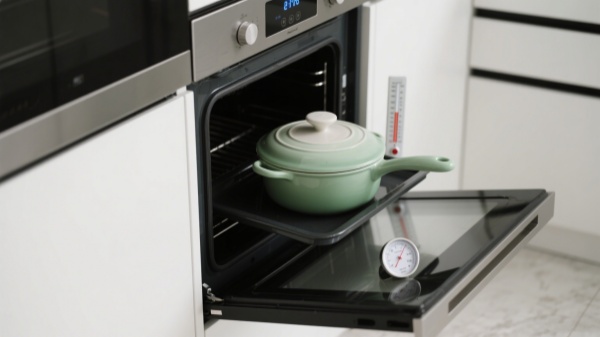
Knowing the real definition protects you from:
- Warping—uneven heat can bend metal bases
- Handle failure—plastic or silicone parts can degrade
- Toxic fumes—overheated coatings may release chemicals
III. Oven‑Safe Materials & Construction
Your pan’s ability to survive oven heat depends on both core materials and auxiliary components:
1. Core Materials
- Stainless steel: Often rated to 500–600 °F; durable, non‑reactive.
- Cast iron & carbon steel: Withstand 700 °F+ when properly seasoned.
- Die Cast Aluminum & hard‑anodized: Typically safe to 400–500 °F; lightweight but softer.
2. Coatings
- PTFE (traditional nonstick): Safe up to 450 °F; avoid overheating to prevent fumes.
- Ceramic & mineral nonsticks: Often rated ≥ 500 °F without off‑gassing.

3. Handles, Knobs & Lids
- Metal‑only handles: Typically oven‑safe to core material limit.
- Silicone/plastic parts: Rated from 350–425 °F; check specifics.
- Removable knobs: Ideal for high‑heat use—take them off!
4. Build Quality
- Riveted vs. welded handles: Rivets can loosen; welded is seamless but pricier.
- One‑piece bodies: No glued parts—best for high heat.
IV. How to Verify Ratings
Before you gamble your pan, follow these steps:
- Read the manual or packaging: Look for “Oven‑Safe to ___°F.”
- Check the brand’s FAQ/support page: Navigate Support → Product Care → Oven Safety.
- Contact customer service: Ask “Is model X rated for X°F and broiler use?”
- DIY smoke‑point test (cautiously): Heat at a low setting with oven off; watch for warping.
V. Care & Maintenance for Oven‑Safe Cookware
Even oven‑safe skillets need TLC to last:
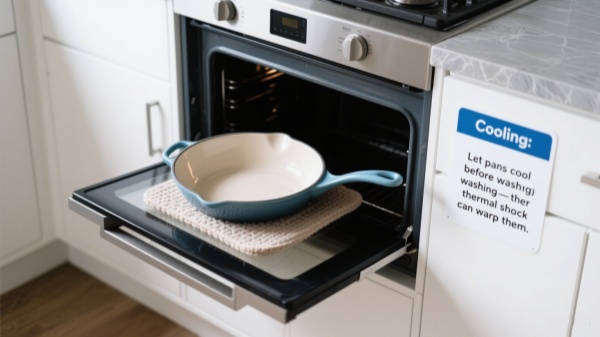
- Cooling: Let pans cool before washing—thermal shock can warp them.
- Cleaning: Use gentle detergents; avoid abrasive sponges on coatings.
- Handle check: Tighten screws or rivets periodically.
- Re‑season cast iron/carbon steel: After high‑heat runs, apply a thin oil coat.
- Retire when needed: Discard pans with peeling coatings or warped bases.
VI. Brand Comparison Table
| Brand | Oven‑Safe Temp | Broiler‑Safe | Notes |
|---|---|---|---|
| Caraway | 550 °F | No (ceramic only) | Remove silicone handles at >425 °F |
| Calphalon | 450–500 °F | Yes (some lines) | Signature & pro lines to 500 °F |
| GreenPan | 600–850 °F | Yes (select models) | Thermolon™ coating—no PTFE/PFOA |
| All‑Clad | 500 °F (nonstick) 600 °F (stainless) |
Yes | Stainless sets safe to 600 °F |
VII. People Also Ask (PAA)
1. Is Caraway cookware oven safe?
Yes. Caraway’s ceramic‑coated pans handle up to 550 °F. Their removable silicone handles are rated to 425 °F—simply remove them when using highest heat.
2. Is Calphalon cookware oven safe?
It depends on the line: Everyday nonstick works to 450 °F, while professional hard‑anodized and stainless collections reach 500 °F, including with lid.
3. Is GreenPan oven safe?
GreenPan’s Thermolon™ ceramic nonstick endures up to 850 °F without off‑gassing; most skillet lids are safe to 425–600 °F depending on material.
4. Is All‑Clad cookware oven safe?
All‑Clad stainless steel sets are safe to 600 °F (broiler too); their nonstick and ceramic lines are rated to 500 °F, though broiler use is limited.
VIII. Common Myths & FAQs
Myth: Glass lids aren’t oven safe.
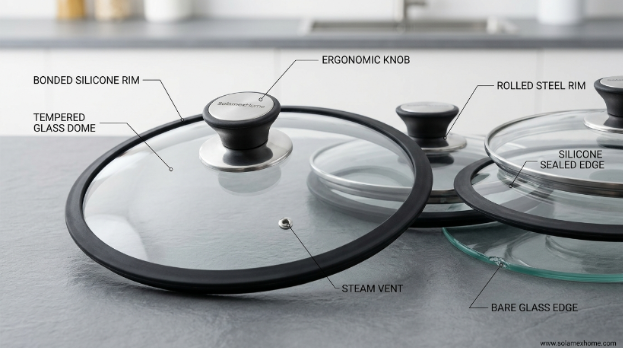
Some tempered glass lids handle up to 450 °F—check for metal rim or knob materials.
Myth: Silicone bakeware is always oven‑safe.
Silicone tolerances vary from 350 °F to 450 °F—verify per product.
Myth: Induction‑ready = oven‑safe.
Magnetic bases work on induction, but knob and handle materials still govern oven rating.
IX. Conclusion
Understanding and verifying your cookware’s oven‑safe rating pays dividends in safety and performance. Always refer to official materials, heed build quality, and maintain your pans properly. Ready to test your cookware? Check the manual or brand site now—your next perfect roast depends on it!
Oven-Safe Cookware Guide: Decoding Labels & Avoiding 4 Major Brand Mistakes
The Non-Toxic Cookware Reality Check: Verify Your Pans in 4 Steps