What “18/10” Means For Stainless Steel Cookware — Composition, Performance & Buying Guide
A practical, human-focused guide: what 18/10 means, how it performs in the kitchen, how it compares with other materials, and clear buying and care advice. Short answers to common questions are included for quick reference.
Quick Answer
18/10 stainless steel normally indicates roughly 18% chromium and 10% nickel (similar to alloy 304). Chromium improves corrosion resistance and nickel adds shine and toughness. For best cooking results choose 18/10 cookware that is fully clad or bonded to a conductive core (aluminum or copper) so you get both durability and even heat.
What “18/10” Means — Composition And Metallurgy
The shorthand “18/10” refers to the percentages of chromium and nickel in the steel: about 18% chromium and 10% nickel. In industry terms this composition is commonly associated with 304 stainless steel, an austenitic alloy valued for its corrosion resistance and polishable finish. Chromium forms a stable oxide layer that resists rust; nickel stabilizes the austenitic microstructure and improves resistance to certain corrosive environments and adds luster.
Practical takeaway: the numeric label helps compare corrosion resistance and finish between similar stainless grades (18/10 vs 18/8 vs 18/0), but it doesn't tell you how the cookware is built (single-wall vs multi-ply), which matters a lot for cooking performance.
How 18/10 Performs In The Kitchen — Heat, Reactivity, Durability, And Maintenance
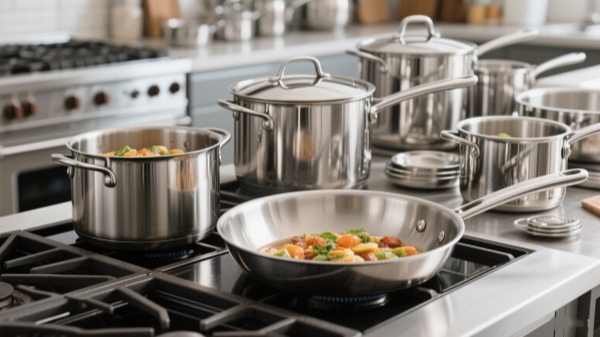
On its own, stainless steel is not a great heat conductor: while 18/10 is durable and non-reactive with acidic foods (tomatoes, wine, citrus), it conducts heat slowly compared with aluminum or copper. That’s why most quality cookware uses 18/10 stainless as the interior and exterior layers and adds an aluminum or copper core (tri-ply, 5-ply or copper-core) for fast, even heating.
Durability is another strong point: 18/10 resists staining and corrosion better than lower-nickel grades, it keeps a bright finish, and it tolerates the kind of scrubbing kitchens commonly use — but abrasive tools can dull polish over time.
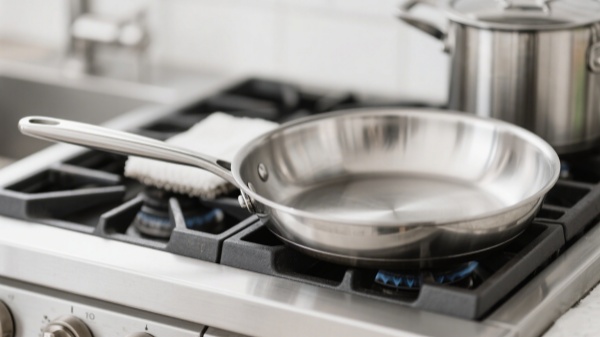
Common finish issues such as rainbow discoloration (from high heat) or spots from hard water are usually cosmetic and removable with a recommended cleaner (see Care section). For heavy duty professional searing or heat-intensive tasks, combining 18/10 cladding with a thick conductive core yields the best results.
18/10 vs 18/8 vs 18/0 vs Other Cookware Materials (Comparison)
Below is a compact comparison to help you choose. Focus on the combination of alloy and construction (cladding, core) rather than the alloy number alone.
| Material / Construction | Composition / Quick Notes | Corrosion Resistance | Heat Performance | Best For |
|---|---|---|---|---|
| 18/10 Stainless (≈ 304) | ~18% Cr, 10% Ni — austenitic | High | Low (alone); excellent when full-clad with Al/Cu core | Everyday cookware, flatware, polished finish |
| 18/8 Stainless | ~18% Cr, 8% Ni — similar to 304 | High | Low alone; similar to 18/10 with cladding | Good balance value/performance |
| 18/0 Stainless | ~18% Cr, 0% Ni — magnetic (often) | Moderate | Low alone | Budget cookware, induction bases |
| 430 Stainless | Ferritic, magnetic | Moderate | Low | Induction bases, budget pots |
| Carbon Steel | Low alloy iron — seasons like cast iron | Low (must season / dry) | Excellent when preheated | Searing, woks, high-heat work |
| Cast Iron | Heavy, retains heat | Low (needs seasoning) | Excellent heat retention | Searing, braising, roasting |
| Hard-Anodized Aluminum | Al core, durable surface | High (surface sealed) | Excellent | Nonstick alternatives, fast heating |
| Nonstick (PTFE) | Coated aluminum or die-cast body | Good (coating can wear) | Excellent | Eggs, delicate items |
| Die-Cast Aluminum | Molded (cast) aluminum — often thicker walls, can be coated | Good when coated / anodized | Very good heat conduction; may heat unevenly if base thin | Durable pans with nonstick coating; lightweight sets |
| Copper-Core / Copper Clad | Copper core for rapid conduction | Moderate (copper oxidizes; clad protects) | Outstanding | Precision cooking, professional use |
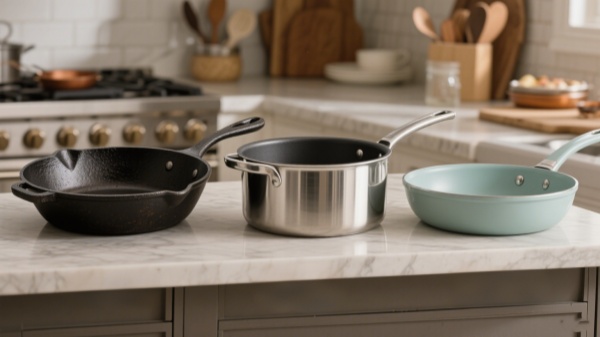
Note: For a direct comparison of performance, durability, and care, see our in-depth stainless steel vs ceramic cookware and stainless steel vs aluminum cookware guides.
Buying Guide — How To Read Product Specs
When you evaluate cookware products, check two things separately: (A) the alloy (e.g., 18/10) and (B) the construction (single-wall, encapsulated base, full-clad, ply count). The alloy tells you about corrosion resistance and finish; the construction determines heat behavior.
Essential Specs To Check
- Alloy marking: explicit “18/10” or alloy number (304) on product page/specs.
- Cladding / Ply: 3-ply (stainless/aluminum/stainless) is a good baseline; 5-ply or copper-core for serious cooks.
- Encapsulated Vs Full-Clad: full-clad extends the conductive core up the sides — better temperature control across the pan.
- Gauge / Thickness: thicker gauge generally helps heat evenness and warp resistance.
- Induction Compatibility: check for magnetic base or explicit induction-ready label.
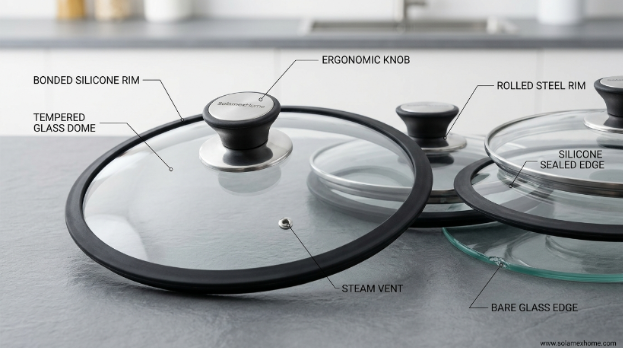
- Handles and Lid Fit: secure rivets, comfortable handles, tight-fitting lids matter for practical use.
- Warranty & Brand Reputation: useful marker — check what the warranty covers (warp, defects).
Advice: for a reliable all-around kit, aim for 18/10 full-clad, 3-5 ply, with a minimum moderate gauge and an induction-ready base.
Care, Cleaning And Common Mistakes
To keep 18/10 cookware looking and performing well: avoid high-abrasion scrubbing on polished surfaces, dry pans promptly to prevent water spots, and don’t regularly overheat empty pans (this risks discoloration). Most 18/10 cookware is dishwasher-safe, but hand-washing preserves the finish longer.
Daily Care (Quick)
- Wash with mild dish soap and a soft sponge after cooling.
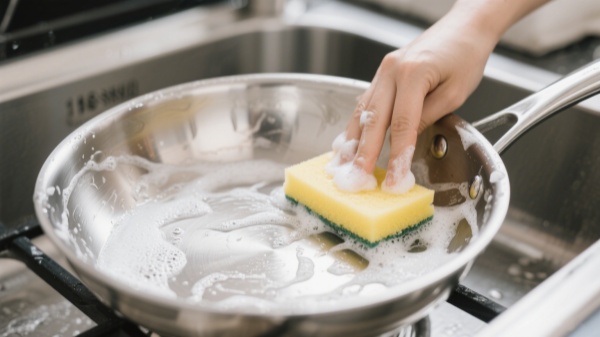
- Dry thoroughly to minimize water spots.
- Use wooden, silicone, or nylon utensils to reduce surface scratches.
Deeper Cleaning & Removing Discoloration
For rainbow or heat discoloration, nonabrasive cleaners such as powder or liquid formulations designed for stainless steel (e.g., Bar Keepers Friend) are effective when used per product guidance. Rinse thoroughly and dry. Avoid using strong chlorine bleach on stainless finishes.
If soot or baked-on food is present, soak with warm soapy water first; then use a soft nylon brush and a gentle cleaner.
Myths, Limitations And Safety Notes
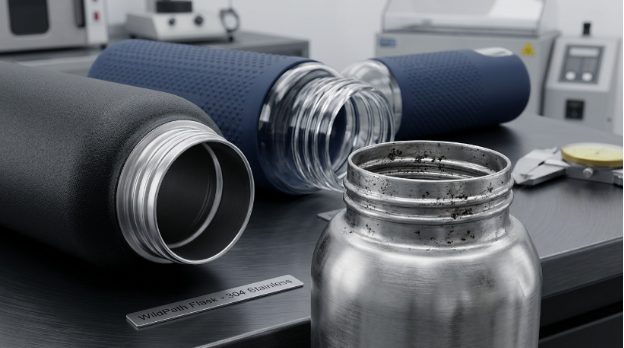
Two common misconceptions: (1) “18/10 is the best heat conductor” — false: nickel improves corrosion and finish, but the alloy itself is not as conductive as aluminum or copper; (2) “18/10 will never release nickel” — in reality, small amounts of nickel and chromium can solubilize into strongly acidic foods under particular conditions, but typical home use is considered safe for the majority of people. If you have a diagnosed nickel allergy, consult medical guidance and consider product-specific tests.
Practical safety: avoid overheating pans empty for prolonged time (warping, discoloration) and follow cookware manufacturer guidance about oven temperatures and handle care.
Use Cases And Quick Recommendations
Short, practical recommendations depending on how you cook:
- Everyday Home Cook: 3-ply 18/10 full-clad — versatile, dishwasher-friendly, a good balance of performance and cost.
- Professional / Serious Enthusiast: 5-ply or copper-core with an 18/10 interior; thicker gauge for searing and precise heat control.
- Budget Buyer: Encapsulated base (18/10 with aluminum base) is economical, but expect less even heat up the sides.
- Nonstick / Lightweight Needs: Die-cast aluminum with an anodized or coated finish can be a good compromise — light and conductive but check coating durability.
FAQ
What Does 18/10 Stainless Steel Mean?
It indicates roughly 18% chromium and 10% nickel in the alloy, a composition similar to 304 stainless that offers strong corrosion resistance and a shiny finish.
Is 18/10 Better Than 18/8?
18/10 has slightly more nickel than 18/8, giving marginally better corrosion resistance and luster, but in practical cooking the construction (cladding) often matters more than that small difference. See Comparison.
Is 18/10 Safe For Acidic Foods Like Tomatoes?
Yes — 18/10 is generally non-reactive with acidic foods; small trace metal transfer can occur in extreme conditions, but typical cooking is considered safe for most people. See Safety Notes.
Can You Use 18/10 Cookware On Induction Stoves?
Only if the cookware has a ferromagnetic base or explicit induction-ready labeling; check the product spec. See Buying Guide.
How Do I Remove Heat Discoloration From 18/10 Stainless?
Use a nonabrasive stainless cleaner (for example Bar Keepers Friend) according to instructions; soak first for heavy deposits and always rinse/dry thoroughly.
Is 18/10 Dishwasher Safe?
Often yes, but hand-washing preserves finish and longevity; follow the manufacturer's care recommendations. See Care.
Does 18/10 Stainless Steel Leach Nickel Into Food?
Small amounts can leach in certain conditions; scientific studies report overall low release and consider typical use safe for most people, but those with severe nickel allergies should seek medical advice and product tests. :contentReference[oaicite:10]{index=10}
Should I Season Stainless Steel Cookware?
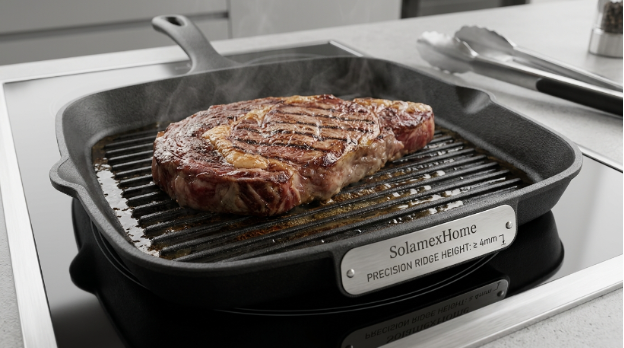
Stainless is not like cast iron; seasoning is optional but preheating and using a bit of oil can create a temporary nonstick effect for searing and reduce sticking on stainless surfaces.
How Can I Tell If My Cookware Is True 18/10?
Check the product page/specs for “18/10” or alloy type (304); manufacturer documentation or stamped markings are the reliable source. See Buying Guide.
Is Die-Cast Aluminum Good For Everyday Cooking?
Die-cast aluminum is durable and conductive and often used for nonstick pans; look for anodized/coated finishes and good base design to ensure even heating and longevity.
References & Source Links
Below are the primary sources cited in this article.
- All-Clad — Understanding Stainless Steel Cookware Types (18/10 Explained). (All-Clad product/education page.)
- Study — Release Of Nickel And Chromium From Stainless Steel During Cooking (PubMed Central). (Research on metal release into foods.)
- British Stainless Steel Association — Cutlery Stainless Steel Grades (18/8, 18/10, 18/0). (Technical primer on grade meanings.)
- Bar Keepers Friend — Do’s & Don’ts For Cleaning Stainless Steel. (Practical cleaning guidance.)
- Die-Cast Aluminum Overview — Die-Cast Vs Non-Stick (context on die-cast construction).
- Xometry — 18/10 Stainless Steel Material Overview. (Material properties and quick facts.)

Solamex — Wholesale Pots and Pans Expertise
Solamex offers a comprehensive range of wholesale pots and pans, combining durable materials, precise craftsmanship, and flexible product customization. From premium stainless steel to advanced nonstick lines, our catalog is built for both retail distribution and demanding commercial kitchens — ensuring consistency in performance and presentation.
The Ultimate Guide to 18/10 Stainless Steel Cookware: Why It's the Pro's Choice
5-Ply vs. 3-Ply Stainless Steel: The Definitive Guide for 2025