Your Pan's Too Small? Understanding Frying Pan Sizes from 8 to 14 Inches
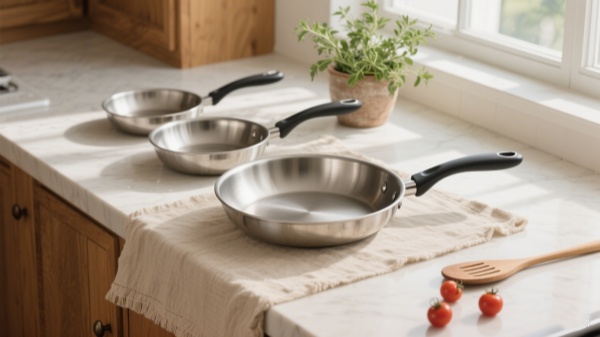
Ever bought a beautiful frying pan only to realize it's constantly overcrowded? Or maybe you're tired of washing that massive skillet just to fry two eggs? You're not alone—choosing the wrong frying pan size is one of the most common kitchen mistakes. Let me help you solve this once and for all with simple, practical rules that'll have you picking the perfect pan every time.
First, Let's Clear Up a Size Confusion: Advertised Diameter ≠ Cooking Surface
Here's something cookware companies don't shout about: that 12-inch pan you bought? The actual flat cooking surface is only about 9 inches. Frying pan sizes are determined by measuring rim to rim, not the cooking surface diameter. Due to sloped walls, two 12-inch pans can have different cooking surface measurements.
How to Actually Measure Your Pan: Stretch a tape measure across the top from rim to rim, passing through the center. Include any flared edges. For the cooking surface, measure where the flat bottom meets the sloped sides.
Why does this matter? When cooking steaks, eggs, or burgers, the flat cooking surface size is what really matters. Most 12-inch pans have around 9 inches of flat cooking area, while 10-inch pans offer about 8 inches.
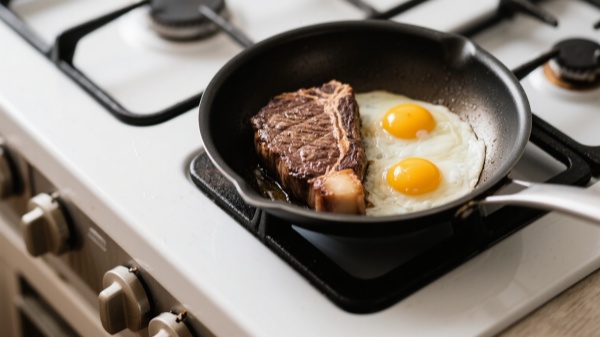
The Three Golden Sizes: What 8-, 10-, and 12-Inch Pans Actually Do
8-Inch Pan — Your Morning Champion
Think of an 8-inch pan as your personal chef. It's perfect for single servings like one fried egg or chicken breast, toasting spices, or making brown butter sauces. The compact size means your ingredients get full attention from evenly-distributed heat from both bottom and sides.
Real-world capacity: 1-2 eggs, 1 chicken breast, 1 grilled cheese sandwich, or a personal omelet. The beauty? Everything heats quickly and evenly—no cold spots when you're rushing through breakfast.
10-Inch Pan — The Household Workhorse
Ask any home cook about their most-used pan, and you'll likely hear "10-inch." Many consider having a 10-inch frying pan since it serves most cooking purposes. It's the Goldilocks of pans—not too big, not too small.
What fits comfortably: 2 to 3 servings of food, like frying 3 eggs or 2 chicken breasts, frying latkes, or sautéing vegetables. Most recipe developers assume you're using a 10-inch pan unless they specify otherwise.
Reddit home cooks consistently vote this as their go-to size because it handles Tuesday night dinners for two without breaking a sweat, yet doesn't feel overwhelming to clean.
12-Inch Pan — The Crowd Pleaser
A 12-inch frying pan is large enough to handle most cooking tasks. You can create skillet meals for four in one of these pans. Professional chefs often recommend 12-inch as their primary pan because it provides breathing room—your food sears instead of steams.
Perfect for: Frying 4 eggs or 3 chicken breasts, frying bacon strips without trimming the ends, making pan pizzas or Dutch babies. When you're cooking for guests or meal-prepping for the week, this size prevents the dreaded "cooking in batches" scenario.

Beyond 12 Inches? When 14" and Larger Actually Make Sense
Let's be honest about jumbo pans. If you cook more nights than not and have multiple mouths to feed, then a larger size pan (12" or 14") is ideal. But here's the catch—14-inch skillets are often too wide for most stovetops, heating too much in the center and too little on the edges. This causes food to stick, burn, or require excessive maneuvering.
Consider 14" only if: You have a large burner or double-ring gas stove, regularly cook for 6+ people, have ample storage space, and don't mind the 6-8 pound weight. Otherwise, stick with 12" maximum.
Storage space is crucial—larger pans take up more room and may not fit in smaller cabinets. Plus, that romantic idea of one giant pan for everything? Try flipping eggs in a 14-inch pan every morning—your wrist will file a complaint within a week.
3 Hidden Factors That Affect Your Pan's "Real" Size
Two pans with identical diameters can cook completely differently. Here's what actually impacts your usable cooking space:
- Material Thickness Changes Everything: The cooking surface of a 12" Stainless Steel pan is 9.5 inches, while a 12" Carbon Steel pan is 9.25 inches. Cast iron pans have even thicker walls, reducing cooking surface by another half-inch. That beautiful Lodge cast iron? Budget for one size up.
- Depth Determines Function: Shallow pans (1.5-2 inches) excel at searing and quick sautés—food spreads out for maximum browning. Deeper frying pans (2.5+ inches) work like hybrid sauté pans, perfect for braises, one-pot pastas, or anything saucy that might splash.
- Shape Throws Off Everything: Round is standard, but oval pans measure length-wise (great for whole fish), while square pans maximize corner-to-corner space. Pro tip: Always measure your pan before buying a lid—"12-inch" means different things to different manufacturers.
The Real-World Guide: Matching Pans to Your Household
Forget the marketing—here's what actual home cooks use:
Living Solo or Couple: Start with one quality 8-inch nonstick (morning eggs) plus a 10-inch stainless steel for everything else. A 10-inch nonstick skillet is generally recommended for egg cookery, though you may prefer 8-inch if cooking for one or two.
Family of 3-4: Your sweet spot is a 10-inch workhorse plus a 12-inch for bigger meals. Families of three or four should consider 12" to 14" skillets. Though heavier and space-consuming, they provide comfortable cooking space for three or more.
Large Family or Entertainer: Add a 14-inch if—and only if—your stove can handle it. Otherwise, two 12-inch pans beat one unwieldy giant every time.
Size vs. Your Stove: The Compatibility Check Nobody Talks About
Gas Stoves: The pan's base should fit within the cooking element. If much larger than the burner, it heats unevenly and can warp over time. Keep flames within ½ inch of the pan's base edge—anything beyond wastes gas and creates dangerous handle heating.
Electric/Induction: Match your pan's base (not rim) to the heating element. A 12-inch pan with a 9-inch base works perfectly on a 9-inch burner. Mismatch = hot center, cold edges, and frustrated dinner guests.
Oven Compatibility: Planning to finish that steak in the oven? 12" is the ideal size for oven-safe baking pans. Just verify your handle can withstand 500°F+ if you're searing-then-roasting.
Quick Reference Chart
| Pan Size | True Base Diameter | Serves | Best Dishes | Matching Lid | Typical Weight |
|---|---|---|---|---|---|
| 8" | 6"-6.5" | 1 | Fried eggs, crepes, personal omelet | 8" or 20cm glass | 1-2 lbs |
| 10" | 8"-8.5" | 2-3 | Chicken breasts, stir-fry, quesadillas | Universal 25cm | 2-3.5 lbs |
| 12" | 9.5"-10.5" | 3-5 | Steaks, fajitas, full breakfast | 30cm standard | 4-6 lbs |
| 14" | 11"-12" | 5+ | Party paella, batch cooking | 35cm (harder to find) | 6-8 lbs |
Smart Buying & Storage: Making Every Inch Count
Budget Allocation Strategy
Here's insider wisdom: A 10-inch pan serves most cooking purposes, making it worth the splurge. Most households use their 10-inch pan 60% of the time, so invest in quality here first.
Quality vs. Quantity Math: Two high-quality pans (one 10-inch nonstick, one 12-inch stainless) will outperform five cheap pans every single time. Good pans heat evenly, last decades, and actually make you want to cook. Cheap pans? They'll warp within a year and turn cooking into a chore.

Beginner's Smart Start: Get one solid 10-inch nonstick around $40-60. Use it for a month. You'll quickly learn if you need bigger (constantly overcrowded) or smaller (too much empty space). Then invest accordingly.
Storage Solutions That Actually Work
Stop the cabinet avalanche! Vertical pan organizers let you slot pans sideways with handles facing out. The entire organization process takes about 10 seconds.
Size-Based Storage Tips:
- 8-10-12" nested set: Use felt pan protectors (cut to size: 20cm for 8", 30cm for 12") between each to prevent scratching
- 14" and larger: Wall-mount individually or store separately—they're too heavy for standard cabinet organizers
- Vertical rack system: Holds up to 3 pans horizontally or 4 vertically, with perfect spacing for each size
Speaking of extending lifespan, proper sizing prevents premature wear. Constantly overloading a small pan or underusing a large one creates uneven heating patterns that damage the cooking surface over time.
FAQ: Your Quick Questions Answered
The Bottom Line: Measure Your Stove, Check Your Menu, Then Choose
Stop thinking of pans as collections—they're tools. The right tool makes cooking effortless; the wrong one makes it frustrating. Quality beats quantity every single time.
Your action plan right now:
- Audit your current pans: Measure what you have (rim-to-rim and cooking surface)
- Measure your largest burner: This determines your maximum practical pan size
- Choose based on this guide: Match your household size and cooking style to the recommendations above
Remember: professional chefs don't own twenty pans—they own the right three or four and use them brilliantly. Start with one perfect-for-you size, master it, then expand thoughtfully. Your cooking (and your kitchen cabinet) will thank you.
Complete Guide to Frying Pan Sizes: Choose the Perfect Pan for Your Kitchen
Which Frying Pan Size Should You Buy? Quick Guide to 6", 8", 10", 12" & 14" Skillets