Kids’ Drinkware Buying Guide: Safety, Durability, and Easy Cleaning
Introduction
Are children drinking from completely safe bottles during daily school outings? Parents always seek remarkably durable, non-toxic cups resisting hidden mold. Selecting the appropriate kids drinkware remains a crucial aspect of early childhood development. Discover everything regarding hygiene, material safety, and choosing trustworthy everyday options.
Selecting the appropriate drinkware remains a crucial aspect of a child's everyday life, whether they are in the classroom, attending after-school clubs, or enjoying picture outings with the family. Because children require drinking cups they can actually trust, parents are always seeking bottles, tumblers, and mugs that are not only definitely safe but remarkably durable and super easy to clean.
For any parent, caregiver, or educator, providing healthy kids' drinkware is about creating lifelong healthy habits, establishing proper hydration, and lessening daily stress for a busy family.
In this article, you will read everything you need to know regarding the selection of children's cups and thermoses, alongside important things you can do to keep your child healthy and well without sacrificing convenience.
Quick Action
When considering children's cupware on-the-go, ensure you implement these take-action ideas:
-
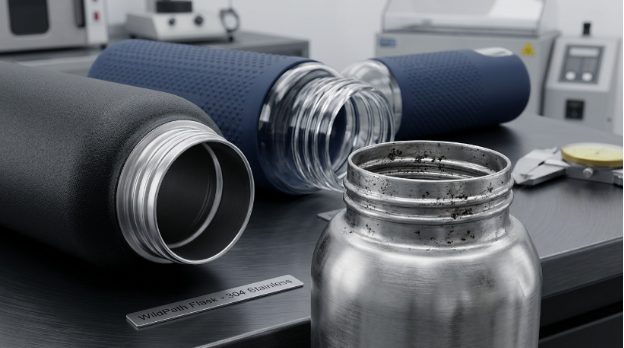
Insulated Metal Cups: Examine the bottom of insulated metal cups to look for exposed lead soldering, which is a manufacturing shortcut that has recently resulted in masses of product recalls.
-
BPA-Free Plastics: Keep in mind that BPA-free plastics have imperfections and can potentially emit harmful estrogenic chemicals when you put them in the dishwasher.
-
Spill-Proof Valves: Avoid complicated spill-proof valves; instead, use simple-path lids to eliminate the headache of discarding costly cups where the internal sealing gaskets are too hard to wash off.
-
Capacity Sizes: Select 9oz to 14oz capacities for children aged one to five, as this particular size provides them with proper daily hydration without being cumbersome to carry.
-
Transparent Parts: Check for transparent parts to clearly see any debris or spotting of black mold before your child drinks.
Who This Checklist Is For
Because proper equipment is important in early childhood development, parents will not budge on hygiene when selecting the best kids drinkware, and neither should you.
For parents of one- to five-year-olds, cup horror stories are all too familiar—from leaking on the car seat and breaking on the driveway to developing hidden mold inside the lid. Expectant mothers and preschool instructors require alternatives that can withstand tough use, while pediatric nurses, speech-language pathologists, and babysitters appreciate knowing which cups feature the best designs for correct cleaning between feeds.
This guide will provide you with a solid and trustworthy model that allows you to examine any brand on the shelf and feel confident about the decisions you make for safety and daily use.
Using This Kids Drinkware Buying Guide
By default, go through the steps of this checklist in order before buying something: firstly, check the material safety; secondly, examine the material's durability for your child's age; and thirdly, consider the hygiene requirements so long-term hygiene is possible.
Taking a few minutes to check these things will save you money and a lot of frustration in the long run, making it highly recommended to keep this list on your cell phone while shopping. Take any product—from a top-of-the-range insulated thermos to a plain old training cup—through these three phases, because the facts and figures speak for themselves.
If a cup does not pass a number of these checks in the initial stages, just return it; even if it is cool and fun to use, there is no way that aesthetic appeal can make up for a hidden mold risk or a heavy metal hazard.
Safety Comes First
|
Material Feature |
Primary Safety Benefit |
|
Food-Grade Stainless Steel |
Completely avoids chemical leaching |
|
Does not impart fragrance or taste |
Because material safety is central to the best nontoxic kids drinkware products, parents will not bend on this issue, and neither will you. One cannot simply take packaging claims on faith; you must be completely sure about the composition of the material used.
An Awareness Of Safe Base Materials
The foundation of a safe cup is the material of the cup itself:
-
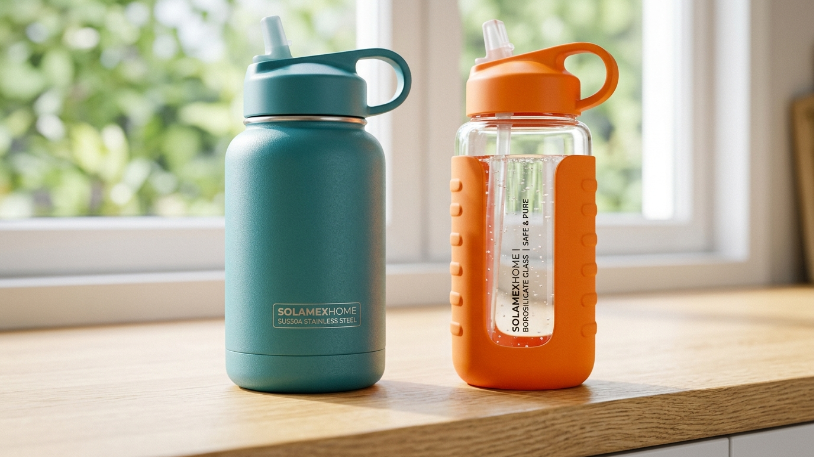
Food-Grade Stainless Steel: The industry standard for kids' drinkware is SUS304 (18/8) and SUS316 (18/10) stainless steel, identical to SolamexHome Stainless Steel Bottles. Because they are rust-resistant, highly durable, and safe, they completely avoid the chemical leaching associated with heated plastics, ensuring that highly acidic fruit juices or hot liquids stay free of contamination while in use.
-
Borosilicate Glass: Glass is the most authentic drinkware because it does not impart the taste or fragrance of previous drinks. If a glass cup is used, make sure it is reinforced with an outer protective layer, similar to SolamexHome Glass Water Bottles, as raw glass is not suitable for a toddler.
-
BPA-Free Plastics: Select only "BPA-Free" food-grade plastics such as PP or Tritan. However, remember that research published in the Environmental Health Perspectives Journal indicates even so-called BPA-free plastics can leak other estrogenic chemicals (BPS and BPF) during extreme heat exposure.
Understanding The Risks Of Hidden Toxins
Less desirable manufacturing methods can create hidden hazards in less expensive drinkware products:
-
Avoiding Exposed Lead Solder: Always check the vacuum seal at the bottom base of insulated metal cups for exposed lead solder. Over the last few years, the CPSC has recalled major brands of children's cups because they contained solder that exposed kids to lead, directly violating the federal ban on lead in cup products.
-
Safe Silicone Parts: Younger kids benefit from the improved comfort and safety of soft, non-toxic silicone straws or grips. Make sure all silicone parts are medical grade and that endocrine-disruptive substitutes were completely avoided.
-
Non-Toxic Paints & Dyes: Bright patterns and cartoon prints are nice, but you must ensure they are constructed using secure, innocuous inks. The paint on lower-cost metal bottles may flake off over time and pose a serious ingestion risk to small children.
Strength To Withstand Kids' Vitality
Because children are highly prone to dropping objects, the type of drinkware you select must be strong and tough enough to endure bumps and falls alongside the energy of everyday life. Parents desire bottles that last seamlessly on the playground, in the classroom, and in the driveway.
Structural Integrity For Active Kids
The structural design determines the manner in which the child uses the cup, meaning the design needs to be physically robust:
-
Silicone Sleeves and Bumpers: Silicone bases or reinforced bumpers are perfect for providing impact protection for stainless steel thermoses. These sleeves provide great defense against repetitive falls on tarmac, concrete driveways, or tile floors, which saves parents money on replacements while extending the product's lifetime.
-
Sweat-Proof Powder Coatings: Check that metal bottles are well powder-coated and completely sweat-resistant. This coating helps prevent condensation on the exterior and keeps the bottle from slipping out of wet hands when children are handling it.
Limits On Capacity And Weight
Not all kids require a huge bottle; it is important to balance heavy-duty construction with what your child can comfortably lift:
-
Age-Appropriate Sizing: For toddlers and preschool kids aged one to five years old, a capacity between 9oz and 14oz is just right. This correct capacity ensures the bottle will be sufficiently large to keep them well hydrated, yet sufficiently small to fit in standard-sized school bags or their little hands.
-
The Weight of Vacuum Insulation: A double-wall vacuum insulation surrounding preserves the temperature of drinks with fantastic retention for up to 24 hours. But because this technology can add a lot of weight to bottles, an oversized insulated bottle is absolutely ineffective if your two-and-a-half-year-old cannot independently lift, handle, and use it.
Cleaning And Maintenance Should Be Simple
|
Cleanable Component |
Maintenance Advantage |
|
Simple-Path Lids |
Eliminates hidden mold risks |
|
Wide-Mouth Openings |
Enables thorough manual scrubbing |
Elbow-deep parents do not want a bottle that makes cleaning a chore, which is exactly where most drinkware fails altogether by forgetting about daily cleaning routines. Parents always grumble that complex valves trap moisture, and if it cannot be seen, it cannot be cleaned.
The Cleanable Lid Components
If you want to easily maintain hygiene, you have to begin with a simple, transparent design:
-
Simple-Path Straws and Spouts: Look for simple-path lids with no hidden valves inside or overly complex anti-leak features to operate. It is hardly a secret that otherwise spill-proof lids have hidden gaskets that will cause deadly black mold if they are not separated and bleached properly from time to time. Furthermore, straw cups encourage correct positioning of the tongue, helping in the formation of good speech patterns that cannot be achieved with hard spouts.
-
Transparent Components: Check for clear lids or clear silicone straws. With transparent components, parents can quickly see if there is any debris, old milk, or mold growth inside the bottle, instead of only noticing it once their child has already taken a sip.
Logistics Associated With Daily Cleaning
Of course, maintenance should be seamlessly integrated into an already busy family life:
-
Wide-Mouth Openings: Look for a large opening design on the cup or thermos. Wide openings easily accommodate standard ice cubes and enable easy manual scrubbing, offering much better visibility of internal surfaces that standard bottle brushes may not reach.
-
Detachable Components: Check if small parts, such as silicone rings and straws, can be easily removed to air dry every single day. Determine if the cup can be fully disassembled by hand without special tools or small proprietary brushes. Furthermore, dishwasher-friendly parts need to hold up to repeated use in the dishwasher, eliminating any trapped juice and associated toxicity complaints.
People Also Ask
This section provides answers to the most frequently asked questions that parents have about kids' drinkware safety, focusing primarily on materials, mold avoidance, and developmental suitability.
Are Stainless Steel Bottles OK For Toddlers?
Indeed, food-grade stainless steel bottles (18/8 or SUS304) are highly safe for toddlers. Because they do not release harmful chemicals into liquids and actively inhibit the growth of bacteria, they remain safe, rust-resistant, and highly durable.
A parent's key issue is usually the weight of the bottle, as double-wall vacuum insulation makes these bottles much heavier and harder for smaller toddlers to carry. Also, carefully check the bottom base for any exposed solder areas made of lead, which has been a common concern in recent recalls involving less expensive brands.
Why Is A Sippy Cup Delaying Speech?
Conventional hard-spout sippy cups hinder speech development because the raised lip of the cup restricts the tongue from finding its natural and proper resting position. The American Speech-Language-Hearing Association notes that helping children transition from their bottle right to an open cup or straw cup allows for the clear, articulate expression of speech. Straw-based designs encourage excellent oral motor function, ensuring they are the best design for proper toddler development.
How Will You Eliminate Mold Out Of A Children's Water Bottle?
Kids' water bottles can be cleaned of black mold by gently soaking the affected areas in a diluted bleach and warm water solution, followed by scrubbing with a special tiny wire brush immediately after soaking. However, if the mold is deeply embedded in a hidden gasket or a very complex spill-proof valve, it is a lot safer to simply toss the cup. The avoidance of particularly stressful components and the use of simple-path lids make it possible to avoid this issue entirely.
But Is BPA-Free Plastic Safe For Children?
Even though plastics are labeled BPA-free, they are not completely foolproof, as they can leak other estrogenic chemicals when exposed to high temperatures. The results of studies in the Environmental Health Perspectives Journal strongly suggest that these alternative structural chemicals (such as BPS and BPF) can leach out of the plastic during the cycle of a standard dishwasher and directly into the water.
While high-quality Tritan plastics are a good choice for lightness, safer options are available for everyday use, like food-grade stainless steel or protected glass.
Which Is The Ideal Size For Toddler Cups?
The ideal capacity for young ones (one to five years old) is 9oz to 14oz (about 260ml to 400ml). This size range is just enough to keep a toddler hydrated throughout a day, but not so large that it will become difficult for a youngster to transport around the house or playground.
When filling the bottle, ensure it is full of water and that your child knows how to lift and pour it without becoming frustrated; always test the physical weight of an insulated stainless steel bottle when it is completely full.
Final Review
Last but not least, double-check the three most essential safety and hygiene factors on your shortlist before making any decision to purchase for your home or classroom. Ensuring that your chosen cup meets these stringent standard requirements will help prevent exposing your child to unnecessary chemicals and hidden bacterial infections.
While you will need to follow a few steps in this kids' drinkware shopping manual, make them these important points. These are the uncompromising characteristics that make the profound difference between a safe, durable cup and an unsafe novelty piece.
Perform the following checks the next time you think about purchasing a brand new one: make sure the material used in the base is food-safe, confirm there are no hidden lead solders, ensure the lid is simply designed for easy cleaning, and give the size of the bottle a reality check regarding your child's strength.
Focusing entirely on safety, convenience, and longevity guarantees a hassle-free hydration experience for years to come.
Conclusion
Double-check essential safety and hygiene factors before finalizing decisions for your classroom or home. Providing reliable kids drinkware prevents exposing toddlers to dangerous chemicals and bacterial infections. Focusing entirely on longevity guarantees a hassle-free hydration experience. Visit SolamexHome today to purchase highly durable, food-grade stainless steel bottles designed specifically for protecting your young growing children.
Fry Pan vs. Saute Pan: When to Buy One Over the Other?
How to Clean and Remove Stains from Mugs, Bottles, and Tumblers