Dutch Oven Bread: A Practical Guide to Stellar Crust—With or Without the Pot
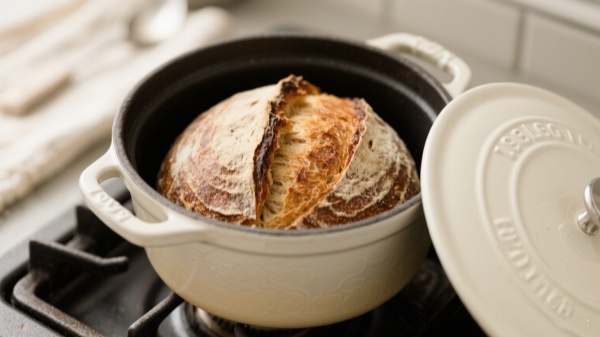
If you can trap steam and keep heat steady, you can bake bakery‑style bread at home—pot or no pot.
Pulling a loaf from a roaring hot Dutch Oven never gets old. The lid lifts, a ribbon of steam escapes, and the crust crackles while it cools. That sealed, steamy environment is why the Dutch oven became a home baker’s secret weapon. But here’s the truth I learned after dozens of side‑by‑side tests: you can mimic those conditions without a Dutch oven and still land a crisp shell and open crumb. This guide shows both paths.
Why a Dutch Oven Behaves Like a Mini Steam Chamber
Bread loves humidity at the start and dry heat at the finish. A lidded pot makes that timing effortless.
- Steam on demand: The dough’s own moisture flashes into steam under a lid, delaying crust set so the loaf can spring dramatically.
- Even, radiant heat: Thick cast iron or enameled cast iron stores energy. Preheating the pot creates a hot “floor” and walls that brown evenly.
- Two‑phase bake: Lid on for expansion; lid off for caramelization and crackle.
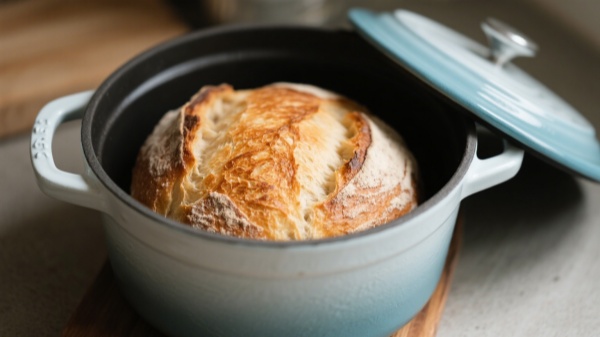
Understand these mechanics and you’ll know exactly what to replicate when you bake without the pot: add steam early, shield the surface, and keep the heat stable.
What Size Dutch Oven for Bread and Sourdough?
Pick a size of dutch oven that gives the dough room to rise without hitting the walls.
Recommended sizes (tested at home)
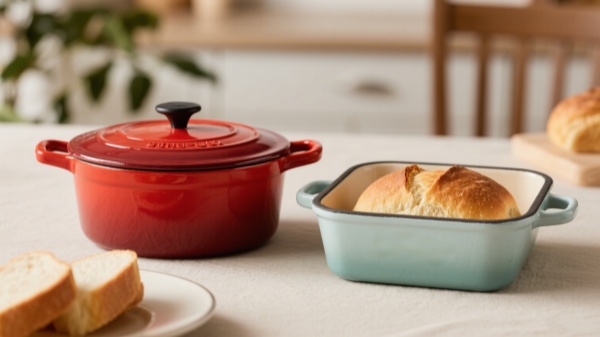
- 5.5‑quart round — sweet spot for 450–900 g dough (1–2 lb). Most of my test loaves live here.
- 4‑quart — fine for 450–700 g dough; tighter for high‑hydration sourdough.
- 6 quarts–7 quarts — roomy for 800–1100 g dough or bâtards, but heavier to handle when blazing hot.
- Shape: Round fits boules; oval favors bâtards. First pot? Go round.
Material and hardware
- Enameled cast iron — easy to clean, no seasoning needed. Light interiors stain at high heat (purely cosmetic).
- Bare cast iron — rugged and long‑lived; needs seasoning and a dry storage routine.
- Lid knob: Ensure metal or high‑temp phenolic; rated 450°F/232°C or higher.
How to Bake Bread in a Dutch Oven (No‑Knead, Weeknight‑Friendly)
Minimal mixing, maximum payoff. Time does the heavy lifting.
Ingredients (1 loaf)
- 400 g bread flour (about 3 1/4 cups)
- 300 g warm water, ~95°F (1 1/4 cups)
- 2 g instant yeast (about 1/2 tsp)
- 8 g fine sea salt (1 1/4 tsp)
Equipment
- 5–7 qt Dutch oven with lid
- Parchment, bowl, spatula, sharp blade
Timing
- Mix: 5 minutes
- First rise: 12–18 hours at room temp
- Shape/proof: 30–40 minutes
- Bake: 45–50 minutes
- Mix: Whisk flour, yeast, and salt. Stir in warm water until no dry bits remain. The dough will be shaggy and sticky.
- Long rest: Cover and leave 12–18 hours until doubled with a web of bubbles.
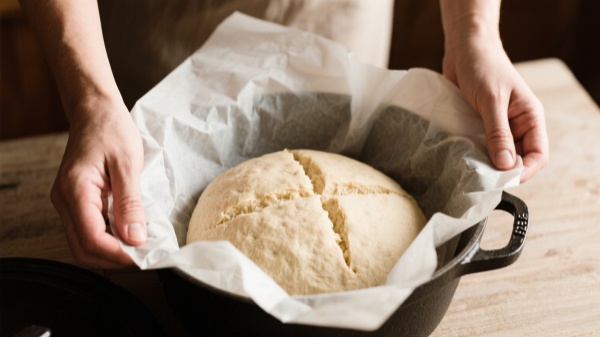
- Shape: Dust the counter. Coil the dough into a loose ball, seam down on parchment. Rest 30–40 minutes.
- Preheat: Place the lidded Dutch oven in the oven and preheat to 450°F/232°C for at least 30 minutes.
- Score and load: Lift the dough by the parchment into the hot pot. Score a cross or a single long slash.
- Bake covered: 30 minutes with the lid on.
- Finish uncovered: Remove the lid and bake 15–20 minutes more until deep golden. Internal temp 205–209°F (96–98°C).
- Cool: De‑pan and cool on a rack for 60 minutes; the crumb sets as steam escapes.
How to Bake Sourdough Bread in a Dutch oven
Sourdough adds acidity and strength—use it to your advantage.
- Hydration: 70–78% is a friendly range for beginners; higher yields a more open crumb with practice.
- Build tension: A taut surface helps bloom your score and form a crisp “ear.”
- Cold proof: Shaping, then an overnight rest in the fridge (8–16 hours) improves flavor and scoring.
- Autolyse 30–60 minutes (flour + water), then mix in salt and ripe starter.
- Bulk ferment 3–5 hours at 75°F/24°C with 3–4 coil folds in the first 90 minutes.
- Pre‑shape, rest 20 minutes, final shape into a tight boule or bâtard. Into a floured banneton, covered.
- Cold proof in the fridge; preheat your pot to 485°F/252°C, then reduce to 465°F/240°C when loading.
- Score decisively, load via parchment, lid on 22–25 minutes, lid off 18–22 minutes to color and dry.
How to Bake Bread without a Dutch Oven (Five Reliable Setups)
No pot? Recreate steam and shelter the crust early in the bake.

| Method | How steam is created | Ease | Result |
|---|---|---|---|
| Skillet + sheet pan | Dough’s own moisture under a hot cap | Easy | Springy, thin crackly crust |
| Stockpot | Trapped steam under a lid | Easy | Good spring; watch handle ratings |
| Steel/stone + foil | Spritz or water pan + foil shield | Moderate | Excellent color; slightly thicker crust |
| Combo cooker | Enclosed cast‑iron chamber | Easy | Closely mimics Dutch oven |
| Steam oven | Active steam control | Easy | Most consistent, higher cost |
How long to bake sourdough without a Dutch oven?
- Typical timing: 20–22 minutes covered/tented with steam, then 20–25 minutes uncovered to color and dry.
- Temperature: Often 10–15°C (20–25°F) lower than your Dutch‑oven routine to avoid a thick, leathery crust.
- Doneness: Internal temp 205–209°F (96–98°C) and a hollow sound when you knock the bottom.
Quick Answers
Short, direct responses you can act on immediately.
Do I need a Dutch oven to make sourdough bread?
No. It simplifies steam management but you can mirror the effect with a preheated skillet plus an inverted sheet pan, a foil tent over a steel/stone, or a combo cooker.
What is the best Dutch oven size for baking bread?
A 5.5‑quart round pot fits most 450–900 g loaves without crowding and is easy to handle when scorching hot.
How do I prevent bread from sticking to the pot?
Use parchment every time. For bare cast iron, dust with coarse semolina or cornmeal as an insurance layer.
Why is my crust not crisp?
Either steam leaked early or the loaf didn’t dry enough. Keep it covered for the first 20–30 minutes, then finish uncovered until deeply colored. Cool on a rack.
Can I bake bread starting in a cold Dutch oven?
Yes. It’s safer to load, though oven spring is typically a touch lower. Extend the bake by 5–10 minutes as needed.
How should I store crusty bread?
Once fully cool, keep at room temperature in a paper bag or cut‑side down on a board for 1–2 days. Avoid sealed plastic; it softens the crust.

Solamex — Wholesale Pots and Pans Expertise
Solamex offers dutch ovens in bulk and wholesale pots and pans, combining durable materials, precise craftsmanship, and flexible product customization. From premium stainless steel to advanced nonstick lines, our catalog is built for both retail distribution and demanding commercial kitchens — ensuring consistency in performance and presentation.
What is Cast Aluminum Cookware — Who Should Buy, and How to Use
How to Bake Sourdough (With and Without a Dutch Oven)